NACCIMA Seeks Digital Automation of Agriculture, Manufacturing to Drive $1trn Economy
Oru Leonard ñ
The President of the Nigerian Association of Chambers of Commerce, Industry, Mines and Agriculture (NACCIMA), Engr. Jani Ibrahim, has called for increased digitalisation and automation of Nigeria’s traditional economic sectors to accelerate the Federal Government’s ambition of building a $1 trillion economy.
Ibrahim said agriculture, manufacturing, trade and mining must embrace stronger digital capabilities, artificial intelligence and technology-driven operations to improve productivity, competitiveness and economic growth.
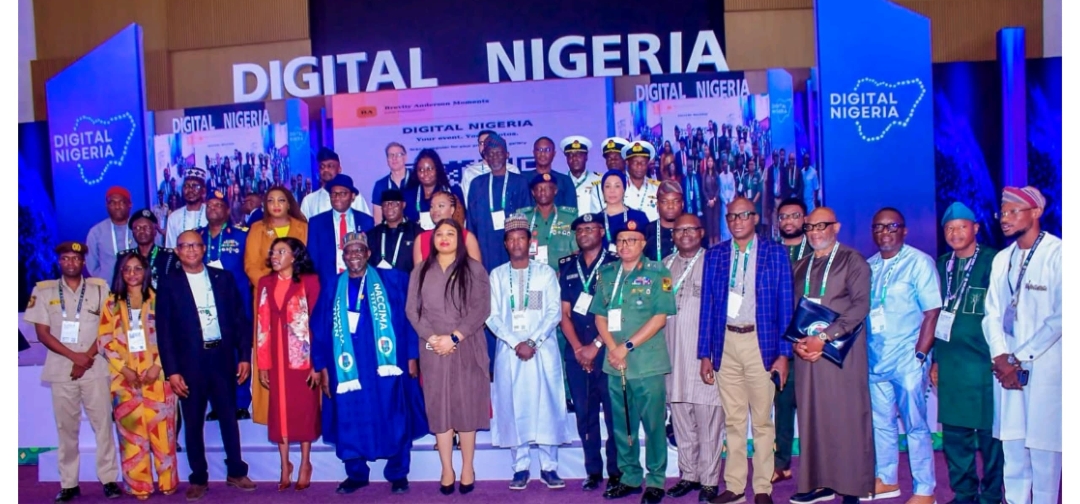
He made the call at the opening ceremony of the Digital Nigeria International Conference and Exhibition (DNICE) 2026 in Abuja, where he led the Organised Private Sector (OPS) into a strategic digital partnership with the Federal Government.
The NACCIMA president, who represented the Organised Private Sector of Nigeria (OPSN) and the Federation of West African Chambers of Commerce and Industry (FEWACCI), formally declared the conference open alongside Vice President Kashim Shettima and the Minister of Communications, Innovation and Digital Economy, Dr. Bosun Tijani.
He commended the Director-General of the National Information Technology Development Agency (NITDA), Kashifu Inuwa Abdullahi, for what he described as the historic repositioning of Nigeria’s digital economy through sustained and institutionalised engagement with the private sector.
According to him, the integration of NACCIMA’s nationwide business networks into national digital policy has transformed digital development from an isolated government initiative into a collaborative economic agenda.
He stressed that achieving the $1 trillion economy target would require deliberate efforts to integrate technology into traditional sectors where the majority of Nigerians earn their livelihoods.
Ibrahim also unveiled key initiatives under the NACCIMA-NITDA partnership designed to accelerate enterprise digitalisation and improve the competitiveness of Nigerian businesses.
The initiatives include the NACCIMA-NITDA 10,000 AI Enterprise Accelerator, the Integrated Digital Transformation Platform (IDTP) and the National Digital Trustmark.
The 10,000 AI Enterprise Accelerator is designed to introduce artificial intelligence and digital solutions to 10,000 micro, small and medium-sized enterprises (MSMEs) and industrial businesses across the 36 states and the Federal Capital Territory.
Under the programme, businesses will undergo digital assessments, receive practical artificial intelligence training and access digital enablement vouchers covering cloud services and connectivity.
The initiative will also integrate graduates of the Federal Government’s 3 Million Technical Talent (3MTT) programme into participating businesses to support their digital transformation efforts.
The Integrated Digital Transformation Platform, described as the digital operating system of Nigeria’s Organised Private Sector, is expected to provide a central database for registering, digitising and verifying businesses in collaboration with the Corporate Affairs Commission (CAC) and the Federal Inland Revenue Service (FIRS).
The platform is also expected to significantly reduce the time required for trade documentation, including the electronic Certificate of Origin, from 48 hours to approximately four minutes through automation.
Similarly, the National Digital Trustmark will provide a verification and compliance framework for businesses, particularly in data protection and cybersecurity, helping to strengthen their credibility and readiness for international trade.
Ibrahim explained that the framework would enhance the capacity of Nigerian businesses to access international markets, including opportunities under the African Continental Free Trade Area (AfCFTA) and the Nigeria-UAE Comprehensive Economic Partnership Agreement (CEPA).
Moving beyond policy discussions to commercial transactions, the NACCIMA president disclosed that the association had brought 10 leading corporate investors, financiers and industrialists to the DNICE Executive Hall B2B Deal Rooms.
The engagement is aimed at facilitating procurement agreements, pilot projects and direct equity investments between established businesses and technology startups vetted by NITDA.
He urged Nigerian businesses to support indigenous technology companies through funding, procurement and strategic partnerships rather than relying exclusively on foreign markets for validation and expansion.
As president of FEWACCI, Ibrahim further pledged to extend the digital trust and trade frameworks across the Economic Community of West African States (ECOWAS), positioning Nigeria as a major digital and commercial gateway for the African continent.
The DNICE 2026 conference, which continues until November 12, features the Live Builders Festival, business-to-business matchmaking sessions and engagements among government agencies, technology innovators, investors and private-sector operators.