Enikanolaiye Calls for Stronger Private Sector Collaboration to Drive Nigeria’s Industrial Growth
… Minister Advocates Youth Investment, Domestic Capital Mobilisation and Regional Value Chains
Oru Leonard
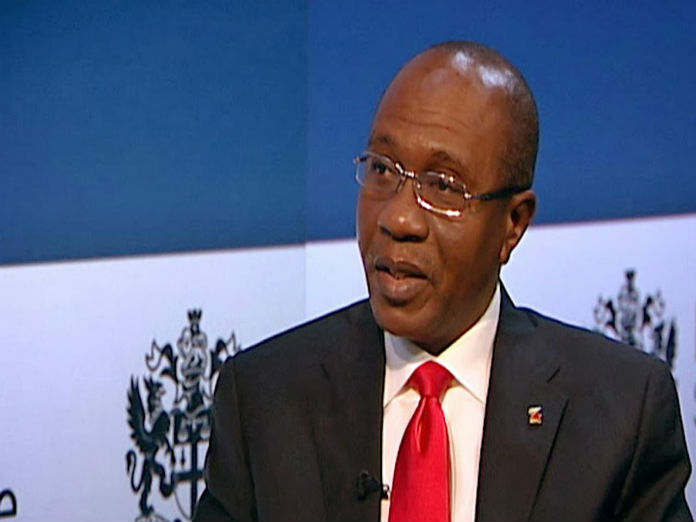
The Minister of State for Foreign Affairs, Ambassador Sola Enikanolaiye, has called for stronger collaboration between the Federal Government and the private sector to transform Nigeria from a trading economy into a productive, value-chain-driven economy capable of competing in global markets.
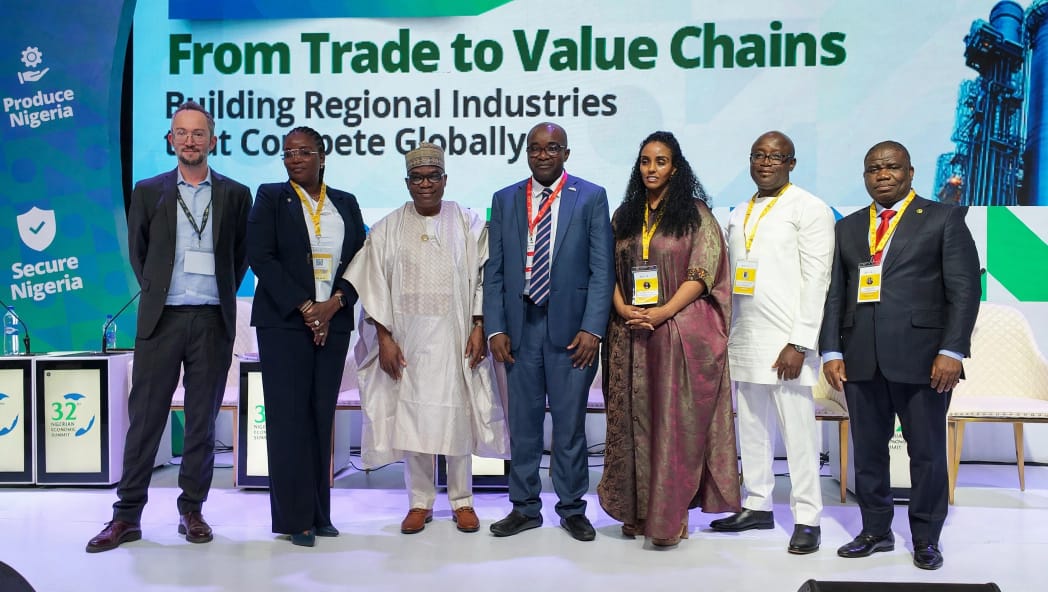
Enikanolaiye made the call at the 32nd Nigerian Economic Summit (NES #32) during a high-level panel discussion titled “From Trade to Value Chains: Building Regional Industries to Compete Globally,” under the sub-theme “Invest Nigeria.”
The minister emphasised that sustainable economic growth would require strategic partnerships, increased investment in human capital, technology-driven innovation and the mobilisation of domestic and foreign capital to expand industrial production and create employment opportunities.
Reflecting on his recent participation in the Berlin Global Dialogue, where investment and economic resilience featured prominently, Enikanolaiye said global business leaders remained optimistic about Nigeria and the wider global economy despite prevailing uncertainties.
4D Foreign Policy Doctrine Prioritises National Interest
Explaining the Federal Government’s reordered 4D foreign policy doctrine, the minister said the framework places the welfare and prosperity of Nigerians at the centre of the country’s international engagements.
He identified the four pillars as Demography, Development, Democracy and Diaspora, noting that Nigeria’s foreign policy must deliver tangible economic benefits to its citizens.
“Democracy is good, but it is a means to an end, not an end in itself. Democracy must deliver on core priorities of economic development and economic prosperity to our people,” he said.
According to him, Nigeria’s diplomatic engagements must increasingly support national development objectives, attract investment and promote opportunities that improve the livelihoods of its citizens.
Enikanolaiye stressed that government alone could not mobilise the resources required to achieve sustainable economic development, urging stronger dialogue and cooperation between public institutions and private businesses.
He observed that constructive engagement between government and the private sector was essential to unlocking investment opportunities, expanding productive capacity and building a resilient economy.
“In advancing our country, we don’t talk enough to one another in terms of constructive conversation and dialogue,” he said, adding that stronger partnerships were necessary to mobilise capital from both foreign investors and domestic businesses.
The minister maintained that Nigeria must look beyond foreign investment by strengthening local businesses and encouraging domestic capital to support industrialisation and shared prosperity.
Highlighting Nigeria’s youthful population as a major economic asset, Enikanolaiye called for increased investment in human capital, small and medium-sized enterprises (SMEs), technology, innovation and creativity.
He said empowering young Nigerians with relevant skills, resources and entrepreneurial opportunities would help expand employment, increase incomes and generate wealth.
“Our youth population is very critical — a vibrant population. We need to invest more in human capital, focusing on Small and Medium Scale Enterprises, technology, innovation and creativity,” he stated.
He added that a deliberate focus on these sectors would enable Nigeria to harness the potential of its young population while strengthening the country’s productive base.
The foreign affairs minister also pointed to improvements in macroeconomic stability, noting that greater predictability in key economic indicators was important for business planning and investment decisions.
He said businesses needed reliable economic data and a more predictable operating environment to make informed decisions, expand operations and plan for long-term growth.
According to him, sustained economic stability would help build investor confidence and support the development of productive industries across the country.
Enikanolaiye further called for a more people-centred approach to diplomacy, insisting that the Ministry of Foreign Affairs must work more closely with Nigerians and the private sector.
“We have to ensure that the foreign ministry is brought closer to the Nigerian people. We do not operate necessarily in esoteric terms above the people but for the people and with the people,” he said.
He explained that diplomatic engagement should create practical opportunities for Nigerian businesses, facilitate investment and strengthen economic relationships with international partners.
The minister identified government-to-government (G2G), government-to-business (G2B) and business-to-business (B2B) partnerships as important channels for expanding economic cooperation.
He added that Nigeria could strengthen its industrial competitiveness by deepening engagement with immediate neighbours, the wider West African region, the African continent and the international community.
Also speaking at the session, the President of the ECOWAS Commission, General Birame Diop, represented by the Commission’s Commissioner for Economic Affairs and Agriculture, Hon. Dehpue Yenpea Zuo, reinforced the call for industrialisation and stronger regional value chains.
Diop warned that trade agreements alone would not deliver the employment and economic transformation West Africa needs.
“Trade agreements do not create jobs; industries do,” he said.
He noted that intra-African trade remained at approximately 15 per cent, significantly below the levels recorded in Europe and Asia, arguing that the continent needed stronger industrial capacity to increase trade among African countries.
According to him, the ECOWAS market, with more than 300 million consumers, offers an immediate opportunity for Nigerian manufacturers and other West African producers to expand their operations, achieve economies of scale and become more competitive.
He also identified the African Continental Free Trade Area (AfCFTA) as an important platform for expanding market access and positioning regional businesses for continental and global competition.
The ECOWAS Commission president outlined four priorities for accelerating regional economic integration and industrial growth.
These include implementing existing regional agreements, beginning with measures at the borders; developing value chains in sectors where West Africa has competitive advantages; mobilising financing that reaches producers and businesses throughout the value chain; and measuring progress by the number of jobs created and the volume of goods processed within the region.
He stressed that regional economic integration must translate into increased production, employment generation and tangible benefits for businesses and citizens.
Both speakers underscored the need to move beyond agreements and policy declarations towards practical investments that expand manufacturing, strengthen regional supply chains and create sustainable employment.
The discussions at NES #32 highlighted the importance of aligning Nigeria’s foreign policy, domestic economic reforms and regional partnerships with the broader objective of building a productive economy that can compete effectively in international markets.