Beyond Assistance: Doro Calls for Sustainable Pathways Out of Poverty
Oru Leonard
The Minister of Humanitarian Affairs and Poverty Reduction, Dr. Bernard M. Doro, has called for a shift from conventional humanitarian assistance to sustainable interventions capable of moving vulnerable Nigerians from poverty to resilience, self-reliance and shared prosperity.
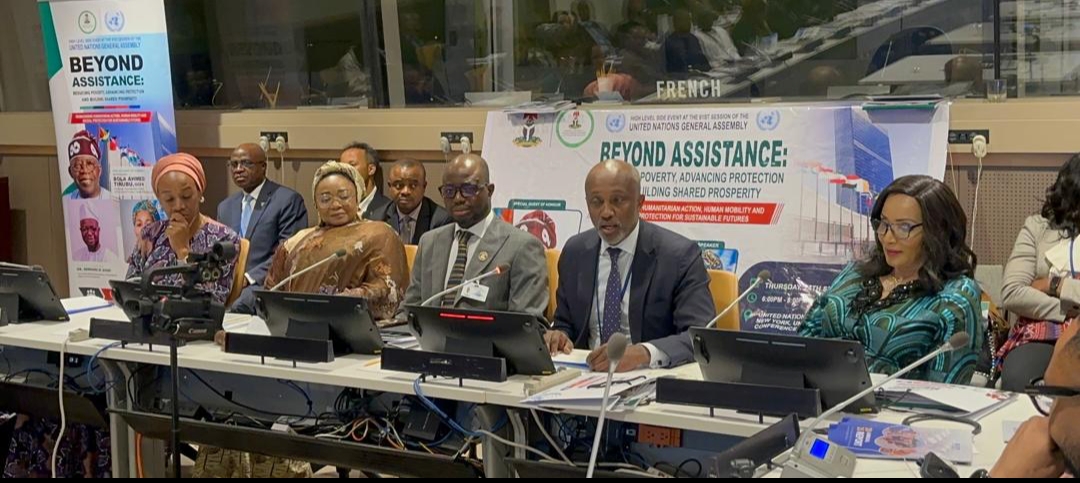
Doro made the call in New York while convening a high-level side event on the sidelines of the 81st United Nations General Assembly (UNGA).
The event, titled “Beyond Assistance: Reducing Poverty, Advancing Protection and Building Shared Prosperity,” brought together development partners, government officials and international experts to examine strategies for reducing poverty and strengthening protection for vulnerable populations.
The minister said the Federal Government, through the Ministry of Humanitarian Affairs and Poverty Reduction, was implementing interventions aimed at lifting vulnerable households out of poverty and creating pathways towards sustainable livelihoods.
According to him, humanitarian interventions must go beyond immediate relief to provide vulnerable households with credible opportunities to build resilience, achieve self-reliance and participate in shared prosperity.
He said the administration of President Bola Ahmed Tinubu would continue to prioritise poverty reduction and interventions designed to improve the socioeconomic conditions of vulnerable Nigerians.
Doro stressed the importance of collaboration among government, international organisations, development partners and other stakeholders in achieving sustainable poverty reduction.
Contributions to the side event included messages from the United Nations Deputy Secretary-General, Hajiya Amina J. Mohammed, represented by Mr. Mohamed Yahya; the Minister of Foreign Affairs, Ambassador Bianca Odumegwu-Ojukwu; the Minister of Women Affairs, Hajiya Imaan Sulaiman-Ibrahim; and the Deputy Director-General, Operations of the International Organization for Migration (IOM), Ms. Ugochi Daniels.
Other experts also participated in the discussions, which focused on strengthening humanitarian protection while creating sustainable pathways out of poverty.
The speakers emphasised that humanitarian assistance must remain focused on saving lives, while also supporting longer-term interventions that enable vulnerable individuals and households to recover, become self-reliant and contribute to economic development.
The side event was organised in partnership with Innovations for Poverty Action, the International Organization for Migration (IOM), IQS and the Learning Economy Foundation.
The discussions formed part of Nigeria’s broader engagement at the UN General Assembly and highlighted the need for stronger partnerships and evidence-based approaches to poverty reduction and humanitarian protection.