
FG, ABIA, ILO MOVE TO EXPAND SOCIAL SECURITY COVERAGE FOR INFORMAL SECTOR WORKERS
Oru Leonard
The Federal Government, Abia State Government and the International Labour Organization (ILO) have stepped up efforts to extend social protection benefits to millions of Nigerians working in the informal economy, with a renewed commitment to inclusive labour policies and stronger stakeholder collaboration.
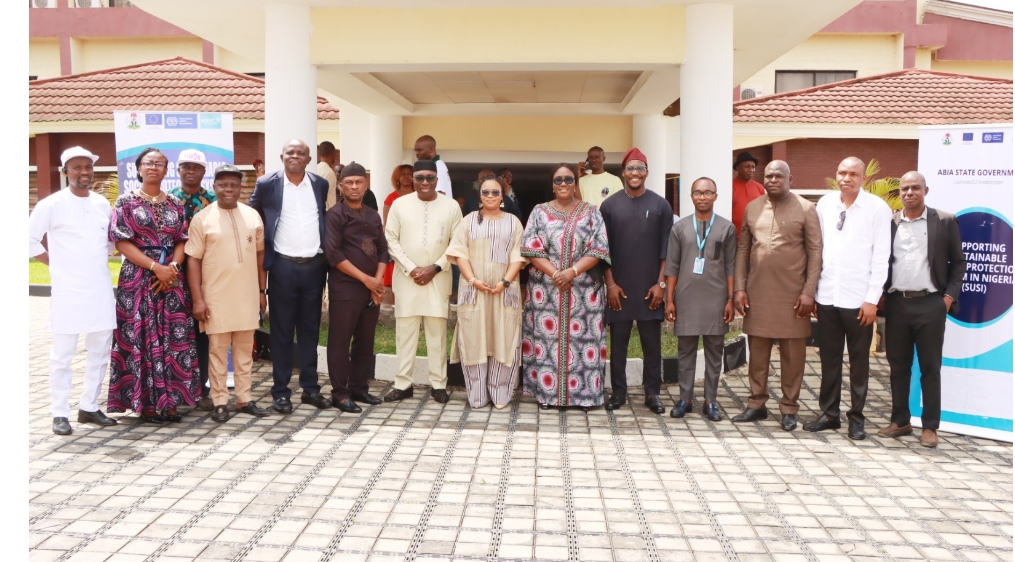
The initiative was highlighted at a Social Dialogue Engagement on Extending Social Protection to Workers in the Informal Economy held in Abia State, bringing together government officials, employers, workers’ representatives, informal sector associations and other stakeholders to examine ways of addressing the social security challenges facing informal sector workers.
In a statement issued in Abuja by Hannah Daniel, Head of Press and Public Relations, Federal Ministry of Labour and Employment, the engagement was described as part of ongoing efforts to strengthen social protection systems and promote decent working conditions across the country.
Abia State Governor, Dr Alex Otti, reaffirmed his administration’s commitment to policies that improve workers’ welfare, protect livelihoods and widen access to social security, particularly for vulnerable groups.
Otti, represented by the Commissioner for Poverty Alleviation, Hon. Ngozi Blessing Felix, observed that informal sector workers play a critical role in the state’s economy and should not be denied social protection because they operate outside conventional formal employment arrangements.
He maintained that access to healthcare, pensions, maternity benefits, occupational safety and other essential social security provisions should be recognised as fundamental rights associated with decent work and inclusive economic development.
The governor also emphasised the importance of social dialogue in developing responsive policies, assuring that Abia State was prepared to work with the Federal Government and the ILO to establish sustainable mechanisms for extending social protection to informal economy workers.
Earlier, the Minister of Labour and Employment, Dr Muhammad Maigari Dingyadi, represented by the Director of Social Security and Cooperative Development, Franca Adiekweh, described the expansion of social protection to the informal sector as a major priority of the Federal Government’s labour and employment agenda.
Dingyadi noted that although millions of Nigerians working in the informal economy contribute significantly to national productivity, economic growth and wealth creation, many remain vulnerable to economic shocks, workplace hazards, inadequate healthcare and the absence of reliable retirement benefits.
He said the Federal Government was working with the ILO and state governments to promote inclusive social protection systems through policy reforms, stakeholder consultations and effective implementation strategies.
According to him, social dialogue remains essential for building consensus, strengthening institutional trust and ensuring that workers, employers and government representatives participate actively in policy development.
The minister urged stakeholders to translate discussions into practical recommendations capable of expanding social security coverage, particularly for women, young people, artisans, traders, agricultural workers, domestic workers, transport operators and other informal sector practitioners.
He also commended the ILO for its technical expertise and continued support towards advancing decent work, social security and inclusive labour governance in Nigeria.
The ILO, in its contribution, reiterated its readiness to support federal and state governments in strengthening social protection frameworks and promoting decent work principles.
The organisation stressed that social protection plays a vital role in poverty reduction, social justice, improved workers’ welfare and the development of resilient economies.
It called for stronger institutional structures, sustainable funding arrangements, increased public awareness and better coordination among government agencies, employers’ associations and workers’ organisations to ensure effective coverage of informal sector workers.
Other stakeholders at the engagement also advocated the implementation of practical recommendations arising from the dialogue.
Among the key proposals were improved registration and data collection for informal economy workers, stronger social dialogue platforms, expanded access to affordable health insurance and pension schemes, and the development of social security arrangements suited to the peculiarities of informal employment.
Participants further stressed the need for public sensitisation, capacity building and closer engagement with trade unions, market associations, cooperatives and other informal sector groups to ensure that interventions reach the intended beneficiaries.
The Federal Ministry of Labour and Employment reiterated its commitment to promoting decent work, safeguarding workers’ rights and ensuring that all categories of Nigerian workers benefit from the country’s social protection agenda.


