ARCON: Marketing Communications Contributes N16.5 To Nigeria’s GDP For Every N1 Spent – Fadolapo
Oru Leonard
The Director-General of the Advertising Regulatory Council of Nigeria (ARCON), Dr. Olalekan Fadolapo, has highlighted the growing economic importance of the marketing communications industry, disclosing that every N1 spent on marketing communications generates an estimated N16.5 contribution to Nigeria’s Gross Domestic Product (GDP).
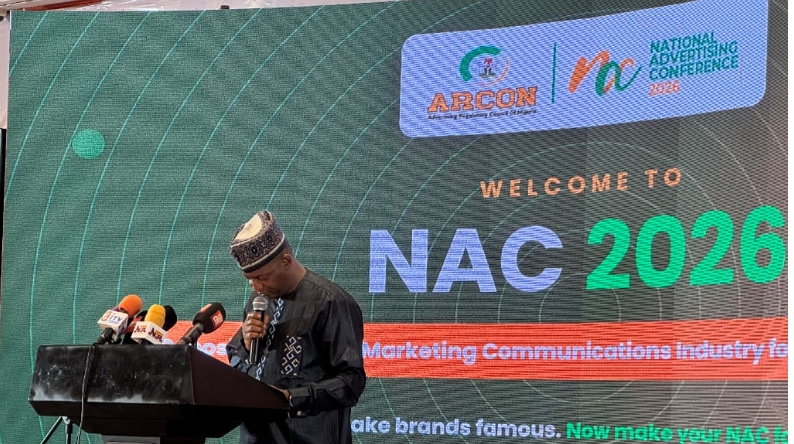
Fadolapo made this known while delivering his welcome address on the second day of the 2026 National Advertising Conference at the Abuja Continental Hotel, Abuja.
Citing a PricewaterhouseCoopers (PwC) study, the ARCON chief executive described the advertising and marketing communications sector as a major economic force with significant contributions to business growth, entrepreneurship, employment generation and the development of local brands.
He said the industry supports several sectors of the economy, including media, entertainment, technology, printing, production and the wider creative economy.
According to him, the impressive economic contribution underscores the need to reposition the industry through innovation, stronger professional standards, effective regulation and collaboration among stakeholders.
Fadolapo, who spoke on the conference theme, “Repositioning the Marketing Communications Industry for the Next Frontier,” said the industry must take advantage of emerging technologies, including artificial intelligence and digital platforms, without compromising professional expertise and creativity.
He maintained that technology should complement the capabilities of advertising professionals rather than replace their knowledge, judgment and understanding of human behaviour.
“The next frontier therefore demands that we do more than adapt; we must anticipate, innovate and lead,” he said.
The ARCON Director-General also used the occasion to reaffirm the council’s commitment to regulatory reforms aimed at strengthening accountability, transparency and competitiveness in the industry.
He identified the 45-day payment threshold, due diligence requirements, local content and talent development mandates, as well as the increasing functionality of the Advertising Offences Tribunal, as key measures designed to improve industry operations.
He explained that the reforms would promote responsible business practices, protect consumers, strengthen professional standards and create a more sustainable operating environment for practitioners.
However, Fadolapo stressed that the success of the reforms depended on the cooperation of industry stakeholders, noting that regulatory institutions alone could not achieve the desired transformation.
He also called for greater commitment to responsible advertising, truthful communication, consumer protection and respect for cultural values.
“Growth without responsibility cannot be considered true progress,” he stated.
On professional development, he urged practitioners to embrace continuous learning and acquire the competencies required to remain relevant in an increasingly competitive and technology-driven marketplace.
Fadolapo further called for an end to fragmentation within the industry, insisting that regulators, advertisers, agencies, media owners, technology companies and academics must work together to achieve sustainable growth.
“No single stakeholder can reposition the industry in isolation,” he said, emphasising the importance of sustained dialogue, mutual understanding and coordinated action.
He urged participants to use the conference to develop practical solutions to the challenges confronting the industry and identify new opportunities for growth.
The 2026 National Advertising Conference brings together key players in Nigeria’s marketing communications ecosystem to examine emerging trends, regulatory developments and strategies for positioning the industry for future opportunities.