Beyond the Ballot: NDC Tasks INEC on Transparency, Public Trust Ahead of 2027 Elections
Oru Leonard
The Nigeria Democratic Congress (NDC) has called on the Independent National Electoral Commission (INEC) to prioritise transparency, accountability and public confidence in its adoption of emerging technologies ahead of the 2027 general elections.
The party warned that the credibility of the forthcoming elections could be threatened if artificial intelligence (AI) and other digital technologies are deployed in critical electoral processes without adequate safeguards and mechanisms for independent verification.
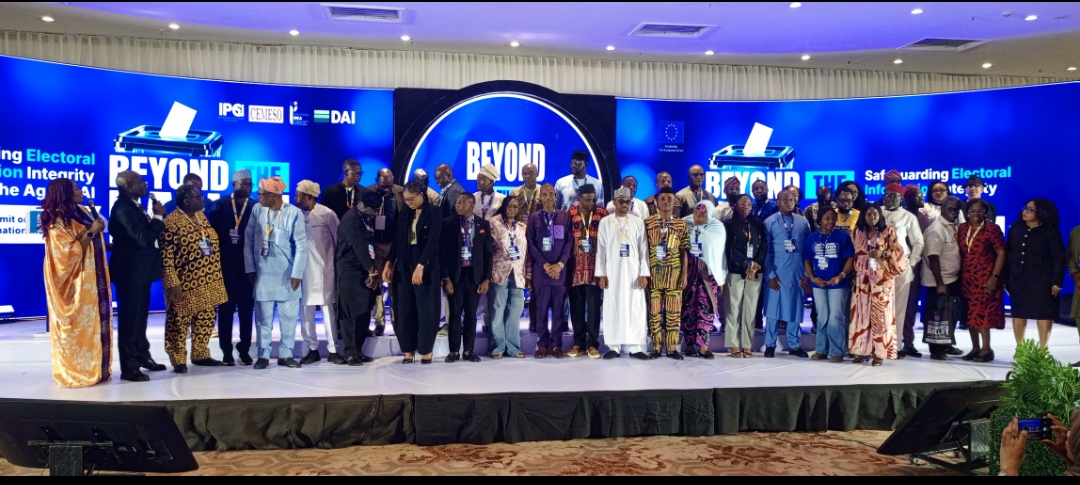
National Publicity Secretary of the NDC, Osa Director, made the position known at a national summit on electoral information integrity in the age of artificial intelligence.
The summit, themed, “Beyond the Ballot: Safeguarding Electoral Information Integrity in the Age of AI,” was organised by the International Press Centre (IPC) and the Centre for Media and Society (CEMESO), with support from the European Union (EU).
Director acknowledged that AI offers opportunities for improving electoral administration, particularly in identifying suspicious entries, cleaning voters’ registers and detecting irregularities.
However, he cautioned that allowing the technology to influence voting and election results collation without sufficient transparency could expose the electoral process to manipulation.
He argued that technological innovation should strengthen democratic institutions rather than create new vulnerabilities capable of eroding public confidence in elections.
The NDC spokesman also urged INEC to draw lessons from the technological difficulties associated with the 2023 general elections, stressing that any innovation introduced ahead of 2027 must be tested, reliable, transparent and open to public scrutiny.
Beyond technology, Director challenged the electoral commission to demonstrate its constitutional independence through its decisions and conduct.
He maintained that public confidence in INEC would depend not merely on its statutory mandate but on its ability to conduct elections impartially and resist undue external influence.
He also called for stronger collaboration among political parties, media organisations, civil society groups and electoral stakeholders to tackle the growing threat of AI-generated misinformation, fabricated audio and video materials, and other forms of digital manipulation.
Participants at the summit examined the implications of artificial intelligence, foreign information manipulation and disinformation for Nigeria’s democratic process.
Discussions also focused on strengthening fact-checking institutions, promoting responsible media practices, improving digital literacy and developing collaborative approaches to protect electoral information.
The gathering underscored the need for Nigeria to build a more resilient information environment ahead of the 2027 elections, with stakeholders emphasising that credible elections require not only reliable technology but also transparency, institutional integrity and public trust.