Abdulaziz Secures Fresh Three-Year Term as WAPP Board Chairman, Calls for Stronger Regional Power Market
Oru Leonard
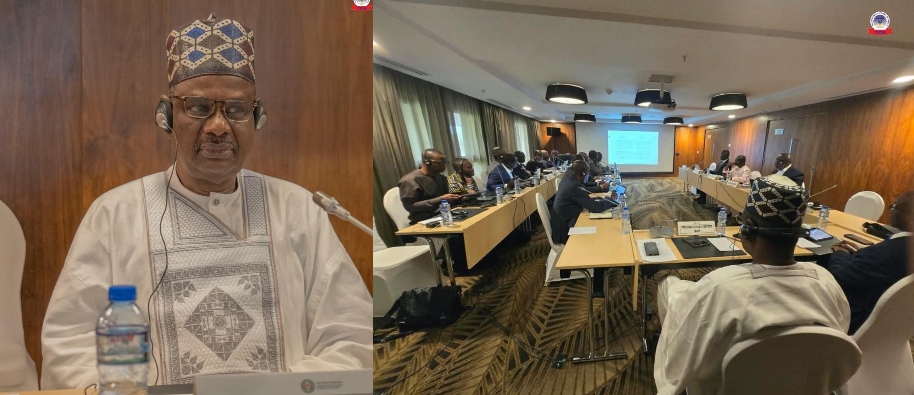
Engr. Sule Ahmed Abdulaziz has been unanimously re-elected Chairman of the Executive Board of the West African Power Pool (WAPP) for another three-year term, following the organisation’s 68th Executive Board Meeting held in Lomé on October 8 and 9, 2026.
Abdulaziz, who secured the confidence of board members for another tenure, pledged to sustain efforts towards strengthening regional electricity cooperation, improving institutional governance and advancing the development of an integrated and competitive electricity market across West Africa.
Addressing members at the meeting, the WAPP Chairman expressed appreciation for the renewed confidence and called on member utilities to demonstrate greater commitment to the organisation’s objectives.
He emphasised that decisions taken at Executive Board meetings must translate into practical measures that strengthen WAPP’s capacity to address the region’s growing electricity needs.
Abdulaziz also stressed the importance of collective responsibility in developing a sustainable regional power market, noting that effective cooperation among member utilities remains essential to achieving reliable electricity supply and improving cross-border power exchanges.
The chairman recalled that the 67th Executive Board Meeting had approved key principles for the gradual establishment of the Independent System and Market Operator (ISMO), while maintaining operational continuity through the transitional role of the WAPP Information and Coordination Centre (ICC).
He said the priority now was to ensure that the approved measures were implemented within a robust legal, institutional and financial framework that safeguards the interests of WAPP and its member utilities.
According to him, a well-structured transition would strengthen institutional independence, improve operational efficiency and provide a solid foundation for the long-term development of the regional electricity market.
On financing, Abdulaziz described statutory contributions from member utilities as indispensable to WAPP’s institutional autonomy and operational capacity.
“Statutory contributions are not a formality; they are the basis of WAPP’s autonomy and capacity to act,” he said.
He urged member utilities to fulfil their financial obligations promptly, while encouraging the Secretariat to sustain cost-cutting measures without compromising essential operations.
Abdulaziz identified network synchronisation and the launch of the regional electricity market as two critical priorities requiring sustained technical and institutional attention.
He described network synchronisation as a significant technical milestone but cautioned that its benefits would depend on coordinated system operations, appropriate security arrangements and adequate market preparedness among participating utilities and stakeholders.
He further observed that the regional electricity market could only achieve its full potential if supported by transparent rules, reliable data, credible financial mechanisms and independent, effective governance.
The chairman maintained that these measures would help build confidence among market participants and strengthen the reliability and competitiveness of electricity trading across West Africa.
Earlier, the Secretary General of WAPP and Secretary of the Executive Board, Mr. Abdoulaye Dia, outlined progress recorded since the organisation’s 67th meeting.
Dia said WAPP had continued implementing guidelines for institutional strengthening and the progressive operationalisation of the ISMO.
He explained that the process included functional and accounting unbundling, alongside an orderly transition designed to enable the ICC to maintain operational continuity during Phase Two of the Regional Electricity Market.
According to him, the institution’s progress and growing visibility have attracted new partnerships, reinforcing its commitment to developing an integrated, reliable and competitive regional electricity system.
Dia reaffirmed the Secretariat’s determination to advance preparations for the launch of the second phase of the regional market, scheduled for early 2027.
He also highlighted the need for member utilities to settle outstanding contributions and support sound financial management, noting that consistent funding, prudent administration and collective discipline were essential to WAPP’s credibility and effective service delivery.
The meeting also considered a restructuring study on the operationalisation of the ISMO, which is intended to align the institution with international best practices and mitigate the risk of political interference as the regional electricity market evolves.
Among other decisions, the Board adopted the Charter of the Forum for Women in Energy in West Africa and a Memorandum of Understanding with the Millennium Challenge Account Côte d’Ivoire.
The meeting further welcomed new representatives of member utilities to the Executive Board.
They include Mr. Lawrent Tossou, the new Managing Director of Société Béninoise d’Énergie Électrique (SBEE), representing the Republic of Benin; Mr. Amidou Traore, the new Director General of CI-ENERGIES; and Mr. Julien Sagna, representing Société de Gestion de l’Énergie de Manantali (SOGEM).
The Board also reviewed applications from four electricity-sector organisations seeking membership of the regional power pool.
The applicants are Konexa of Nigeria; Société de Gestion de l’Énergie de Sambangalou et du Réseau de Transport d’Électricité (SOGESART) of Senegal; Société de Gestion de l’Énergie des Ouvrages du Haut Bassin du Fleuve Sénégal (SOGEOH); and HOLDEN–Niger SARL, an independent power producer from the Republic of Niger.
The applications are expected to be submitted for ratification at the WAPP General Assembly scheduled to hold before the end of 2026.
Abdulaziz’s re-election comes at a critical stage in WAPP’s efforts to strengthen regional electricity cooperation, advance institutional reforms and establish a more efficient and competitive electricity market capable of supporting West Africa’s energy development.