Beyond Rhetoric: SEDC takes giant stride to restore South East Agro-Economy
By Emmanuel Nzomiwu
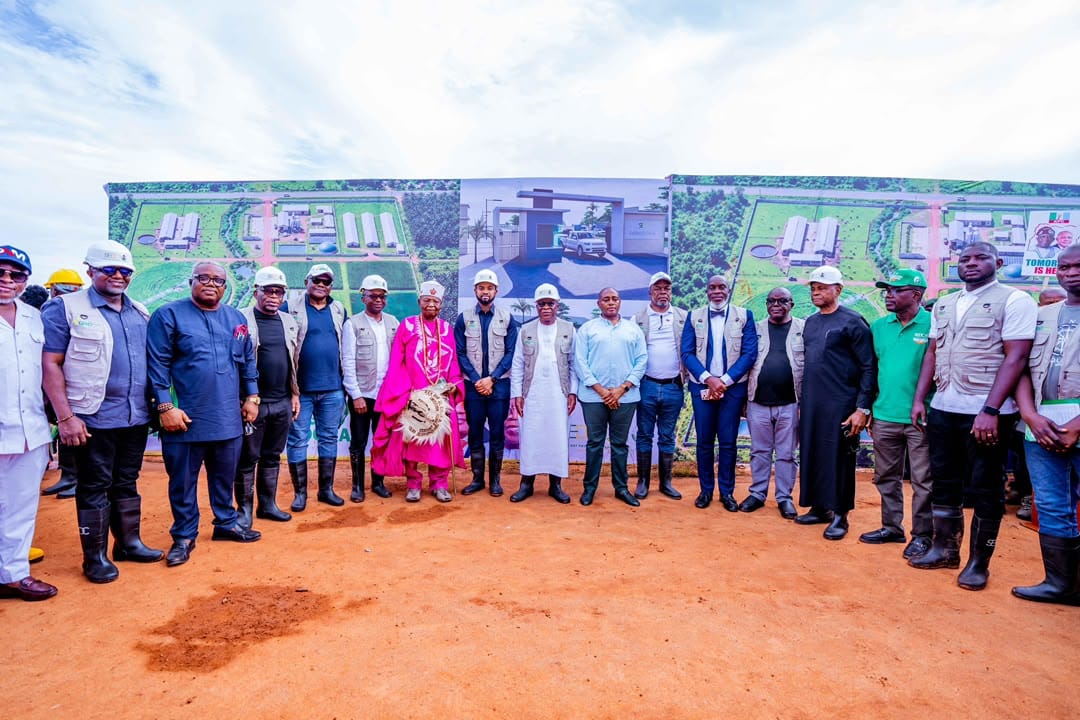
As legendary Chinese philosopher Lao Tzu famously said, “The journey of a thousand miles begins with a single step”. On Tuesday, September 22, 2026, the South East Development Commission (SEDC) took a giant stride towards restoring Eastern Nigeria’s Agro-Economy, with the flag-off of a 200-hectare pilot integrated model farm at Nomeh Unateze in Nkanu East Local Government Area (LGA) of Enugu State. The project is part of the South East Agro-Development Programme (SEADP) of the commission.
The SEADP is a major component of the 25-year roadmap of the commission to transform the South East region through investments, public-private sector partnerships and innovative financing.
The SEDC agro-development programme, the first regional, multi-state, commission-led integrated agro-development programme of this scale in Eastern Nigeria since the end of the Nigerian civil war in 1970, aims at boosting agricultural productivity, strengthening food security and stimulating agro-industrialisation.
The flag-off of the integrated model farm at Nomeh Unateze, marks the roll out of the programme across the South East. Two things make this event so remarkable for the predominantly Igbo Eastern Nigeria.
One, since the civil war ended in 1970, the eastern part of the country has been unable to maximise its vast agricultural potential, which the administration of Dr. Michael Okpara harnessed in the early 1960s, to accelerate economic growth in the former Eastern Region. Under the premiership of Dr. M. I Okpara, the Eastern Region, comprising the current South East and South South states, ranked among the fastest growing economies in the world, until the setback of the civil war.
Secondly, post-war South East has been dependent on other regions for food and livestock needs. Even the few surviving livestock farmers in South-East Nigeria rely on other regions for animal feed. Hence, the target of SEDC is to replicate what Okpara did in the 1960s, by rebuilding the capacity of the South East region in agriculture and agro-industries, and by so doing, restore the lost agro-economy of the region.
In this regard, the commission returned to the archives to retrieve Okpara’s economic blueprint, cleaned it up and invited experts to bring the document up to date, before projecting into the future. Looking at the trajectory of the region, the flag-off of the integrated model farm at Nomeh Unateze by SEDC represents a milestone in the journey towards the restoration of the agro-economy of the South-East.
Ahead of the flag-off, SEDC signed a Memorandum of Understanding (MOU) with the Enugu State Government. A team from the commission led by the Executive Director, Natural Resources, Agriculture and Rural Development (NRARD), Dr Cliff Ogbede, later conducted stakeholder engagements at the community level and site inspections, to secure community support and ensure that the chosen locations were suitable for the mechanised agricultural programme.
In an address at the flag-off ceremony, the SEDC Managing Director (MD), Mark Okoye, listed the objectives of the programme, which according to him, includes making South East self-sufficient in food production, creating productive jobs and building agricultural value chain. The programme, he said, was designed to transform agriculture in the region from predominantly small-scale subsistence activity into modern commercially viable enterprise.
The MD explained that the commission was building much more than a farm in Nomeh, beginning with approximately 200 hectares of land, with the site designed as an integrated agricultural development facility, bringing together diary, poultry, fisheries and feed production, greenhouses, processing, mechanisation and practical agricultural training.
Quoting him: “The idea is simple. Production should connect processing. Training should connect employment and enterprise. Farmers should connect to markets. Training should connect to employment and enterprise.”
Okoye expressed optimism that the investment inside the 200 hectares should create opportunities well beyond the site, while farmers in the communities, through the out-grower programme, have opportunities to participate in the value chain, receive technical support and connect their production to the markets. Describing the pilot site in Enugu State as the starting point, Okoye restated the ambition of SEDC to establish agricultural interventions across the South East, working with five state governments, communities, farmers, development institutions and the private sector.
According to him, Nomeh is an opportunity to demonstrate the model, learn from it, improve it and replicate what works. He declared that the South East must become a much more significant contributor to Nigeria’s food security, which President Bola Ahmed Tinubu has made a national priority, with the Federal Government’s agricultural agenda emphasizing on mechanization, irrigation, processing, stronger agricultural value chains and improved productivity for small holder farmers.
“For us at SEDC, this is where our regional mandate meets that national objective,” the MD said. He concluded his address by reminding the host community that the project cannot succeed without their support, assuring that the engagement of the commission with them will continue beyond the flag-off ceremony.
Also speaking, the Executive Director NRARD, Dr. Cliff Ogbede, reiterated SEDC’s commitment to reviving the agro-industrial revolution that placed the defunct Eastern Region as the fastest growing economy between 1954 and 1966, courtesy of the late Dr. Michael Okpara’s visionary leadership.
Making remarks, the Honourable Minister of Regional Development, Abubakar Momoh, described the project as a critical stride towards strengthening food security in Nigeria. The Minister noted that the initiative aligns with the Federal Government’s eight-point Renewed Hope Agenda. While commending the SEDC for transitioning vision into tangible field implementation, he urged the host community to take full ownership of the project to guarantee its long-term protection, operation and success.
While officially flagging-off the pilot integrated model farm, Enugu State Governor, Peter Mbah, who was represented by the Deputy Governor, Ifeanyi Ossai, described the project as a testimony of what could be achieved by strategic collaboration between the South East states and the commission, especially at this time when food production and economic diversification have become increasingly important. The agro-development programme, according to Mbah, aligns perfectly with the state government’s decision to build 200-hectare modern farm estates in 260 wards of the state, which connects with other government projects and the commitment to eradicate poverty in the state by 2031.
Speaking on behalf of the host community, the President General of Nomeh Unateze, Dr. Chukwudi Anyianuka described the project as a restoration of the glory of the community. Anyianuka assured of the community’s total support and ownership of the project.
The Chairman of SEDC Dr. Emeka Wogu, and the Secretary to the State Government, Professor Chidiebere Onyia, were also among the dignitaries at the historic event. The National Agricultural land Development Agency (NALDA) and the Nigerian Incentive-Based Risk Sharing System for Agricultural Lending (NIRSAL) are supporting the SEDC agro-mechanisation programme. Several commercial and micro-finance banks have equally expressed willingness to support the initiative.
To conclude, Enugu has taken the lead in the South East Agricultural rebirth driven by SEDC. All eyes are on the other South East states of Abia, Anambra, Ebonyi and Imo, to know the next state where the progressive ship of SEDC will berth.
Nzomiwu, a public affairs analyst, writes from Enugu.