From Pan-Africanism To Meta-Africanism: Youths Challenge Africa To Build Its Future
City Correspondent
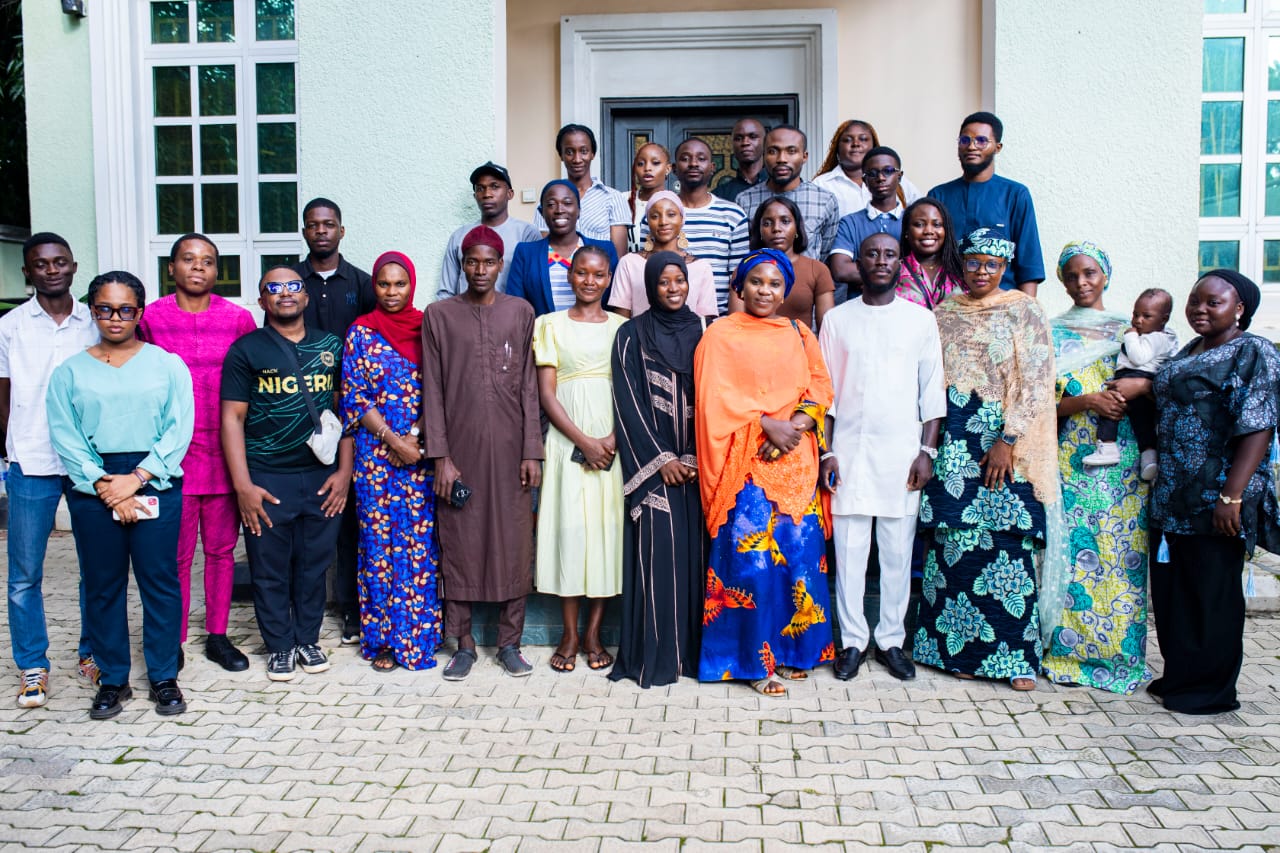
The call for Africans to stop waiting for the continent they want and begin building it gained traction among young Nigerians in Abuja last week, as YouthHubAfrica convened a satellite watch party to connect them to the inaugural Africa Mindset Reset Forum in Kigali, Rwanda.
The two-day forum, held at the Kigali Convention Centre on August 25 and 26, brought together African leaders, policymakers, business executives, academics and young emerging leaders to confront a question that has long shaped the continent’s development debate: what must Africans change about the way they think, lead and build if they are to create the Africa they desire?
Held under the theme, “From Pan-Africanism to Meta-Africanism,” the forum was convened by the African School of Governance (ASG), co-founded by Rwandan President Paul Kagame and former Ethiopian Prime Minister Hailemariam Desalegn.
While conversations unfolded in Kigali, YouthHubAfrica created a parallel space in Abuja where young Nigerians could watch the proceedings, engage with the speakers and reflect on how the ideas emerging from the forum could translate into action at home.
Facilitated by Nkpoikana-Abasi Aniefiok, Monitoring, Evaluation, Research, and Learning (MERL) Officer, the Abuja satellite gathering became an extension of the wider conversation, allowing participants to interrogate issues around African identity, leadership, governance, economic ownership, regional integration and the responsibility of young people in shaping the continent’s future.
At the heart of the Kigali conversation was the argument that Africa must move beyond the historic Pan-African ideal of solidarity and liberation towards what the organisers describe as Meta-Africanism a mindset centred on ownership, capability, institution-building, value creation and disciplined execution.
The African School of Governance has framed the transition as a movement from solidarity to systems, resistance to value, identity to capability and aspiration to execution.
For participants in Abuja, the proposition carried a practical implication: Africa’s future cannot be built solely by governments or external partners. It must also be shaped by citizens who are prepared to assume responsibility for the systems, economies and institutions they want to see.
That challenge was powerfully captured by Brian Kagoro, Managing Director of Programmes at Open Society Foundations, whose intervention during a session on making markets work across Africa’s borders urged Africans to rethink the meaning of borders, informality and economic integration.
Kagoro argued for seeing African borders not merely as barriers but as potential marketplaces, while challenging the tendency to treat the informal economy simply as a problem rather than a source of opportunity.
He also identified four pillars for Meta-Africanism: Skill, Network, Networth and Ubuntu placing human capability, relationships, economic power and collective responsibility at the centre of Africa’s transformation.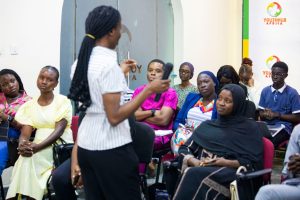
His message to the continent’s younger generation was summed up in a striking observation: “We are not Africa’s children, we are Africa’s parents, because the Africa we want has not yet been born.”
The statement resonated with the Abuja audience because it placed responsibility squarely on the present generation rather than on an undefined future.
YouthHubAfrica Executive Director, Rotimi Olawale, who participated in the Kigali dialogue on “Making Markets Work Across Africa’s Borders,” reinforced the youth dimension of the conversation, pointing out that the informal economy is not only rural but also urban and largely young.
He drew attention to the gap between policies and the realities confronting young entrepreneurs and innovators, arguing for systems that recognise where young Africans are already creating businesses, livelihoods and solutions.
His intervention also connected the forum’s broader message to Nigeria’s “Japa” phenomenon, with the argument that African countries must create conditions that give young people reasons to remain, participate and invest their skills in the continent’s development.
The question of ownership was equally prominent during the panel, “Who really owns Africa’s resources, and who owns its people’s future?”, which featured former Nigerian President Olusegun Obasanjo’s daughter alongside Samantha Muhwezi Kassami, Dr Dorothy Nyambi, Dr Mahmud Hassan, Diana Paul Chando and Agana Teni.
Mahmud Hassan, Chief Economist of Dangote Group of Industries, emphasised the importance of building institutions capable of surviving the generations that establish them.
His intervention challenged the assumption that simply creating institutions amounts to development, stressing instead the need for systems that can sustain, adapt and deliver long after their founders have left the scene.
The same emphasis on building African capacity emerged from Zouera Youssoufou, CEO of Aliko Dangote Foundation, who spoke about the importance of converting capital into capacity by strengthening local institutions and supporting African-led solutions to African problems.
Her contribution reinforced a central proposition of the forum: Africa must increasingly develop the confidence and capacity to finance, own and scale solutions on its own terms.
The leadership conversation also featured President Paul Kagame, who urged Africans, particularly young people, to take ownership of the continent’s future rather than allow circumstances to define what is possible.
Former South African President Thabo Mbeki, in his opening keynote on “From Pan-Africanism to Meta-Africanism,” examined the need for a mindset shift against the backdrop of changing global geopolitics and declining traditional sources of development finance.
The presidential-level conversation further featured Hailemariam Desalegn and Ghana’s Vice President, Jane Naana Opoku-Agyemang, who represented President John Dramani Mahama.
Across the different sessions, the message remained consistent: Africa’s challenge is not simply a shortage of resources, talent or ideas, but the failure to consistently convert those assets into effective institutions, productive economies and sustainable outcomes.
Caren Wakoli, Founder and Executive Director of Emerging Leaders Foundation-Africa, Kenya, argued that Africa’s next chapter would require strong institutions capable of being stewarded by successive generations of leaders committed to character, courage and service.
She also called for a shift from scarcity to abundance and from dependence to interdependence, reinforcing the need for Africans to see themselves not merely as beneficiaries of development but as active participants in creating it.
For young Nigerians at the Abuja watch party, the discussions provided an opportunity to connect the continent-wide conversation to their own realities.
Faruk Rabiu, one of the participants, described the experience as a reminder that Africa’s transformation requires more than policies, institutions and resources. He stressed the importance of changing how Africans think, lead and perceive what is possible, while encouraging young people to build solutions, challenge ineffective systems and participate more actively in governance and community development.
The Abuja gathering therefore became more than a viewing centre. It served as a local platform for young Nigerians to interrogate the ideas emerging from Kigali and consider what ownership of Africa’s future should look like in their own communities.
That connection between Kigali and Abuja was itself significant.
The Africa Mindset Reset Forum was designed to challenge seven prevailing shifts: from fatalism to growth, isolation to openness, cynicism to possibility, dependency to initiative, scarcity to abundance, victimhood to ownership and low standards to excellence.
But perhaps the most important question emerging from the forum is what happens after the speeches, panels and conversations end.
For Africa’s young population, the transition from Pan-Africanism to Meta-Africanism cannot remain an attractive phrase or another conference theme. It must be demonstrated through the businesses created, institutions strengthened, technologies developed, communities transformed and public systems held accountable.
That is where the real significance of the Abuja watch party lies.
By bringing the Kigali conversation into a Nigerian youth space, YouthHubAfrica placed young people not at the margins of the debate but within it as participants, questioners and potential builders of the Africa being imagined.
The continent, as Kagoro reminded participants, has not yet become the Africa many Africans want.
The challenge now is whether the generation calling for change will remain spectators to that unfinished project or accept the responsibility of becoming its builders.