THE SILVER VOTE: WHY ELDER JUSTICE MUST ENTER NIGERIA’S 2027 POLITICS
By Omini Oden
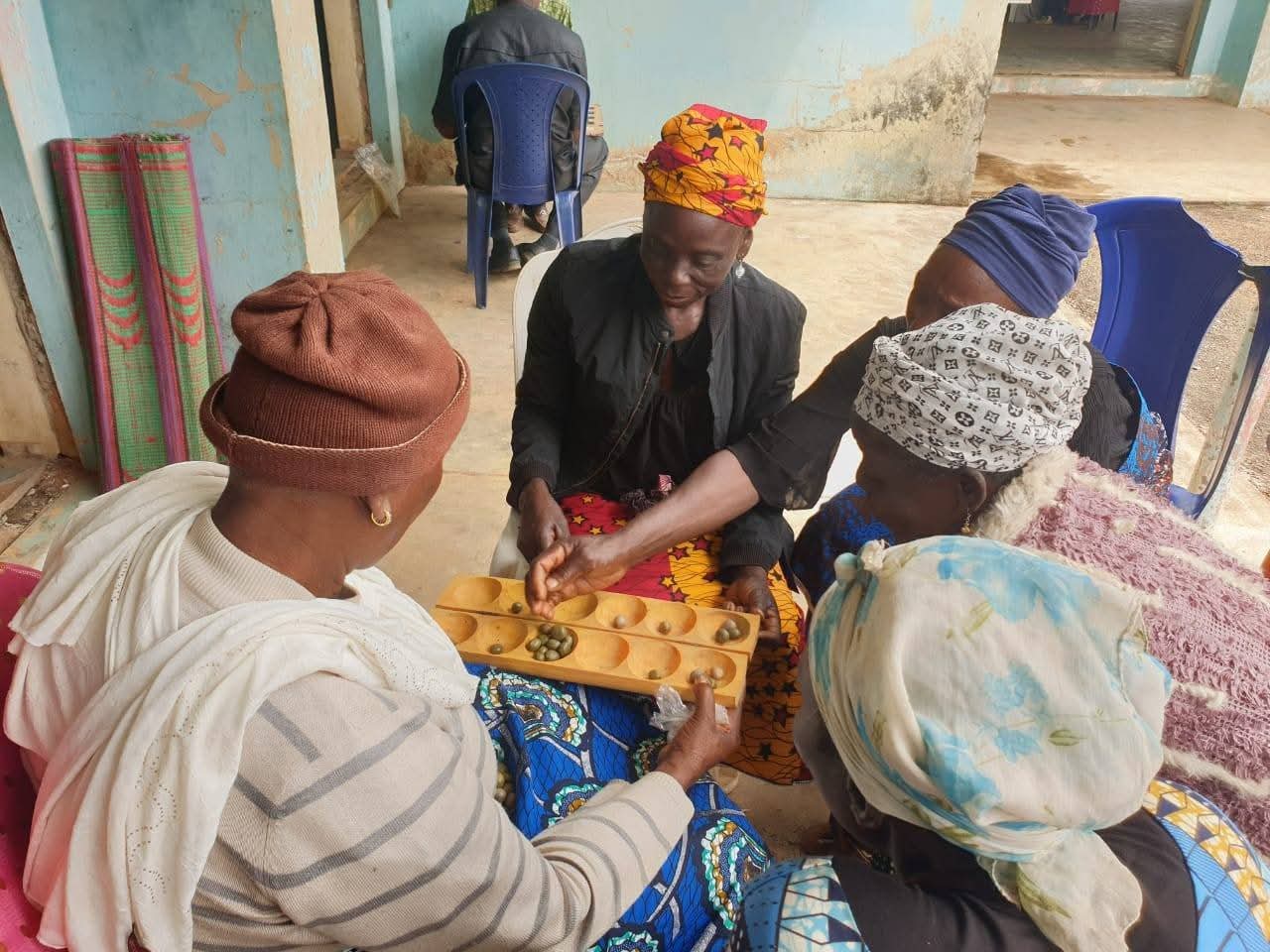
There is something profoundly wrong with a democracy that remembers its older citizens when it needs their votes but forgets them when it is time to design the system in which those votes are cast. For too long, Nigeria has approached the question of Older Persons from the language of pity, welfare and palliatives. We talk about taking care of the elderly, supporting senior citizens and giving them interventions as though growing old were a condition for which citizens must depend on the generosity of government. That narrative should change.
Older persons are not beneficiaries of democracy. They are shareholders in it and as Nigeria approaches the 2027 General Elections, the time has come to place “Elder Justice” at the heart of the electoral conversation.
The National Senior Citizens Centre (NSCC), established under the National Senior Citizens Centre Act 2017, is the Federal Government’s focal institution on ageing and older persons. Its mandate is explicitly concerned with dignity, independence, security, care and social inclusion. Its structure now includes an Elder Justice Stakeholder Engagement and Community Relations function initiated by its pioneer Director General, Dr Emem Omokaro.
This is important because Elder Justice changes the question. It asks not only, What can government do for old people?
What does justice require of society for the ageing demograpy?From palliative politics to rights-based politics
An older Nigerian who goes to a polling unit is not going there to collect a favour from a political party. He is there to exercise a right. She is exercising a right. The pensioner, the retired teacher, the farmer, the artisan, the civil servant, the grandmother who raised a family and the community elder who spent decades contributing to society are all citizens whose political rights remain intact.
Age does not diminish citizenship, yet during electioneering, older persons are too often reduced to a mobilization bloc. Politicians court them with campaign gifts, food items and promises, assemble them for rallies and photograph themselves among them. Then the election ends. The cameras disappear. The political engagement disappears. The older person disappears from the policy conversation.
That is not inclusion. It is electoral opportunism. The 2027 General Elections should therefore mark a decisive departure from the politics of tokenism to the politics of rights, representation, dignity and accountability. The Silver Vote must become a political constituency. Nigeria’s older population is growing and is verysignificant. That demographic reality should have political consequences.
Older Nigerians constitute a constituency with legitimate interests and legitimate political power. The emerging idea of the “Silver Vote”, which the National Senior Citizens Centre and other stakeholders like the Dave Omokaro Foundation and the Stakeholders Consultative Forum on Ageing has sustained the advocacy within the conversation on electoral reform, and deserves serious national attention.
The Older Persons constitute the Silver Economy and the Silver Vote should not mean creating a separate electorate for older people.It means recognizing that older voters have particular electoral access requirements and policy interests that must be deliberately accommodated within Nigeria’s democratic architecture. If political parties can have elaborate youth, women and disability agendas, there is no reason ageing should remain a footnote.
Every serious political party preparing for the 2027 General Elections should be asked; What is your policy for the 60-plus Nigerian? Not a paragraph, Not a campaign slogan but an intentional policy.
The real test begins at the polling unit. Imagine an 80-year-old voter arriving at a polling station without seating, facing a long queue under the sun, struggling over rough terrain or waiting for hours before being allowed to vote. What exactly are we saying to that citizen? That his or her vote matters but only after enduring indignity? That is unacceptable. Priority voting for older persons must become a consistently implemented electoral standard, not an informal courtesy. Polling units should be age-sensitive and accessible. There should be appropriate seating, orderly queues, clear signage and trained officials capable of assisting older voters without compromising the secrecy and independence of the ballot.
Elder Justice must become visible at the polling unit. The Independent National Electoral Commission, INEC must institutionalize age-inclusive elections. INEC must lead this reform. Being the election umpire, it should, ahead of 2027;
1. Develop a specific Age-Inclusive Electoral Framework.Older persons should be explicitly incorporated into voter-registration, voter-education, polling and post-election accessibility planning.
2. Institutionalize priority voting for older persons. Priority should not depend on the personality of an individual presiding officer at a polling unit.
3. Map accessibility challenges. Polling units requiring stairs, difficult terrain or other barriers should be reviewed and where possible, relocated or adapted.
4. Train election officials in Elder Justice. Officials should understand age-related vulnerabilities, communication needs and appropriate assistance.
5. Produce age-friendly voter education. Electoral information should be available not only online but through radio, television, community meetings, print and local-language communication.
6. Establish an Older Voters’ Electoral Help Desk. Complaints involving discrimination, intimidation, denial of priority access or other age-related barriers should have a clear reporting and response mechanism.
An older citizen should never be forced to choose between dignity and democracy.
Political parties must earn the Silver Vote. Political parties also have responsibilities. The first is to stop treating older persons as an electoral crowd and begin treating them as a policy constituency.
Every party contesting the 2027 elections should publish a National Ageing Policy Agenda covering;
* pensions and retirement security
* affordable and accessible healthcare
* social protection
* elder abuse and neglect
* housing and age-friendly communities
* transportation
* access to justice
* digital inclusion
* financial protection
* continued economic participation
* and representation of older persons in governance.
Political should also deliberately include older persons in policy formulation, campaign structures and candidate selection processes.
Older persons should not only be represented as people to be governed; they should be represented among the people who govern. Experience is not political obsolescence.
The NSCC has an opportunity to make Elder Justice one of the defining national policy conversations of this electoral cycle. NSCC should convene a National Elder Justice and Electoral Inclusion Forum involving INEC, political parties, the National Assembly, Civil Society, Security Agencies, Media Organizations, Development Partners and Representative Bodies of Older Persons. The forum should ignite and give teeth to the Elder Justice Electoral Charter already produced by the National Senior Citizens Centre for the 2027 General Elections.
The Elder Justice Charter by the National Senior Citizens Centre established minimum standards for the treatment and participation of older persons throughout the electoral cycle, from registration to campaigns, voting, collation and post-election engagement. NSCC should develop an Older Persons Electoral Rights Observatory, working with civil society and relevant institutions to document barriers, violations, exclusion and emerging good practices. Most importantly, the NSCC should ensure that the voice of older Nigerians remains in the national conversation before, during and after elections.
The National Assembly also has work to do. Nigeria needs a stronger legislative framework that translates the broad principle of protecting older persons into enforceable rights. Parliament should examine the electoral laws and relevant legislation to determine whether existing provisions adequately guarantee age-sensitive access to elections. The National Assembly should consider statutory provisions for;
* priority access for older voters
* accessible polling environments
* protection against age-based discrimination during elections
* accessible electoral information
* mechanisms for reporting electoral violations against older persons
* and mandatory consideration of ageing issues in national social and electoral policy
The issue is not to give older persons an electoral advantage. It is to remove barriers that prevent them from enjoying an equal electoral right. That is the difference between privilege and justice.
The Nigerian media has a significant role to play. Election coverage routinely focuses on youth, women, ethnic blocs, party structures, swing states, defections and political calculations. How often do we ask candidates about ageing?
How often does a television debate ask;
What is your plan for older Nigerians? How often does an election programme examine whether polling units are accessible to elderly voters? How often do we hear older citizens themselves interrogate candidates? The media should place ageing and Elder Justice on the election agenda and give older Nigerians a platform to question those seeking their votes.
Technology must not become another wall. As artificial intelligence, digital platforms, social media and data-driven campaigning reshape Nigerian elections, we must guard against a new form of exclusion; digital ageism. The older person who is not active on Facebook, WhatsApp, TikTok, X and LinkedIn remains a citizen. The citizen who cannot navigate a sophisticated digital platform remains entitled to electoral information. Technology should supplement democratic participation not determine who gets to participate.
Radio remains important. Television remains important. Community engagement remains important. Human contact remains important. A smart election is not necessarily one with more technology. It is one in which more citizens can participate meaningfully.
The 2027 General Election should force us to answer a deeper question;
What kind of democracy are we building for the people who built Nigeria? If we see older persons only as vulnerable people requiring charity, we will continue to produce palliative solutions. If we see them as citizens with rights, we will build institutions. If we see them as political stakeholders, we will hear their voices. If we see them through the lens of Elder Justice, we will ask whether our laws, policies and institutions treat them fairly. If we see them as equal citizens, we will understand why their place at the polling unit cannot be negotiable.
The older Nigerian does not need a politician to give him a vote, he already has one. She does not need permission to participate, she already has the right. What is required is for the Nigerian state, political parties and electoral institutions to remove the barriers that make the exercise of that right unnecessarily difficult. That is the essence of Elder Justice.
The greatest mistake would be to make Elder Justice an election slogan. It must become a permanent feature of governance. Nigeria needs an ageing agenda that survives elections, administrations and political parties. The National Senior Citizens Centre should provide the institutional leadership. INEC can provide the electoral architecture. The National Assembly can provide the legislative foundation. Political parties can provide the policy commitments. The media can provide the scrutiny. Older Nigerians themselves must provide the voice.
The ultimate objective is not to create a privileged class of voters. It is to create a more just democracy.
Democracy is not truly inclusive if some citizens can vote only by enduring indignity. A society cannot claim to respect its elders while making them invisible in the very political system through which their future is decided. The Silver Vote is not a favour to older Nigerians, it is the expression of their citizenship. Elder Justice demands that Nigeria’s democracy recognise it.
Omini Oden ACPA, FCAI
News Directorate, NTA Headquarters, Development Journalist, writes from Abuja