Tinubu’s Appointment of State Officials as Campaign Operatives, Where Does Governance End and Politics Begin?
Oru Leonard
The appointment of serving ministers and heads of government agencies into the All Progressives Congress (APC) Presidential Campaign Council for the 2027 elections raises an important question that Nigerians should not shy away from asking: Can public officials simultaneously serve the interests of the state and actively participate in partisan electoral campaigns without compromising the neutrality of the state apparatus?
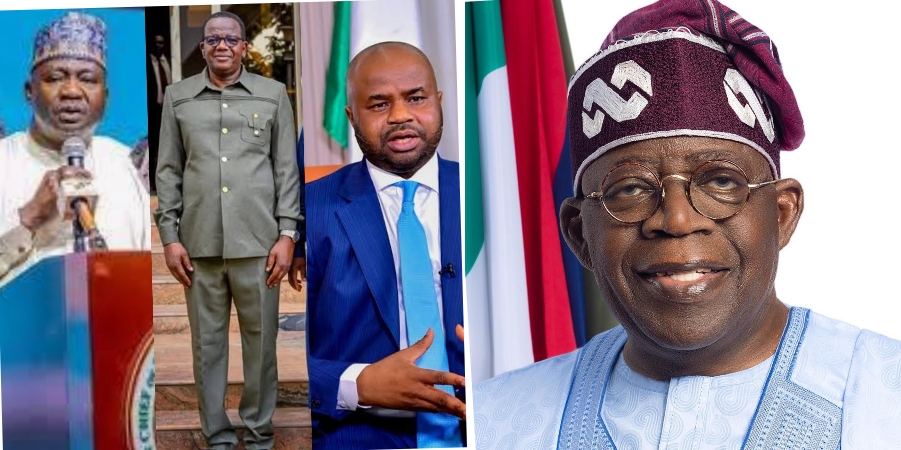
The latest appointment of the Minister of Defence, General Christopher Gwabin Musa (Rtd), as Secretary I, The Minister of State Defence, Honourable Bello Matawalle, Deputy Director, Security and Intelligence 1 and the Chairman of the National Revenue Service, Dr Zacch Adedeji as Deputy Director, of Fundraising among others has brought the debate into sharper focus.
General Musa, in accepting the appointment, acknowledged the distinction between his political assignment and his constitutional responsibility, stressing that national security remains his “highest imperative.” That assurance is important. However, the issue goes beyond the personal integrity or professionalism of the individual involved.
A minister is appointed to serve the Federal Republic of Nigeria, not merely the political party that produced the government. Similarly, the head of a government agency is expected to administer public resources and implement public policy in the national interest.
When such officials become prominent campaign actors, the public is entitled to ask whether the machinery, resources and authority of government could be perceived as being deployed in favour of a political party.
Nigeria’s democracy has repeatedly struggled with the relationship between the governing party and the machinery of government.
There is nothing inherently wrong with public officials having political affiliations. Ministers and political appointees are, by their nature, connected to the political process. The concern arises when their official positions and partisan responsibilities become so intertwined that the distinction between government business and campaign business becomes blurred.
A minister who attends a campaign meeting does so as a political actor. But when that same individual returns to office the following morning, he or she exercises powers derived from the Nigerian state.
For example, government facilities, official vehicles, security personnel, public communication platforms, administrative time and other resources must never become instruments of partisan campaigning.
The danger is not only actual abuse. The perception of abuse can itself weaken public confidence in government institutions.
The involvement of the Defence Minister deserves special attention.
National security institutions must enjoy the confidence of Nigerians regardless of political affiliation. The armed forces are constitutionally expected to remain professional and non-partisan.
Although the Minister of Defence is a political appointee rather than a serving military officer, the office is central to the formulation and supervision of national defence policy.
Consequently, placing the Defence Minister in a senior position within a partisan presidential campaign structure could create unnecessary questions about the separation between the nation’s security architecture and electoral politics.
The same principle should apply to officials overseeing elections, law enforcement, public finance, communications, anti-corruption, regulatory institutions and other strategic sectors.
Public Office Is a Public Trust
The fundamental issue is accountability.
A minister’s first responsibility while in office should be to the Nigerian people and the Constitution. A campaign official’s responsibility is to promote the electoral interests of a political party or candidate.
These are different responsibilities.
They may coexist legally under certain circumstances, but that does not necessarily mean that combining them is always wise or desirable.
Nigeria’s democracy is still developing institutional safeguards against the abuse of state power during elections. The country therefore needs stronger conventions that discourage the use of public office for partisan advantage.
The objective should not be to prevent political participation. Rather, it should be to ensure that political participation does not compromise the integrity of public administration.
Recommendations
1. Establish clear boundaries between official and campaign activities
Serving ministers and heads of agencies appointed to campaign committees should not perform campaign duties during official working hours or through government facilities.
2. Ban the use of public resources for campaign activities
Official vehicles, government offices, public funds, official communication channels, security resources and government personnel should not be deployed for partisan campaign activities.
3. Consider temporary leave for strategic officials
Where an official is given a major campaign responsibility that requires extensive political activity, the government should consider placing the individual on temporary political leave, particularly where the office controls sensitive public resources.
4. Strengthen the Code of Conduct for public officials
The Code of Conduct Bureau and other relevant institutions should develop clearer guidelines governing the partisan activities of serving political appointees during election periods.
5. Protect the neutrality of security institutions. Officials responsible for defence, policing, intelligence and other security institutions should exercise exceptional restraint in partisan political activities to protect public confidence in the neutrality of the security architecture.
6. Strengthen INEC’s monitoring powers
The Independent National Electoral Commission should intensify monitoring of the use of government resources during campaigns and work with relevant institutions to investigate credible complaints of abuse.
7. Political parties should separate party structures from government structures
The governing party should have sufficiently strong internal structures to conduct its political and electoral activities without relying excessively on serving government officials.
8. The National Assembly should provide clearer legislation
The National Assembly should review existing laws and regulations governing the political activities of serving public officials and establish unambiguous rules on campaign participation, conflict of interest and the use of public resources.
9. Civil society and the media must remain vigilant
The media, civil society organisations and professional bodies have an important role in monitoring the boundary between government activities and partisan politics, particularly as the 2027 elections approach.
The Real Test
President Bola Ahmed Tinubu has the constitutional authority to appoint ministers and heads of agencies, while members of his administration are also entitled to participate in political activities within the law.
But democracy is not sustained by legality alone. It is also sustained by restraint, convention, transparency and public confidence.
The real question is therefore not whether serving officials can belong to the ruling party or participate in politics. The question is whether they can do so without allowing the instruments of the Nigerian state to become instruments of partisan electoral competition.
As Nigeria approaches the 2027 elections, the administration has an opportunity to set a higher standard.
The President and his appointees should demonstrate that the government belongs to every Nigerian, while the APC belongs to its members.
Keeping those two responsibilities clearly separated would not weaken the ruling party. On the contrary, it would strengthen democratic institutions, protect the credibility of the administration and reassure Nigerians that their state remains bigger than any political party.
The state must remain the state; the party must remain the party. That distinction is fundamental to the health of Nigeria’s democracy.