NSIB DG Leads Safety Assessment Visit to Benue Boat Accident Scene, Alia Seeks Stronger Bureau Presence
Oru Leonard
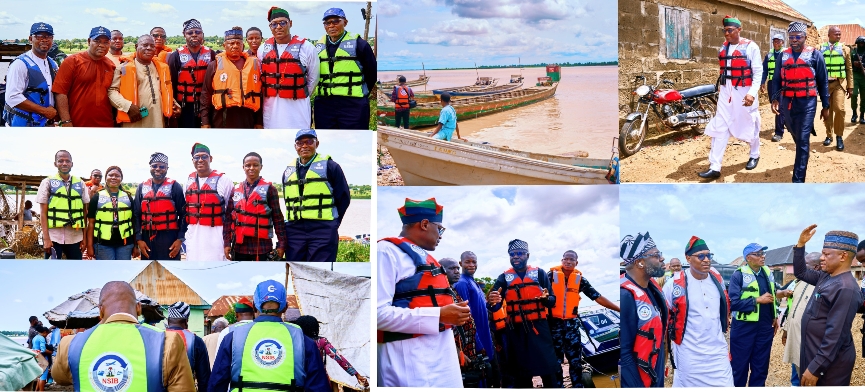
The Director-General and Chief Executive Officer of the Nigerian Safety Investigation Bureau (NSIB), Capt. Alex Badeh Jr., has led a team of investigators and senior officials on an on-the-spot safety assessment visit to Wadata in Benue State following the recent boat accident that claimed 11 lives.
The visit, conducted on Wednesday, forms part of the Bureau’s efforts to assess safety conditions surrounding the tragic incident, gather firsthand information, and engage critical stakeholders as part of ongoing accident prevention and transport safety advocacy initiatives.
The NSIB delegation was received in Makurdi by the Deputy Governor of Benue State, Dr. Samuel Ode, on behalf of Governor Hyacinth Alia. The team later met with Governor Alia after commencing investigative activities and activating family assistance protocols for victims and their families.
Governor Alia commended the Bureau’s swift response to the accident and called for a stronger and more sustained NSIB presence in Benue State to support safety awareness and risk-reduction efforts along the River Benue. He emphasized the need for enhanced public enlightenment, stricter operational safety standards, and broader stakeholder engagement to improve safety outcomes on the state’s waterways.
Responding, Capt. Badeh welcomed the governor’s request and reaffirmed the Bureau’s commitment to collaborating with state governments and other stakeholders to promote safer transportation systems across the country.
“The NSIB welcomes every opportunity to collaborate with state governments, local communities, operators, and regulators in advancing transport safety. We remain committed to exploring practical avenues for institutionalising safer navigation on the River Benue and across Nigeria’s inland waterways,” he said.
Addressing journalists during a media briefing, the NSIB chief extended condolences to the Benue State Government and families affected by the accident, describing the tragedy as a painful reminder of the need for heightened safety consciousness and stronger compliance with safety regulations on inland waterways.
“Our thoughts are with the families and communities affected by this unfortunate accident. Every loss of life is one too many, and while each occurrence presents its own circumstances, many accidents can be prevented through greater safety awareness, responsible operational practices, and stronger collaboration among regulators, operators, and waterway users,” Badeh stated.
He noted that the visit was not only aimed at understanding the circumstances surrounding the accident but also at strengthening engagement with communities that depend on water transportation for their daily activities.
“We are here to listen, learn, and engage directly with those who operate and use these waterways. Safety is a shared responsibility, and sustained public education remains one of the most effective tools for reducing risks and preventing accidents on our waterways,” he added.
Following the Government House engagement, the NSIB team visited Wadata along the banks of the River Benue, where they held discussions with community leaders, residents, boat operators, and representatives of the Boat Operators Association.
According to the Bureau, the interactions provided investigators with valuable eyewitness accounts and deeper insights into local water transport operations, existing safety practices, and challenges confronting operators and passengers.
NSIB said findings from the visit would support ongoing investigations into the accident and help shape future safety recommendations aimed at strengthening safety culture and preventing similar occurrences on Nigeria’s inland waterways.
The Bureau reaffirmed its commitment to advancing transportation safety through independent investigations, targeted safety advocacy, and recommendations designed to protect lives and improve safety standards across the nation’s transport systems.