Akume: Atiku Played Key Role in Adoption of Rotational Presidency After June 12 Crisis
Njideka Ozoalor
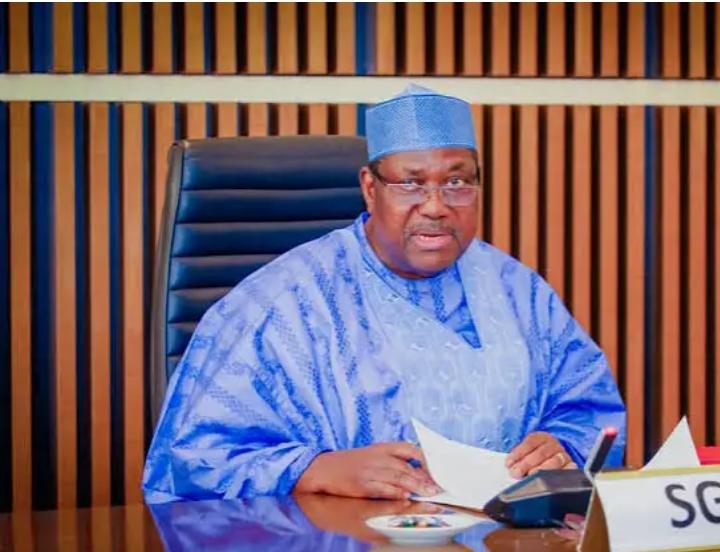
Secretary to the Government of the Federation, Senator George Akume, has disclosed that former Vice President Atiku Abubakar was among the political leaders who championed the adoption of Nigeria’s rotational presidency arrangement following the annulment of the June 12, 1993 presidential election.
Akume made the revelation during a World Press Conference in Abuja held to commemorate Nigeria’s 27th Democracy Day, where he reflected on the lessons of June 12 and the evolution of the country’s democratic process.
According to the SGF, Atiku participated in a crucial meeting of leaders of the Peoples Democratic Party (PDP) convened in Kaduna by the late Chief Solomon Lar and Alhaji Adamu Ciroma, where political stakeholders debated how to preserve national unity after the political crisis triggered by the annulment of the election won by Chief MKO Abiola.
“Atiku was one of the leaders at that meeting, which was convened by Chief Solomon Lar. He was part of that agreement,” Akume stated.
The SGF explained that the meeting focused extensively on power rotation and presidential zoning as political leaders searched for a framework capable of addressing the divisions created by the annulment.
“It was a tough argument before the issue of rotational presidency was agreed on,” Akume recalled. “At the end, we had to concede. We must do this. June 12 annulment had complicated the whole thing. It was finally agreed that we’ll be alternating between North and South.”
Akume added that the decision eventually became a cornerstone of Nigeria’s democratic arrangement, influencing not only the PDP’s presidential nominations but also broader political calculations across the country.
By highlighting Atiku’s participation in the Kaduna meeting, the SGF underscored the former vice president’s role in shaping the power-sharing formula that has remained a significant feature of Nigeria’s political landscape.
Reflecting on the June 12 election itself, Akume described its annulment as a major setback for democracy, insisting that Chief Moshood Kashimawo Olawale Abiola won the election convincingly and that Nigerians were denied the opportunity to see their mandate respected.
He stressed that the enduring lesson of June 12 is the need to uphold the will of the people in every democratic process.
“The voice of the people must always be sacrosanct. That’s the beauty of democracy. We prefer the ballot to bullets,” he said.
The SGF also expressed confidence in the nation’s electoral institutions, particularly the Independent National Electoral Commission, noting that many electoral officials understand the significance of the events of 1993 and are committed to preventing a recurrence.
“Never again would such happen in this country. You win, you win. When you lose, go back and prepare for another election,” Akume said.
He called on political actors to respect electoral outcomes, strengthen democratic institutions, and uphold the principles of freedom of expression, the rule of law, and peaceful political participation.
As Nigeria marks 27 years of uninterrupted democratic governance, Akume said the country must continue building on the lessons of June 12 to deepen democracy and protect the sanctity of the ballot.