Nigeria, Bangladesh Move to Strengthen Energy, Trade, Security Cooperation
Oru Leonard
Nigeria and Bangladesh have reaffirmed their commitment to deepening bilateral relations, with both countries advancing discussions on energy cooperation, trade expansion, security collaboration, and stronger engagement in multilateral affairs.
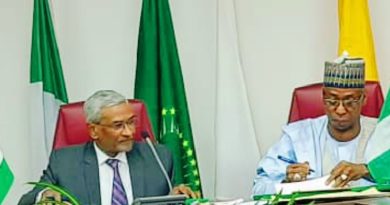
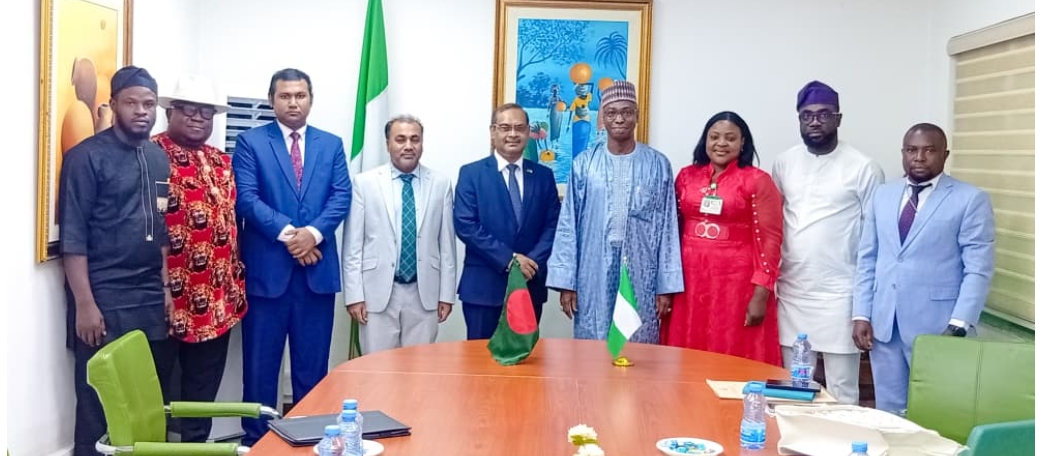
The renewed commitment was made on Wednesday in Abuja when the High Commissioner of Bangladesh to Nigeria, His Excellency Miah Md. Mainul Kabir, paid a courtesy visit to the Permanent Secretary of the Ministry of Foreign Affairs, Ambassador Dunoma Umar Ahmed.
During the meeting, both sides reviewed the growing partnership between Abuja and Dhaka and explored new areas of cooperation aimed at enhancing economic growth and regional stability.
Ambassador Ahmed congratulated Bangladesh on the emergence of its Foreign Minister, Khalilur Rahman, as President-elect of the 81st Session of the United Nations General Assembly, expressing Nigeria’s support for a successful tenure focused on advancing global cooperation and the Sustainable Development Goals (SDGs).
The discussions also focused on the proposed Agreement on the Avoidance of Double Taxation and plans to operationalize a Political Consultation Mechanism that would facilitate regular high-level engagements between the two countries. Nigeria reaffirmed its commitment to strengthening South-South cooperation through closer collaboration with Bangladesh.
A key highlight of the talks was Bangladesh’s ongoing effort to conclude a Memorandum of Understanding (MoU) for the importation of petroleum and gas products from Nigeria as part of its strategy to diversify energy sources.
The Nigerian delegation assured its Bangladeshi counterparts that necessary steps were being taken with relevant authorities to fast-track the agreement.
Speaking on Nigeria’s economic priorities, Ambassador Ahmed underscored the Federal Government’s commitment to economic diversification under President Bola Ahmed Tinubu, inviting Bangladeshi investors to take advantage of opportunities in mining, agriculture, information and communications technology (ICT), pharmaceuticals, and manufacturing.
He also identified the textile sector as a strategic area for collaboration, noting that renewed partnerships could help revive Nigeria’s textile industry, create jobs, and stimulate industrial growth.
On security matters, both countries explored avenues for enhanced cooperation in counter-terrorism efforts, intelligence sharing, and other measures aimed at addressing emerging security challenges.
Nigeria also sought Bangladesh’s support for its bid for a non-permanent seat on the United Nations Security Council, as both nations reiterated their commitment to promoting peace, stability, and development through multilateral platforms.
The meeting concluded with an agreement to finalize arrangements for the inaugural Nigeria-Bangladesh bilateral consultation session, a move expected to institutionalize regular dialogue and further strengthen strategic ties between the two countries.