Nigeria Calls for Stronger Korea-Africa Partnership to Tackle Global Challenges
Oru Leonard
Seoul, South Korea — Nigeria has called for deeper cooperation between Africa and the Republic of Korea in addressing some of the world’s most pressing challenges, including climate change, insecurity, and global health threats.
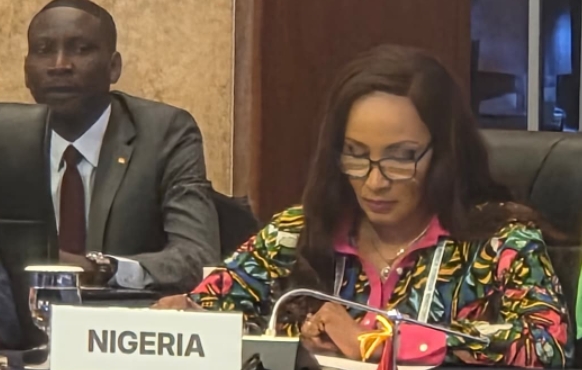
Speaking at the Korea-Africa Foreign Ministers’ Meeting in Seoul, the Honourable Minister of Foreign Affairs, Bianca Odumegwu-Ojukwu, stressed that global challenges require collective action and stronger international partnerships.
Delivering President Bola Ahmed Tinubu’s goodwill message, the Minister commended the Korean government for hosting the meeting and highlighted the growing importance of Korea-Africa solidarity in a rapidly changing world.
She noted that issues such as climate change, pandemics, food insecurity, and conflicts transcend national borders and can only be effectively addressed through shared responsibility and coordinated responses.
On climate action and energy transition, Odumegwu-Ojukwu emphasized that although Africa contributes less than four percent of global greenhouse gas emissions, it bears a disproportionate share of climate-related impacts. She proposed the establishment of a Korea-Africa Green Energy Alliance to leverage Korea’s technological expertise and Africa’s abundant renewable energy resources.
The Minister highlighted Nigeria’s Energy Transition Plan, which aims to achieve net-zero emissions by 2060 and requires an estimated $410 billion in investments. She described the initiative as an opportunity for strategic investment rather than aid, calling for joint development of solar energy projects, battery value chains, and green hydrogen facilities across the continent.
Addressing security concerns, Odumegwu-Ojukwu said threats such as terrorism in the Sahel, piracy in the Gulf of Guinea, and unconstitutional changes of government have global implications.
She urged stronger Korea-Africa collaboration in intelligence sharing, maritime security, capacity building, and support for African-led peace operations.
She also praised Korea’s contributions to United Nations peacekeeping efforts and encouraged greater engagement in Africa’s “Silencing the Guns by 2030” initiative.
On health security, the Minister underscored lessons from the COVID-19 pandemic, noting Africa’s heavy dependence on imported vaccines and medicines. She proposed a Korea-Africa Health Security Compact to facilitate technology transfer, regional vaccine manufacturing, and stronger disease surveillance systems.
Odumegwu-Ojukwu further called for reforms of global governance institutions, arguing that international structures established after World War II must evolve to reflect current realities.
She urged greater African representation in the United Nations Security Council, the International Monetary Fund, and the World Bank, while acknowledging Korea’s support for Africa’s inclusion in global decision-making processes.
Reaffirming Nigeria’s commitment to partnership rather than dependence, the Minister described Korea’s remarkable transformation from a war-torn nation into a major global economy as an inspiration for Africa’s development aspirations.
She concluded by urging both regions to confront global challenges through genuine partnership, mutual respect, and shared responsibility, expressing Nigeria’s readiness to work closely with Korea in building a more secure, sustainable, and prosperous future.
The meeting brought together foreign ministers and senior officials from African countries and the Republic of Korea to strengthen cooperation and advance joint responses to emerging global challenges.