BEYOND TEXTBOOK ECONOMICS: THE EXISTENTIAL REALITY OF NIGERIA’S INFLATION
By Dr. Iyke Ezeugo
Inflation in Nigeria today is no longer just an abstract economic statistic debated in the corridors of the Central Bank or the National Bureau of Statistics (NBS), nor is it merely a topic for economics students. It has become a social condition, a psychological burden, and for millions of families, a silent humanitarian crisis.
Recently, in Paris, the Minister of Finance and Coordinating Minister of the Economy, Taiwo Oyedele, stated that the Federal Government will not set up a price control mechanism. He emphasized his trust in the market, noting instead that the government’s focus is on broadly reducing inflation. Economically speaking, that position has the sterile logic of textbook theory. But whether that logic translates into practical survival for the Nigerian populace is an entirely different ball game.
In the Nigerian context, the issue cuts far deeper than supply-and-demand curves. As the French philosopher Jean-Jacques Rousseau once observed, “When the people shall have nothing more to eat, they will eat the rich.” While we are not yet at the precipice of such literal anarchy, Nigeria’s inflation problem is fiercely structural, emotional, political, and existential.
1. The Four Horsemen: What is Really Driving Inflation?
To understand the crisis, we must look beyond abstract data or political statements and examine the four foundational pillars currently destabilizing the Nigerian economy:
A. Fuel Subsidy Removal and Energy Costs
The sudden removal of the fuel subsidy—executed without appropriate, effective, and immediate palliative measures—triggered a seismic chain reaction. Transportation costs surged exponentially. Because businesses rely heavily on petrol and diesel to bridge the gap of a chronically poor electricity supply, production costs skyrocketed. Since almost everything moves by road and powered by petroleum product in Nigeria, the cost of food, medicine, building materials, and essential services all moved north.
This inflationary pressure is underpinned by a stark reality: in Nigeria, the price of fuel is not just an energy issue; it is the foundational cost of the entire economy.
B. Exchange Rate Instability and Naira Depreciation
Nigeria is a nation that consumes what it does not produce. We import fuel, raw materials, machinery, medicine, clothing, household items, and food. When the Naira weakens, imported goods inherently become more expensive. Even our few local manufacturers suffer; some are forced to shut down because they cannot keep pace with racing costs, while those struggling to survive swiftly transfer these financial burdens to consumers. Thus, our inflation is inextricably tied to the instability of our exchange rate.
This underlines a brutal reality: when the Naira falls, the purchasing power of Nigerians falls with it.
C. Insecurity and Food Inflation Farmers in our agricultural heartlands face daily threats of violence. Many cannot access their farms safely; others are forced to pay ransoms, royalties, and illegal taxes to bandits simply to harvest their crops. When transportation routes become as dangerous as they are expensive, food scarcity becomes inevitable, violently pushing prices upward.
A country cannot fight inflation while its food production system is under siege.
D. Structural and Governance Problems
Our economic engine is choked by structural rot: poor road networks, weak electricity supply, high logistics costs, and port inefficiencies. Add to this the burden of multiple, aggressive taxation and the exploitation by middlemen and corrupt officials, and the cost of doing business becomes astronomical. Ultimately, the consumer pays for this governance failure.
2. The Illusion of Data: Official Inflation vs. Street Reality
The government frequently announces inflation figures fluctuating between the 20% and 35% range, depending on their chosen methodology and rebasing metrics. But ordinary Nigerians do not shop in government spreadsheets.
On the streets, the economic hemorrhage is glaring. Food prices have more than doubled in many areas, and the Naira-to-Dollar exchange rate has essentially tripled. Transport fares have skyrocketed, while the costs of rent, healthcare, school fees, and utilities continue their relentless ascent.
To the salary earner and the struggling business owner, inflation is not a complex macroeconomic index; it is the brutal, straight-line mathematics of what their stagnant income can no longer buy.
Let us look at the raw numbers that resonate with the populace. In early 2023, a standard 50kg bag of rice sold for roughly ₦35,000. By early 2026, that same bag commands an extortionate ₦80,000—a devastating 128% increase. Similarly, the official exchange rate, which hovered around ₦460 to $1 in early 2023, has plummeted to over ₦1,400 to $1 today. That is a staggering 204% depreciation in purchasing power.
While economists might apply sophisticated formulas to aggregate these spikes into a neat 30% national inflation rate, the man on the street only sees that his primary expenses have surged by over 100% to 200%, while his earning power has remained frozen in time. That massive, crushing percentage difference is his reality.
Therefore, it is critical to note that for the ordinary person on the street, inflation is not the sterilized data economists announce in air-conditioned boardrooms. True inflation is the merciless premium that the market woman, the transporter, the landlord, and the telecom provider demand from an empty pocket every single day.
3. The Societal Hemorrhage
The consequences of this economic pressure extend far beyond diminished bank balances. It is heavily impacting household survival, mental health, family stability, and youth employment. Small businesses are shuttering daily.
Families are forced to skip meals, prioritizing mere survival over growth or stability. As savings lose their value and wages become virtually meaningless, workers seek alternative—sometimes corrupt—ways to survive.
Desperation breeds frustration, indirectly fueling spikes in crime and eroding social trust.
The Real Consequence: The kind of inflation that Nigeria is witnessing is not the type that only reduces purchasing power, it destroys human dignity.
4. The Mirage of Price Controls
To a desperate populace, government-mandated price controls sound like a compassionate lifeline. When inflation bites, people demand immediate relief. However, economics is not governed by sentiment, and history remains an unforgiving teacher.
In 301 AD, the Roman Emperor Diocletian issued the Edict on Maximum Prices under the threat of the death penalty to curb rampant inflation. The result? Merchants simply stopped selling, goods vanished from the markets, and a violent black market was born.
Modern history echoes this exact failure. In the 1970s, United States President Richard Nixon enacted sweeping wage and price controls to halt inflation. The consequence was devastating scarcity; farmers notoriously drowned their chickens rather than sell them at a government-mandated loss, and Americans were subjected to agonizingly long lines at gas stations. More recently, Venezuela’s “Fair Price” laws under Hugo Chávez and Nicolás Maduro decimated a once-thriving economy. By forcing businesses to sell below production costs, the government did not lower prices; they simply emptied supermarket shelves, annihilated local manufacturing, and birthed a hyper-inflationary black market where basic toiletries became luxury items.
Instituting rigid price controls in Nigeria today would predictably yield these exact same bitter fruits: artificial scarcity, aggressive hoarding, cross-border smuggling, reduced production, and a whole new syndicate of bureaucratic corruption. If businesses cannot recover their foundational costs, they do not act as charities—they simply shut down.
The Bottom Line: You cannot force an unsubsidized manufacturer or a struggling trader to sell below their survival cost and expect the shelves to remain full. Legislation can never repeal the natural laws of supply and demand.
5. The Path Forward: Tackling the Roots
Can the government effectively tackle inflation without market price controls? Yes—but only if it wages war on the root causes.
The government must focus on stabilizing the Naira, not by piling up foreign loans that vanish into non-productive sectors, but through genuine economic productivity.
We must secure our farming communities and boost agricultural productivities.
We must support local production by dismantling the suffocating web of arbitrary taxes that makes business survival a miracle.
We need strategic investments in manufacturing, power, and transportation to reduce import dependence and lower production costs.
Furthermore, we must relentlessly fight speculative profiteering while expanding genuinely targeted social protection for the most vulnerable.
The real issue is not merely controlling prices; it is controlling the CONDITIONS that produce high prices.
6. The Balanced Position
There is a vital nuance here. Pure price control damages markets, but pure market liberalization in a structurally weak economy is equally dangerous. Markets are not inherently moral entities. Without oversight, monopolies and profiteering syndicates will exploit citizens.
The government must strike a delicate balance: allow market efficiency to drive production, but rigorously protect vulnerable citizens through smart regulation and strategic intervention.
Finally
Nigeria does not just need lower inflation figures printed on glossy paper; Nigeria needs lower suffering in reality. The true measure of an economy is not what brilliant economists or political-office-holders say at conferences in Paris, but what ordinary citizens can afford in the markets of Lagos, Abuja, Kano, Aba, Port Harcourt, etc.
In my opinion, the solution is neither to bully the market with artificial price controls nor to abandon citizens completely to the harsh, unfeeling forces of the market. The solution is to fix the foundations: secure production, stabilize the currency, reduce the cost of doing business, support local productivity, and restore purchasing power by paying appropriate wages.
After all, you do not cure a fever by breaking the thermometer. You cure the infection causing the fever.
Dr. Iyke Ezeugo is a Forensic Researcher, a Social Impact Expert, and a Satirist who uses his perspectives and parodies to challenge the status quo, spark debates, and inspire fresh perspectives on public affairs through insightful intellectual injection.
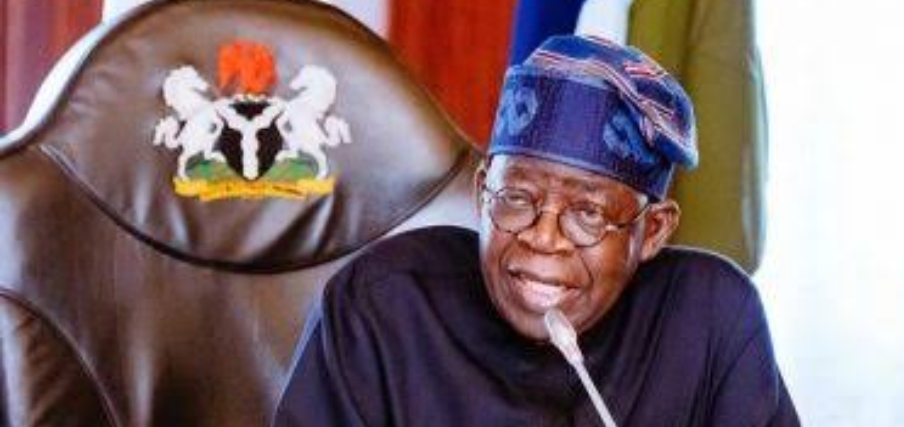
Cover Photo Caption: Nigeria’s current President Bola Ahmed Tinubu address his Cabinet members.