Bagudu Highlights Path to $1tn Economy as Uzodimma Says Nigeria Shifting from Crisis to Confidence
Njideka Ozoalor
Minister of Budget and Economic Planning, Senator Atiku Bagudu, has said Nigeria’s Renewed Hope Agenda is laying the foundation for a $1 trillion economy through bold reforms, fiscal discipline, and strategic investments, while Governor Hope Uzodimma declared that the country is steadily moving from economic repair to recovery and renewed confidence.
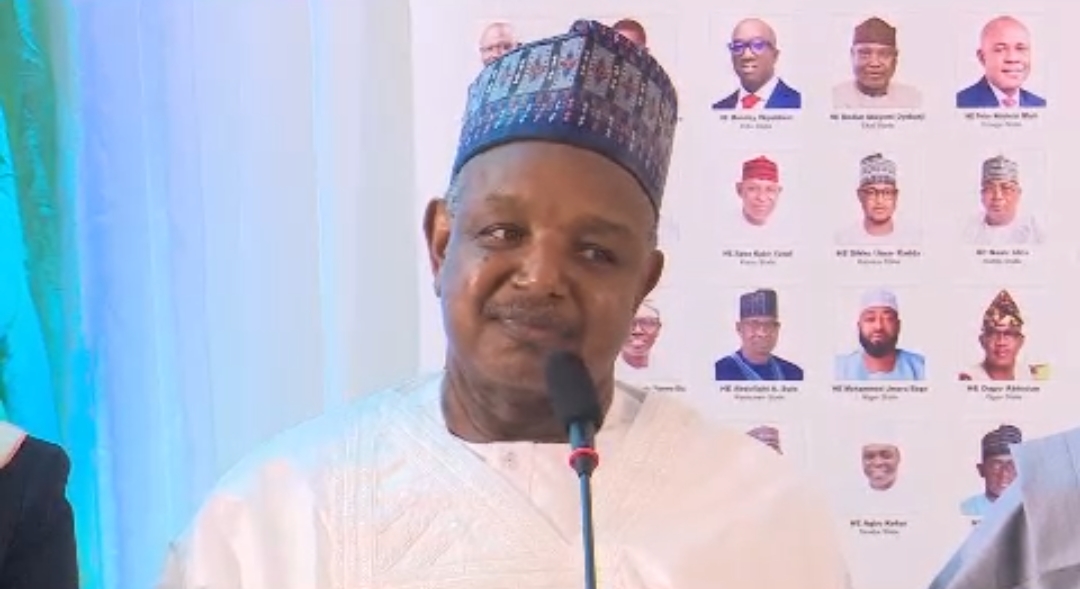
The two leaders spoke on Monday at the Progressive Governors Forum–Renewed Hope Ambassadors Interactive Session with members of the Diplomatic Community held in Abuja.
Bagudu described the engagement as a timely platform for strengthening collaboration between Nigeria’s federal and state governments and the international community, noting that the Renewed Hope Agenda is focused on economic recovery, inclusive growth, improved governance, security resilience, democratic consolidation, and sustainable development.
According to the minister, the administration of President Bola Ahmed Tinubu has taken “bold, courageous, tough but necessary choices” that are already yielding measurable results across key sectors of the economy.
He commended development partners for supporting Nigeria in areas such as humanitarian intervention, peace building, healthcare, agriculture, renewable energy, education, and climate action, adding that Nigeria’s drive toward a $1 trillion economy presents fresh opportunities for investment and partnerships at the state level.
Bagudu said reforms such as fuel subsidy removal and foreign exchange unification have significantly boosted federation revenues, with FAAC allocations rising sharply over the last three years.
He disclosed that federation disbursements reached about ₦10.14 trillion in 2023, while monthly allocations now range between ₦1.8 trillion and ₦2.6 trillion. States, he said, currently receive between ₦700 billion and ₦800 billion monthly, with February 2026 allocations standing at ₦784 billion.
The minister said the improved revenues are supporting over 440 road projects and more than 2,700 kilometres of super highway construction nationwide, alongside ongoing rail modernisation and port digitisation initiatives.
Bagudu also assured the diplomatic community of the stability of Nigeria’s democracy, citing judicial independence and the administration’s respect for court rulings, including judgments that went against the ruling APC in some states.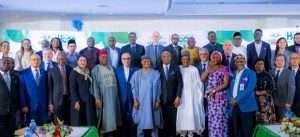
He added that increasing defections of governors into the APC reflected growing confidence in President Tinubu’s leadership and reform agenda.
Speaking at the session, Governor Hope Uzodimma, Chairman of the Progressive Governors Forum and Director-General of the Renewed Hope Ambassadors, said Nigeria’s trajectory has changed significantly since May 2023.
According to him, diplomatic reports sent to foreign capitals have gradually shifted “from concern to cautious optimism, and more recently, to genuine confidence.”
Uzodimma explained that the Renewed Hope Ambassadors initiative was designed to deepen grassroots awareness of the President’s policies and reforms across states, local governments, and wards nationwide.
He said the administration’s economic turnaround began with two major decisions taken immediately after inauguration — the removal of fuel subsidy and the floating of the naira.
Describing the subsidy regime as “the single largest organised corruption pipeline in Nigeria’s public finances,”
Uzodimma said the policy’s removal dismantled a major source of financial leakages and restored fiscal stability.
He noted that state governments no longer depend on emergency bailouts from the federal government to pay salaries due to increased revenues generated from the reforms.
He also pointed to ongoing port modernisation projects under the Nigeria-UK Strategic Partnership and improvements in foreign reserves following exchange rate unification.
According to the governor, Nigeria’s foreign reserves rose from about $32 billion in mid-2024 to $49.4 billion by March 2026, while the gap between official and parallel market exchange rates narrowed significantly.
Uzodimma further stated that inflation had declined from above 27 per cent to 15.06 per cent in February 2026 despite global economic pressures, while Nigeria recorded a 4.07 per cent GDP growth in the fourth quarter of 2025.
He said over 1.3 million Nigerian students had benefited from interest-free education loans, while ongoing tax reforms were providing relief for low-income earners and small businesses.
“Nigeria is not merely surviving its reform period; it is moving through it,” Uzodimma said, adding that the country is emerging more competitive, credible, and economically resilient.