PGF Engages Diplomatic Corps, Defends Tinubu’s Reforms as Foundation for Nigeria’s Economic Recovery
Oru Leonard
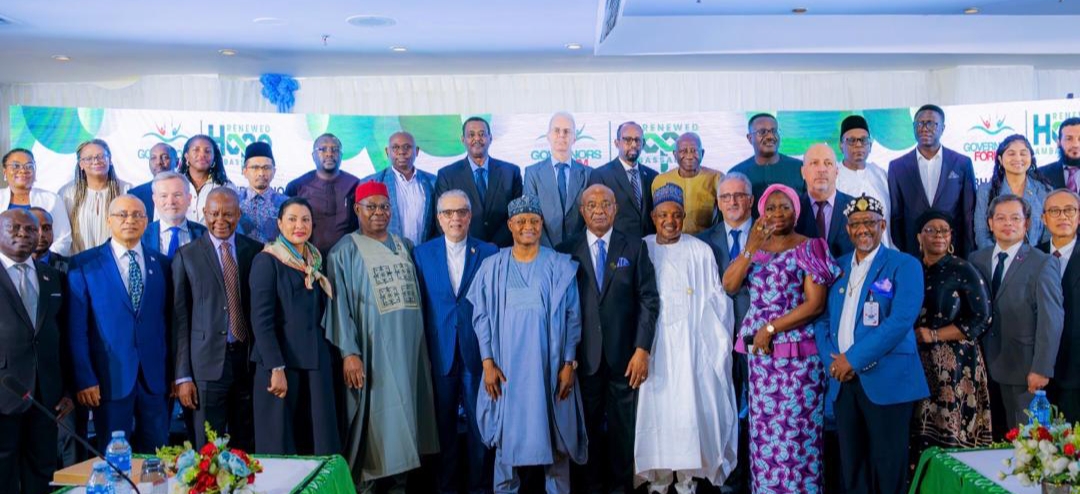
ABUJA — The Chairman of the Progressive Governors’ Forum and Governor of Imo State, Hope Uzodimma, on Monday led an interactive session with members of the diplomatic corps accredited to Nigeria, where he defended the economic reforms of President Bola Ahmed Tinubu and described them as the foundation for Nigeria’s ongoing economic recovery and institutional renewal.
The engagement, held at the Transcorp Hilton Abuja, brought together governors, federal officials, diplomats, development partners, and representatives of the international community to discuss Nigeria’s reform trajectory under the Renewed Hope Agenda.
Addressing the gathering, Uzodimma, who also serves as Director-General of the Renewed Hope Ambassadors, said the administration inherited a fragile economic structure but had embarked on bold reforms aimed at rebuilding public finances, restoring investor confidence, and repositioning Nigeria for long-term growth.
He identified the removal of petroleum subsidy and the unification of the foreign exchange market as the two defining policy decisions of the administration, insisting that both reforms had dismantled entrenched corruption networks and expanded fiscal capacity across all levels of government.
According to him, the fuel subsidy regime had for decades operated as “the single largest organised corruption pipeline” in Nigeria’s public finance architecture, adding that President Tinubu’s decision to remove it effectively shut down a system that had drained trillions of naira from the national treasury.
Uzodimma said resources freed from subsidy payments were now being redirected into infrastructure, education, healthcare, and economic expansion projects across the federation.
“The trajectory of the Federal Republic of Nigeria under President Bola Ahmed Tinubu is one of foundational repair followed by visible signs of economic recovery,” he stated.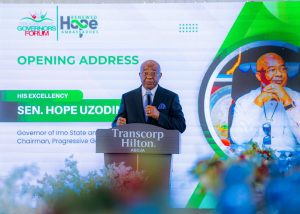
The PGF chairman disclosed that monthly allocations to states had increased significantly since the reforms took effect, noting that many state governments were now financially stable enough to undertake major infrastructure projects, improve workers’ welfare, and reduce dependence on federal bailouts and commercial loans.
He cited flagship projects such as the Lagos-Calabar Coastal Highway and the Sokoto-Badagry Superhighway as evidence of what he described as “the most ambitious infrastructure push in Nigeria’s modern history.”
Uzodimma also defended the naira float policy, arguing that the previous multiple exchange-rate system encouraged arbitrage and undermined economic transparency.
According to him, Nigeria’s foreign reserves had risen substantially, investor confidence had improved, and exchange-rate stability was gradually returning.
He told diplomats that Nigeria was now better positioned for serious capital inflows, pointing to improvements in the banking sector, stock market performance, diaspora remittances, and foreign direct investment commitments.
The governor further highlighted gains in education through the student loan scheme, tax reforms targeted at low-income earners and small businesses, digital economy expansion, security restructuring, and improvements in oil refining and non-oil exports.
On security, Uzodimma said the Federal Government was strengthening cooperation with international partners while pushing constitutional reforms that would pave the way for state policing.
He acknowledged that reform efforts had generated political resistance but insisted that the administration remained focused on outcomes rather than political rhetoric.
“The Renewed Hope Agenda is not a campaign slogan. It is a coherent policy framework anchored in structural reforms, infrastructure development, security cooperation, and institutional repair,” he said.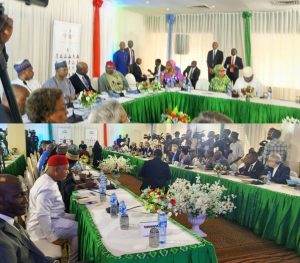
Speaking on behalf of the diplomatic community, the Ambassador and Head of the European Union Delegation to Nigeria and ECOWAS, Gautier Mignot, commended the initiative and described governors as critical development partners because of their closeness to the people.
Mignot said international partners were committed to aligning development programmes with Nigeria’s Renewed Hope Agenda while also strengthening collaboration with state governments.
He noted that governors play strategic roles in tackling insecurity, poverty, humanitarian challenges, energy supply, women and youth empowerment, and economic growth.
“We see Nigeria as a country of opportunity, and governors are key political stakeholders in the country’s democratic and economic development,” he said.
The EU envoy also praised the openness of Nigerian authorities in engaging the international community on issues relating to democracy, governance, rule of law, and the business environment.
He added that the European Union remained committed to supporting Nigeria’s progress and development aspirations.
Also speaking, the Minister of Budget and Economic Planning, Abubakar Atiku Bagudu, described the engagement as timely and important for deepening collaboration between the Federal Government, state governments, and the diplomatic community.
Bagudu said the Renewed Hope Agenda was designed to reposition Nigeria through economic recovery, inclusive growth, institutional reforms, security enhancement, and sustainable development.
The minister commended development partners for supporting Nigeria across sectors such as healthcare, agriculture, renewable energy, climate action, governance, education, and humanitarian services.
He said the Federal Government remained committed to democratic principles, constitutional order, judicial independence, and market-based reforms.
Bagudu further stated that the growing support for the ruling All Progressives Congress among governors was largely driven by confidence in President Tinubu’s reforms and leadership.
He assured diplomats that Nigeria’s democratic institutions remained strong and capable of guaranteeing credible elections and peaceful political transitions ahead of the 2027 general elections.