26.5% MPR Stays as CBN Walks Inflation-Stability Line
By Ademola Bakare
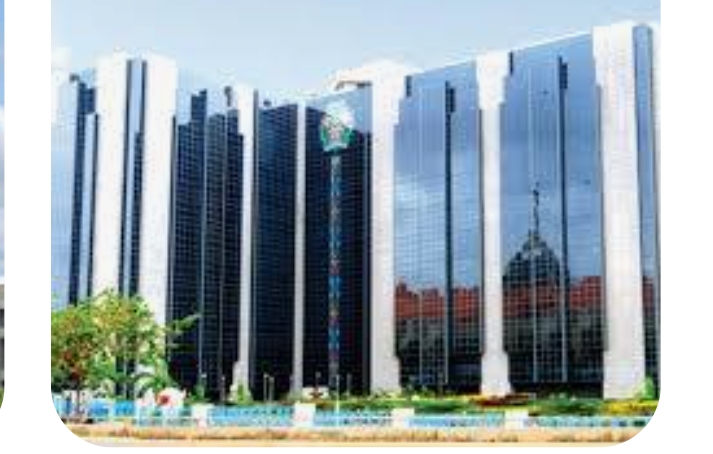
The Monetary Policy Committee {MPC} of the Central Bank of Nigeria {CBN} held its second stanza of its bi-monthly calendar meeting in Abuja few days ago. Before the meeting, financial analysts were divided on their expectations amidst spiking inflation globally, due largely to the unprovoked war in the middle-east, the US/Israel – Iran war. The war has caused global disruption in the supply chains.
However, the pro-maintain rate expected the CBN to hold its rate, and manage persistent inflation and protect foreign exchange stability, thereby prioritizing structural coordination with fiscal authorities.
MPC in their wisdom as they prescribed retained the benchmark lending rate at 26.5 per cent. Standing Facilities Corridor around the MPR at +50/-450 basis points, Cash Reserve Requirement (CRR) for Deposit Money Banks at 45.00 per cent, Merchant Banks at 16.00 per cent, and non-TSA public sector deposits at 75.00 per cent respectively.
Olayemi Cardoso, the CBN governor announced this after the Committee’s two-day meetings. The decisions, he said, were anchored on a “comprehensive assessment of risks to the outlook”.
The MPC acknowledged that inflation slightly ticked up for two consecutive months – 15.38 per cent in March, and 15.69 per cent in April 2026 which they attributed largely to external shocks, especially in energy, arising from ongoing tension involving United States of America and Iran. The war has pushed up global oil prices, transportation, logistics, and manufacturing costs.
The governor, exuding optimism, recognized the transitory nature of the crisis and assured that Nigeria’s current macroeconomic environment is guarded and sufficiently robust to support a return to disinflation. He stressed that available evidence indicates that the impact of the crisis on the Nigerian economy has been ‘largely muted’ due to the benefits of prior policy reforms.
Amongst the reforms include exchange rate stability, improvements in external reserve buffers, strengthened monetary policy transmission, well-capitalised banking system, and ongoing fiscal consolidation.
Undoubtedly, the MPC’s policy position may have been sufficiently stenthened by the impressive economic indicators within the domestic financial and external ecosystem – impressive and competitive foreign reserves, upgraded sovereign rating, and massively capitalized banking sector.
These efforts, he remarked, have “significantly bolstered the economy’s ability to absorb external shocks”.
Financial experts have extoled the decision to hold the interest rate, embracing it as a measure to stem inflation, and defend the currency, as well as consolidate on the gains already recorded.
Dr. Muda Yusuf, CEO, Centre for the Promotion of Private Enterprise {CPPE} applauded the CBN for holding the rate.
He described the outcome as pragmatic, measured, and a sophisticated decision that demonstrates policy maturity, and strategic restraint. He commended the Committee for their hands-on on the economy. He praised the Committee for their proactive macroeconomic management. According to him, the outcome deliberately safeguards vital economic foundations of business investments, in manufacturing, and job creation among others.
He expressed satisfaction with the reforms, and relative stability achieved thus far in the foreign exchange market, noting that it has improved planning, certainty, and reduced speculative tendences for Nigerian businesses.
Mr. Bayo Agbi, chartered accountant, and Principal Partner, Agbi & Partners, commended the outcome, remarking that the CBN was pragmatic in its approach of balancing inflation control and avoiding over-tightening that could hurt the economy. However, he wants the CBN to do something urgently about the high cost of borrowing which he considered still very high. He said at 26.5 percent, most commercial banks will loan to SMEs at 30-35 per cent or more per annum. And with CRR pegged at 45 per cent for deposit money banks, the banks will have less to lend out, not to mention their preference for large conglomerates and government at a very reduced risk.
Holding the rate was a bold move, and also a cautious step at stabilization over aggressive tightening. The CBN may have imperatively applied break on inflation to protect SMEs from getting hit heavily with high inflation and rate hike.
The hold signals also a continued caution by the CBN as it intends balancing inflation control with financial system stability. For the banks, elevated rates will sustain net interest margins but may weigh on credit growth, particularly in the SMEs and consumer segments where demand is rate-sensitive.
The decision follows the completion of the banking sector recapitalization exercise, which saw 33 banks meet new capital thresholds and raised ₦4.7trn in fresh capital. With stronger capital buffers in place, banks are better positioned to absorb shocks, though asset quality, and risk appetite will likely remain conservative until inflation shows a sustained decline. Liquidity management will also remain a focus, with the 45 per cent CRR for deposit money banks continuing to constrain loanable funds. Interbank activity and Treasury Bill yields are expected to stay elevated in the near term.
The CBN indicated that future adjustments will remain data-dependent, with policy direction hinged on the trajectory of inflation and external sector developments. Market participants will look to the next meeting’s decision for signals on the timing of any potential easing.
The CBN restated its call to the federal government to urgently address the challenges of food inflation, aggravated insecurity, and infrastructure, while it fixes its eyes on protecting foreign reserves, using high rates as a shield against Naira depreciation.
Output growth, the governor expressed, is expected to remain resilient in 2026, irrespective of emerging downside risks associated with the US/Israel – Iran conflict.
Available projections he observed, indicate a moderate increase in inflation in the near term, but with the combined effects of previous policy tightening, exchange rate stability, and enhanced food supply, these factors hopefully are expected to support the return to disinflation.
In the light of evolving domestic and global uncertainties therefore, the Committee reaffirmed CBN’s commitment to a forward-looking and evidence-based policy framework, anchored on its primary mandate of achieving price stability, while preserving the soundness and resilience of the financial system, Olayemi Cardoso said.
Ademola Bakare, is a financial analyst writes from Abuja.