2027 Polls Must Address Voter Education Gaps of 2023, Says NOA DG
Oru Leonard
The Director-General of the National Orientation Agency (NOA), Mallam Lanre Issa-Onilu, has said inadequate voter and democracy education exposed during the 2023 general elections must be addressed ahead of the 2027 polls.
He said misconceptions about the electoral process, particularly among young Nigerians, showed the need for sustained public enlightenment to improve citizens’ understanding of voting procedures and their responsibilities during elections.
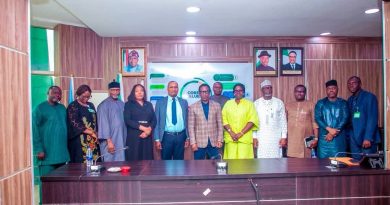
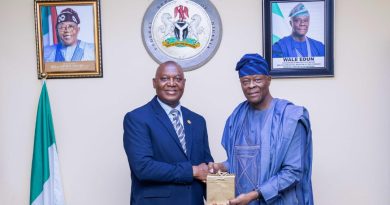
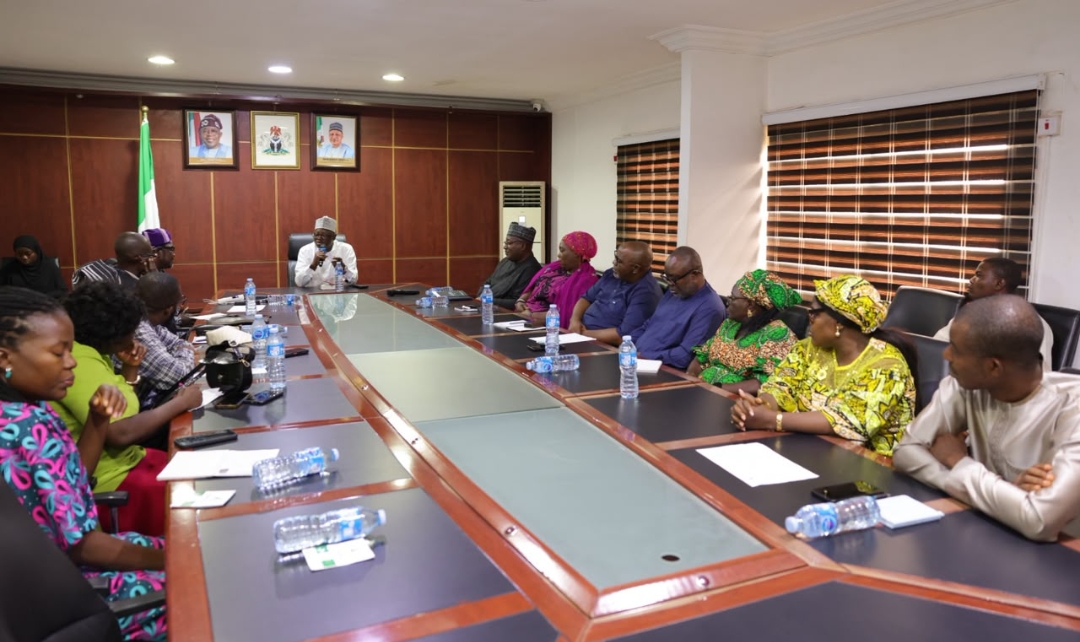
Issa-Onilu spoke in Abuja on Tuesday when he received a delegation of the Association of Corporate Online Editors (ACOE), led by its Chairman, Mr ‘Sola Akingboye, on a courtesy visit to the agency.
He disclosed that NOA had commenced a nationwide voter mobilisation campaign to encourage Nigerians to participate in the 2027 elections, adding that the exercise would combine voter education with sensitisation on peaceful conduct.
The campaign, he said, was formally launched about three weeks ago at the NAV Centre, with the Independent National Electoral Commission (INEC), security agencies, development partners and civil society organisations in attendance.
According to him, the agency is targeting increased participation among the country’s nearly 100 million registered voters by educating citizens on the importance of exercising their civic rights and responsibilities.
He, however, identified poor understanding of electoral procedures as a major challenge that must be tackled before the next general elections.
“The last election of 2023 was an eye-opener. Many things came up after the election that showed clearly that there was a huge gap in terms of education, voter education or democracy education,” Issa-Onilu said.
He cited controversies surrounding the voting status of the Federal Capital Territory (FCT) and widespread arguments on social media as examples of the knowledge gaps exposed during the last general elections.
The NOA boss also identified the confusion between electronic accreditation, electronic voting and electronic transmission of results as another area requiring public enlightenment.
He explained that Nigeria’s electoral process combines manual voting and electronic accreditation and transmission of results, stressing that the distinction must be properly understood by voters.
According to him, voting at polling units remains a manual exercise, involving the use of ballot papers, sorting and counting of votes, while electronic devices are deployed for voter accreditation and uploading of results.
He said the failure to understand these separate stages had contributed to misconceptions about the electoral process, with some Nigerians making demands without fully appreciating the procedures involved.
Issa-Onilu stressed that voter education must continue throughout the electoral process to ensure that citizens were better informed and able to assess developments during elections.
He also linked voter participation to public confidence in the credibility of elections, noting that mobilisation efforts could suffer if citizens believed their votes would not count.
“If there is a situation of distrust, it will even affect our job to mobilise people, because if they believe that their votes will not count, they will not come out,” he said.
He noted that NOA was working with INEC to encourage improvements in the electoral process and strengthen public confidence in the commission.
The agency, he added, was encouraged by the conduct of recent off-cycle elections in Anambra, Ekiti and Osun states, which he said offered indications that improvements in electoral credibility could help reduce post-election disputes.
Issa-Onilu argued that elections should be determined by voters rather than prolonged legal battles, recalling that a significant number of political office holders in the country had secured their positions through court judgments.
He said improving the credibility of elections would make it easier for NOA to convince Nigerians to participate in the process.
The director-general also cautioned against attempts to undermine public confidence in elections through misinformation and the deliberate creation of fear.
He called on journalists to exercise responsibility in their coverage of political and electoral issues, urging them to distinguish between legitimate criticism and narratives capable of undermining national interest.
He maintained that the media had a developmental responsibility to promote national unity while holding public institutions accountable.
“Nobody can pay me or any of us to destroy what belongs to us,” he said, adding that journalists had a responsibility to promote national development while pointing out issues requiring correction.
Earlier, ACOE Chairman, Akingboye, said the association, which comprises more than 50 online media organisations, was ready to partner with NOA in promoting voter education, responsible journalism and public enlightenment ahead of the 2027 elections.
He said the association’s digital reach and editorial experience could help the agency communicate its programmes and sensitisation campaigns to a wider audience.
“Our members possess the digital reach, editorial experience and storytelling capacity to communicate NOA’s programmes, achievements and public enlightenment campaigns to millions of Nigerians,” Akingboye said.
He requested timely access to official information, media tours of NOA’s state and zonal offices and periodic engagements with the agency’s leadership to enable members to report its activities from firsthand sources.
He said stronger collaboration between the agency and credible media organisations would improve public access to information, promote transparency and strengthen constructive engagement between government institutions and citizens.
He also invited NOA to partner with ACOE as a platinum sponsor of its public lecture scheduled for November 19, 2026, and requested that Issa-Onilu deliver the keynote address.
He noted that the event would bring together stakeholders from the media, government and private sector to discuss national development as the country prepares for the 2027 general elections.