The Tijaniyya Came From Algeria. But What Did They Bring to Aso Rock? Algeria, Nigeria and the Coming African Spring
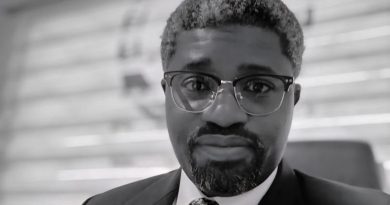
By Citizen Dr. Bolaji O. Akinyemi
Apostle | Nation Builder
They came from Algeria.
They came from Senegal.
They came from Nigeria.
They came to Aso Rock to mourn the passing of a spiritual father, Sheikh Dahiru Bauchi, who died on November 26, 2025, at the age of 98.
But sometimes, those who come bearing condolences leave behind something far greater than condolences.
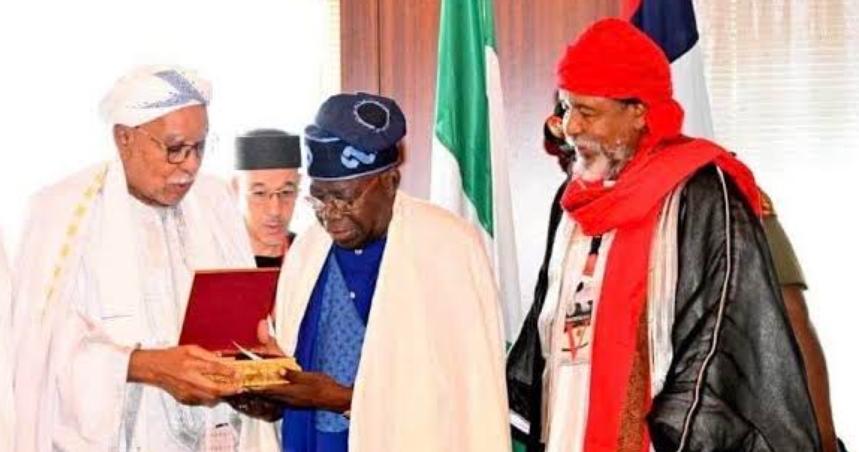
On Friday, August 7, 2026, President Bola Ahmed Tinubu received a delegation of the Supreme Council of Tijaniyya Worldwide at the State House in Abuja. The delegation, comprising representatives from Algeria, Nigeria and Senegal, was led by Khalifa-Sheikh Dahiru Usman Bauchi of the Sheikh Dahiru Bauchi Foundation.
The Khalifa of Tijaniyya from Algeria, Sheikh Ali Bin Arabi, delivered the condolence message.
Then came a sentence that caught my attention.
He acknowledged the relationship and the social and economic similarities between Nigeria and Algeria, and prayed for the sustenance of the spiritual relationship between both countries.
That statement deserves to be taken beyond the walls of Aso Rock.
Because Algeria is not simply another African country.
Algeria is a country with a history.
A country that fought a brutal war for independence.
A country that experienced political upheaval.
A country that confronted popular discontent during the Arab Spring.
And a country whose experience offers Nigeria and West Africa an important lesson:
Economic pain eventually becomes political pain.
The question is not whether citizens are hurting.
The question is what governments do before that pain becomes political rupture.
The Arab Spring began with economics
The Arab Spring has often been presented as a political phenomenon.
It was not.
At least, it did not begin that way.
It began with the ordinary frustrations of ordinary citizens.
Food prices.
Unemployment.
Corruption.
Youth exclusion.
Poor public services.
Inequality.
Humiliation.
A feeling that the political system had become a closed club.
In Tunisia, the self-immolation of Mohamed Bouazizi in December 2010 became the spark. But the fuel had been accumulating for years.
Bouazizi was not the Arab Spring.
He was the match that ignited a room already filled with combustible material.
The World Bank’s analysis of the Arab uprisings found that dissatisfaction was closely associated with poor-quality jobs, inadequate public services, corruption and weak accountability. The old social contract—where governments provided some economic security in exchange for limited political participation—was no longer sufficient for an increasingly educated, connected and demanding population.
And then the streets spoke.
Tunisia.
Egypt.
Libya.
Yemen.
Syria.
Bahrain.
The political geography of the Arab world changed.
Some regimes fell.
Some survived.
Some countries entered transitions.
Others entered wars.
But across the region, one message became impossible to ignore:
The citizen had awakened.
The lesson Nigeria must not ignore
Nigeria is not Tunisia.
Nigeria is not Egypt.
Nigeria is not Algeria.
And nobody should be suggesting that Nigeria needs an Arab Spring.
Quite the opposite.
Nigeria should learn from the Arab Spring precisely so that Nigeria does not have to experience one.
This distinction is critical.
A responsible government does not wait until citizens take to the streets before it begins listening.
A responsible government listens when the citizen is still speaking through the ballot box.
It listens when young people are unemployed.
It listens when families cannot afford food.
It listens when businesses cannot survive energy costs.
It listens when graduates cannot find meaningful employment.
It listens when insecurity makes farmers afraid to return to their farms.
It listens when citizens lose faith in institutions.
And, most importantly, it listens when citizens begin asking:
“What is democracy doing for me?”
That is the question at the heart of our present national moment.
Nigeria’s economic reforms and the citizen’s reality
President Tinubu deserves credit for undertaking difficult economic reforms.
But reforms must ultimately be judged by their impact on human beings.
The World Bank’s current assessment of Nigeria presents a paradox: economic growth has strengthened, but the improvement in macroeconomic indicators has not yet translated sufficiently into household welfare. Nigeria grew by roughly 4% in 2025, while inflation remained high at about 23%, and more than 60% of Nigerians were estimated to be living below the national poverty line.
That is where government statistics meet the kitchen table.
The government says:
The economy is growing.
The citizen asks:
Why is my life not improving?
Government says:
Inflation is falling.
The citizen asks:
Why is food still unaffordable?
Government says:
Investment is coming.
The citizen asks:
Where are the jobs?
Government says:
We are reforming the system.
The citizen asks:
When will I receive the dividend of the reform?
This is not necessarily opposition.
It is citizenship.
And democracy must learn to accommodate difficult questions.
Algeria’s lesson
This is where the Algeria connection becomes particularly interesting.
Algeria experienced significant protests during the Arab Spring period, but it did not follow the same trajectory as Tunisia, Egypt or Libya.
The government had economic and fiscal tools with which to respond to social pressures, including subsidies and other forms of economic intervention.
The lesson is not that money permanently buys political stability.
It does not.
The lesson is that economic conditions influence political legitimacy.
When citizens can no longer reconcile what they are being asked to endure with what they are receiving from government, the social contract begins to crack.
And when the social contract cracks, no government should assume that political slogans will repair it.
What did the Tijaniyya bring to Aso Rock?
This is why I return to the question:
What did the Tijaniyya bring to Aso Rock?
Officially, they brought condolences.
Spiritually, they brought prayers.
Historically, they brought a relationship that stretches across national boundaries.
But perhaps, unknowingly or deliberately, they also brought a mirror.
A mirror in which Nigeria can look at Algeria and ask:
What happens to nations when citizens lose confidence in the social contract?
And perhaps Algeria can look at Nigeria and ask:
What happens when a country of more than 200 million people finally converts its demographic weight into productive economic power?
This is the conversation that should follow the condolence visit.
Not another religious ceremony.
Not another diplomatic photograph.
A serious Nigeria–Algeria conversation.
From spiritual relationship to strategic partnership
Sheikh Ali Bin Arabi spoke about sustaining the spiritual relationship between Nigeria and Algeria.
I believe we should take that relationship further.
The Tijaniyya network has demonstrated something that modern African politics sometimes forgets:
Africa is connected by relationships that are older than our borders.
Religion crossed the Sahara before colonial maps were drawn.
Trade crossed West Africa before modern customs posts existed.
Ideas travelled between communities before passports were invented.
The spiritual relationship between Nigeria and Algeria can therefore become a platform for a broader strategic relationship.
Energy.
Agriculture.
Education.
Security.
Counter-terrorism.
Youth development.
Trade.
Technology.
Infrastructure.
And, most importantly, governance.
Nigeria and Algeria should be talking about how African states can preserve legitimacy while undertaking painful economic reforms.
That is a conversation worth having.
The West Coast is changing
But this conversation cannot stop at Algeria.
Something is happening across the West Coast of Africa.
The old political order is under pressure.
Citizens are becoming more informed.
Young people are becoming more assertive.
Social media has broken the monopoly of traditional political communication.
The citizen can now challenge government in real time.
Military interventions in parts of the Sahel have exposed the depth of popular dissatisfaction with political systems that many citizens consider incapable of delivering security, prosperity and dignity.
This does not mean military rule is the answer.
It is not.
Military coups are symptoms of democratic failure, not substitutes for democratic excellence.
The answer is to fix democracy before citizens abandon faith in it.
That is why the shift is long overdue.
Africa does not need another Arab Spring
Africa does not need an Arab Spring.
Africa needs an African Spring of Performance.
A peaceful spring.
A democratic spring.
An economic spring.
A spring of accountability.
A spring of dignity.
A spring in which the citizen moves from being an electoral statistic to becoming the principal stakeholder in governance.
That is the essence of Performance Democracy.
Democracy must no longer be measured simply by:
Who won the election?
We must begin asking:
Who improved the lives of the people?
Who created jobs?
Who reduced insecurity?
Who improved healthcare?
Who expanded education?
Who made agriculture profitable?
Who built infrastructure?
Who delivered electricity?
Who managed public resources transparently?
Who transformed the lives of ordinary citizens?
That is the democracy Africa needs.
The Citizen must become the centre
For too long, African politics has been designed around political actors.
The candidate.
The party.
The election.
The campaign.
The office.
The next election.
The next appointment.
The next political calculation.
The citizen appears every four years.
We must reverse this order.
The citizen must appear every day.
The citizen must be present in the budget.
The citizen must be present in policy design.
The citizen must be present in implementation.
The citizen must be present in monitoring.
The citizen must be present in evaluation.
The citizen must be present in the measurement of performance.
That is how democracy becomes alive.
And this is where Nigeria can lead
Nigeria is uniquely positioned to lead this conversation.
With its population.
With its entrepreneurial energy.
With its cultural influence.
With its diplomatic reach.
With its intellectual capital.
With its religious institutions.
With its civil society.
With its enormous African market.
Nigeria can become the laboratory for a new democratic proposition:
From Electoral Democracy to Performance Democracy.
This is not a rejection of democracy.
It is the completion of democracy.
It is saying that elections are not the destination.
Elections are the beginning of the citizen-government contract.
The ballot gives government authority.
Performance gives government legitimacy.
The Catholic bishops. The Tijaniyya. The national conversation.
There is another important dimension to the timing.
Only about a week separated the visit of the Conference of Catholic Bishops of Nigeria from the visit of the Supreme Council of Tijaniyya to the President.
Whatever controversies surrounded the earlier visit, the sequence presents an opportunity.
Nigeria should not see these engagements merely through the lens of religious representation.
We should see them as an opportunity for a National Citizen Conversation.
Catholic.
Muslim.
Traditional.
Youth.
Women.
Workers.
Farmers.
Business.
Academia.
Civil society.
Professional bodies.
Political parties.
The Nigerian conversation must become bigger than the Nigerian political class.
Because the problems of Nigeria are bigger than politics.
Perhaps Sheikh Dahiru Bauchi’s final gift is a conversation
Sheikh Dahiru Bauchi lived for 98 years.
He belonged to a generation that witnessed Nigeria before independence, through independence, military rule, civil war, democratic transitions and the complexities of modern Nigeria.
His death should not only produce condolences.
It should produce reflection.
What kind of Nigeria are we building?
What kind of Africa are we building?
What kind of democracy are we leaving for our children?
And what kind of relationship should exist between religion and governance?
The answer cannot be theocracy.
Neither can it be the exclusion of faith from the moral conversation of society.
The answer is responsible citizenship.
Religious leaders must speak for peace, justice, integrity and human dignity.
Political leaders must deliver performance.
Citizens must demand accountability.
And the three must meet in the middle:
The common good.
Better late than never
So yes, better late than never.
The Supreme Council of Tijaniyya has come to Aso Rock.
They came from Algeria.
They came from Senegal.
They came from Nigeria.
They came bearing condolences.
They left prayers.
But perhaps the moment demands that we hear something beyond the prayers.
Perhaps the Algeria connection should become the beginning of a deeper conversation about Nigeria, Algeria and Africa.
Perhaps the memory of the Arab Spring should remind us that economic hardship cannot be permanently separated from political legitimacy.
Perhaps West Africa should understand that citizens who have nothing to lose are not necessarily dangerous—but citizens who have lost hope can become politically unpredictable.
And perhaps the greatest wisdom is not to wait for the streets to speak.
Let government listen while the citizen is still whispering.
Nigeria does not need an Arab Spring.
Nigeria needs an African Spring of Positive Change.
West Africa does not need revolution.
It needs performance.
Africa does not need more elections without transformation.
It needs democracy that delivers.
And Nigeria, with all its contradictions and possibilities, can lead the way.
May the prayer of the Supreme Council of Tijaniyya be answered.
May Nigeria find peace.
May Nigeria find prosperity.
May Nigeria find justice.
May Nigeria find responsible leadership.
And may the spiritual bridge between Algeria, Nigeria and Senegal become a bridge for a new African partnership.
May the West Coast of Africa experience its long-overdue Spring of Positive Change.
A Spring of Performance.
A Spring of Prosperity.
A Spring of Accountability.
A Spring of Dignity.
A Spring of Performance Democracy.
Insha Allah.