TDF Faults Obi Over Rejection of World Bank’s Nigeria Economic Growth Forecast
Oru Leonard
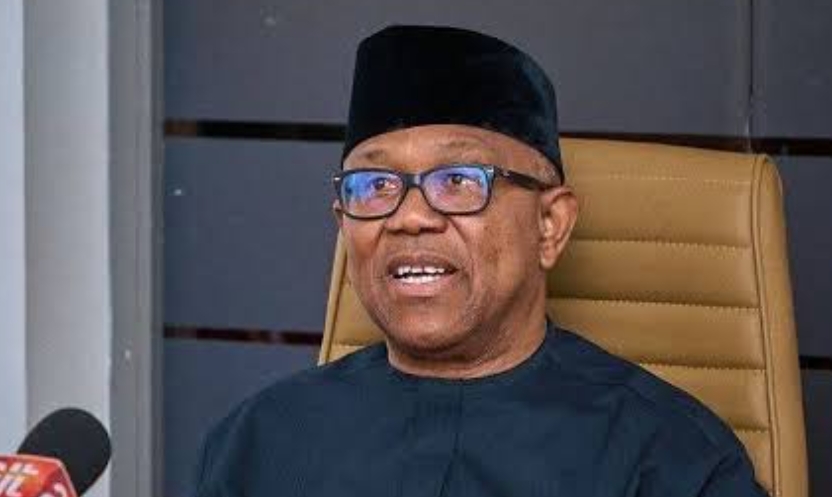
The Democratic Front (TDF), has criticised the presidential candidate of the Nigeria Democratic Congress (NDC), Mr. Peter Obi, over his rejection of the World Bank’s economic growth outlook for Nigeria, describing his position as politically motivated.
The group said Obi’s response to the international financial institution’s projections reflected what it described as a tendency to dismiss positive assessments of the Nigerian economy while highlighting reports containing unfavourable statistics.
In a statement signed by its Chairman, Danjuma Muhammad, and Secretary, Wale Adedayo, TDF argued that the former Anambra State governor’s criticism of the World Bank’s outlook was not sufficiently supported by the economic indicators used in the institution’s projections.
The group said it was misleading for a presidential candidate to reject an economic forecast simply because it did not align with his political position.
According to the statement, Obi’s emphasis on hardship and poverty in the country failed to adequately acknowledge indicators of economic improvement and other factors considered by the World Bank in preparing its projections.
TDF also pointed to the World Bank’s reported $500 million investment in Nigeria, intended to help unlock $5.79 billion in private financing, as evidence of international confidence in the country’s economic prospects.
It argued that such financial commitments demonstrated the importance of considering broader economic indicators rather than relying solely on prevailing hardship to assess the country’s economic performance.
The group further maintained that a sound understanding of economic fundamentals was essential for anyone aspiring to lead Nigeria, adding that economic management required an appreciation of investment trends, development financing and growth projections.
On the domestic front, TDF cited the Federal Government’s reported release of N758 billion for the payment of pension arrears, alongside interventions such as the Nigerian Education Loan Fund (NELFUND), the Consumer Credit Corporation (CREDICORP), loans facilitated through the Small and Medium Enterprises Development Agency of Nigeria (SMEDAN), and the Renewed Hope Housing initiative.
According to the group, these programmes were among the measures intended to ease economic hardship and support vulnerable Nigerians, students, entrepreneurs and other beneficiaries.
TDF urged Nigerians to assess the country’s economic performance using available indicators and government interventions rather than what it described as Obi’s politically driven rhetoric.
The group also questioned Obi’s credibility, referencing his reported disagreement with the Anambra State Government over public debt, questions surrounding ecological funds received during his tenure as governor, and his repeated claims of victory in the 2023 presidential election.
It alleged that Obi had failed to provide sufficient evidence to support some of his assertions, arguing that such controversies raised concerns about his suitability for national leadership.
The group concluded by urging Nigerians to reject Obi at the polls, insisting that his criticism of the World Bank’s economic outlook was another indication of what it described as shortcomings in his approach to national economic management.