NTA Advocates Restorative Justice, Responsible Reporting to Promote Peace
Oru Leonard
ABUJA — The Nigerian Television Authority (NTA) has reaffirmed its commitment to promoting restorative justice, reconciliation, peaceful coexistence and responsible, victim-centred journalism in Nigeria and across Africa.
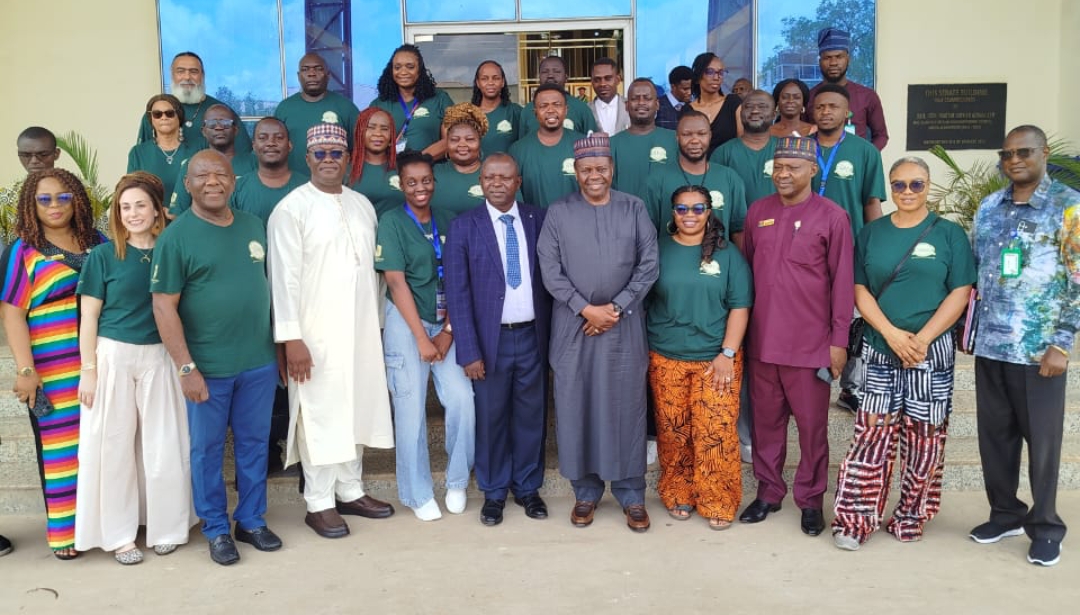
The Executive Director, News, NTA, Mr. Ayo Adewuyi, stated this in remarks delivered on his behalf by the Assistant Director, News, NTA Headquarters, Mr. Omini Oden, at a Special International Seminar organised by the Ambassador Bulus Lolo Centre for Diplomacy, Conflict, Peace and Plural Studies, Bingham University, Karu, near Abuja.
The seminar, which brought together scholars, policymakers, diplomats, security experts, civil society actors and development practitioners, focused on the theme: “The Utility of Apology in Restorative Justice System and the Management of Victims of Violent Extremism in Africa.”
Adewuyi described the theme as timely, stressing that sustainable peace requires more than prosecution and punishment. He said truth, accountability, reconciliation, healing and restoration of human dignity were equally essential to rebuilding societies affected by violent extremism.
He noted that violent extremism had caused severe physical, psychological, emotional and economic consequences across African communities, including displacement, broken families, destroyed livelihoods and declining trust in institutions.
According to him, rebuilding affected communities must therefore extend beyond physical reconstruction to deliberate efforts aimed at restoring trust among individuals, communities and institutions.
He said a sincere and voluntary apology, when accompanied by accountability and meaningful reparative action, could become an important instrument of reconciliation by acknowledging wrongdoing, validating victims’ experiences and creating pathways towards healing and forgiveness.
However, he cautioned that an apology alone could neither erase the pain caused by violence nor substitute for justice, but could complement a broader restorative justice framework.
The NTA Executive Director also called for greater recognition of Africa’s traditional values of communal harmony, dialogue, reconciliation and respect for human dignity, stressing the need to integrate them with modern legal and institutional mechanisms for conflict resolution.
He highlighted the strategic role of the media, particularly public broadcasting, in shaping public perception and supporting peacebuilding efforts.
Adewuyi said NTA’s mandate went beyond informing, educating and entertaining the public to promoting national unity, responsible citizenship, peaceful coexistence and national development.
He urged media organisations to provide factual, balanced and responsible reporting capable of countering misinformation, discouraging hate narratives and creating platforms for informed public discourse.
He further called on journalists reporting violent extremism to adopt conflict-sensitive and victim-centred approaches, stressing that victims should not be reduced to statistics but treated as human beings deserving dignity, empathy and respect.
He also cautioned against reportage that could inadvertently glorify perpetrators or amplify extremist propaganda.
Adewuyi reaffirmed NTA’s readiness to collaborate with government institutions, academic centres, civil society organisations, international development partners and peacebuilding institutions to promote restorative justice, peaceful coexistence and support mechanisms for victims of violence.
He stressed that sustainable peace could not be achieved through security interventions alone, but required inclusive dialogue, public education, community engagement, responsible leadership and strategic communication.
He expressed confidence that recommendations from the seminar would contribute to policy development, academic research and practical interventions aimed at strengthening peacebuilding mechanisms across Africa.
The NTA Executive Director commended the Ambassador Bulus Lolo Centre for Diplomacy, Conflict, Peace and Plural Studies for providing a platform for intellectual engagement and policy dialogue on issues critical to peace, justice and development.
He reiterated NTA’s commitment to using its platforms to promote justice, healing, reconciliation, national integration and lasting peace.