NSIB, Sierra Leone Deepen Cross-Border Cooperation on Air Accident Probes
Oru Leonard
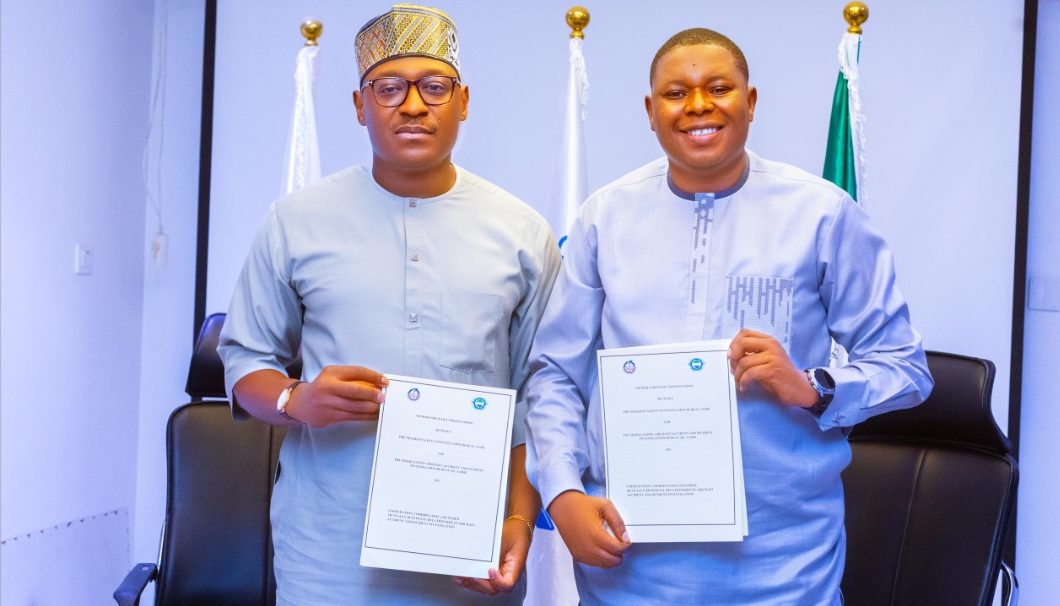
The Nigerian Safety Investigation Bureau (NSIB) has entered into a strategic partnership with the Sierra Leone Aircraft Accident and Incident Investigation Bureau (SL-AAIIB) to enhance air accident investigation standards and strengthen aviation safety across West Africa.
The Memorandum of Understanding (MoU), signed at the NSIB headquarters in Abuja, establishes a structured framework for collaboration between the two agencies. The agreement provides for joint investigations, exchange of technical expertise, and mutual support in advancing aviation safety outcomes within their jurisdictions.
Under the arrangement, both institutions will undertake joint training programmes, secondment of investigators, and sharing of safety data and technical knowledge. The pact also covers cooperation in flight recorder analysis, access to investigative equipment, and participation in each other’s investigations as accredited representatives in line with international standards.
Director General of NSIB, Alex Badeh Jr, described the partnership as a major step toward improving investigative capacity in the region.
“This partnership reflects our collective commitment to maintaining high standards in aviation safety investigation across West Africa. It creates a clear pathway for deeper cooperation between Nigeria and Sierra Leone,” he said, noting that shared expertise would enhance response times and improve the accuracy of findings.
He added that the agreement reinforces adherence to the Standards and Recommended Practices of the International Civil Aviation Organization (ICAO), particularly Annex 13 of the Chicago Convention, which guides aircraft accident and incident investigations globally.
A key highlight of the MoU is its emphasis on human capacity development. Investigators from both countries will participate in specialised training and observe live investigations, strengthening their technical skills and operational knowledge.
The agreement also enables the deployment of expert teams—including flight recorder specialists and forensic personnel—to assist in investigations when required, with logistical costs borne by the requesting party.
Commissioner of SL-AAIIB, Olubunmi Wellington, said the partnership would significantly improve investigative systems in the region.
He noted that collaboration with NSIB would provide access to advanced training, improved methodologies, and valuable experience from a leading safety investigation authority.
Both agencies reiterated their commitment to the principle that accident investigations are aimed at preventing future occurrences rather than assigning blame.
The MoU further aligns with the cooperative framework of the Banjul Accord Group (BAG), where member states support one another in strengthening air safety systems.
With aviation activities increasing across West Africa, the partnership is expected to boost the region’s capacity to respond to air accidents, conduct thorough investigations, and implement safety recommendations that enhance overall flight safety.