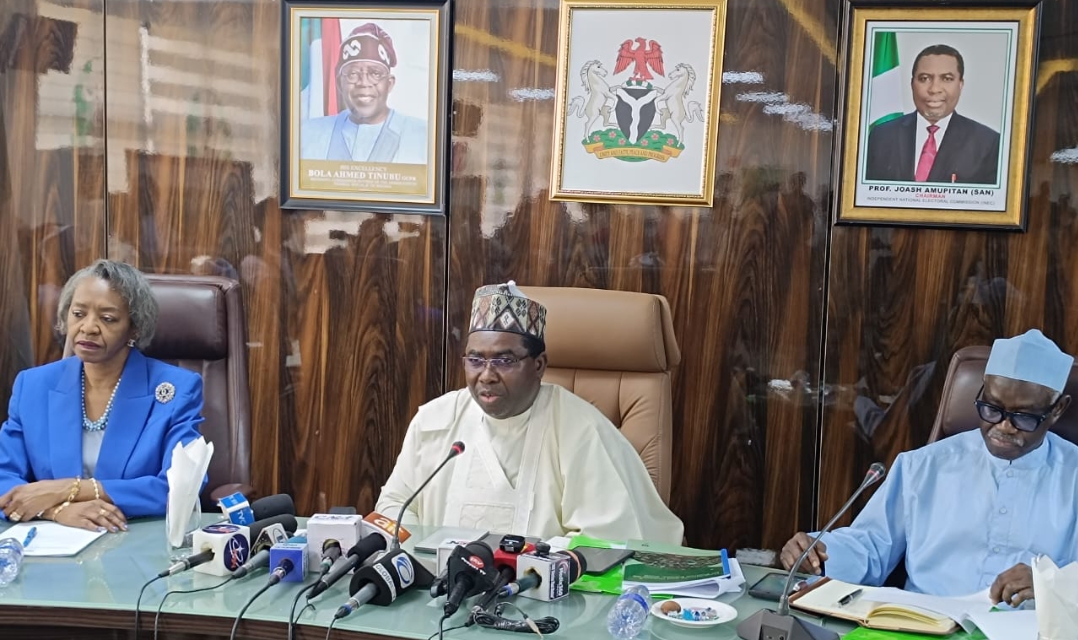
INEC Unveils Revised Party Guidelines, Warns Against Outdated Framework Ahead of 2027 Elections
Njideka Ozoalor
The Independent National Electoral Commission on Tuesday, unveiled a revised draft of its 2006 Regulations and Guidelines for political parties to strengthen the electoral process ahead of 2007 general election. The commission declared that Nigeria can not approach the 2007 general election with an outdated regulatory framework.
Speaking at a consultative meeting with political leaders in Abuja, the INEC chairman Prof. Josh Amupitan, said the new regulations were designed to align with Electoral Act 2026 and address gaps identified in previous frameworks.
He stressed that credible elections begins long before voting day, emphasing the importance of transparency in candidate selection processes.
“We gather to reaffirm our collective commitment to enhancing the democratic process in Nigeria and also to discuss the newly drafted INEC Regulations and Guidelines for political parties, 2026.
He said ” Credible elections begin in the transparency of the processes that produce the candidates; It begin long before the polling day.
The INEC Chairman explained that the revised guidelines followed a comprehensive review of the 2022 regulations, findings, including the political party performance index developed with support from the West minister foundation for Democracy.
He noted that the review exposed a” disturbing gap between party constitution and grassroot realities.
Amupitan added that the new framework introduces reform across key areas such as party registration and mergers, internal operations conduct of primaries, campaign activities, financial transparency, and conditions for deregulation. According to him, the measure are aimed at curbing irregularities, particularly in party primaries.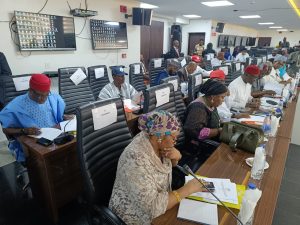
” He said “The guidelines aim to sanitize party primaries and end opaque processes that impose unpopular candidates, fueling voter apathy and avoidable litigation.
The Chairman of INEC also highlighted provisions on campaign finance, noting that the Electoral Act 2026 empowers the commission to determine election expenses in consultation in with political parties . He urged stakeholders to pay close attention to clauses relating to funding and expenditure.
With the 2027 general elections. Scheduled for 16 January for presidential and National assembly polls and February 6, for Governorship and state assemblies, Joash Amupitan warned that the commission is operating within a compressed timeline.
He noted “We are operating within a compressed timetable, which demands what I call surgical precision.
He further disclose that the draft regulations in corporate measurable benchmarks to boost the participation of women, youth, and persons with disabilities.
Urging constructive engagement, He asked political parties to view the regulations as safeguards rather than restrictions.
He said “By sharpening these rules, we are protecting the sovereign will of the Nigerian people from nomination to the final declaration of results.
“Reaffirming INEC neutrality , he added, “INEC remains a neutral umpire, but we are no longer passive observers to the erosion of democratic values.
In his remarks, Dr Yusuf Dantalle, The National Chairman of the Inter- party Advisory Council, raised concern over provision of the Electoral Act 2026, warning that unresolved issues could undermine the credibility of the 2027 general elections.
“Critical issues, If not urgently addressed could jeopardize the success of the 2027 general elections.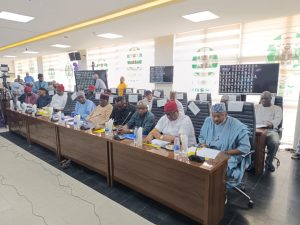
Dr Yusuf Danielle described the law as falling short of public expectations, arguing that it represents a setback to Nigeria’s democratic progress.
He stated “Rather than advancing our democratic journey, it represent a. significant regression.
He noted that Nigerians had anticipated a more inclusive and people oriented framework, while he criticized provisions, he said place undue pressure on political parties, particularly those outside government, and called for a review of the mandatory direct primaries.
He said ” The choice of candidates selection methods remains an internal affair of political parties .
Urging the National Assembly restore indirect primaries as an option.
The IPAC Chairman further described as impractical and exclusionary, The requirements for parties to submit membership registers, including National identification numbers , within a limited time frame.
He also called for mandatory electronic transmission for election results warning against a repeat of the past lapses.
He added” This is a fundamental demand of the Nigeria people.
Danielle emphasizes the need for stronger measure against Electoral malpractice, including the establishment of the electoral offenses commission, while urging stakeholders to rebuild public trust in the system.
He said ” The Credibility of the commission is at stake, and public confidence hinges on the assurance that every vote will count!
The IPAC Chairman added that the International community would closely watching Nigeria’s 2027 elections.