FG Unveils 10 Measures To Cushion Nigerians From Rising Fuel Costs
Maryam Aminu
The Federal Government of Nigeria has announced a 10-point intervention package aimed at easing the pressure of rising petrol prices on Nigerians, including a 30-day discount at NNPC stations, a proposed ₦1,350 ceiling on petrol landing costs and increased support for vulnerable households.
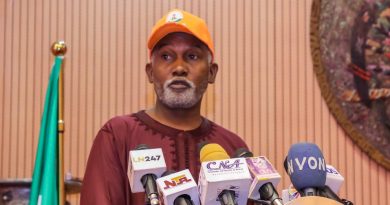
Minister of Finance and Coordinating Minister of the Economy, Professor Taiwo Oyedele, announced the measures while delivering an address during a press briefing titled “Fuel Prices and the Subsidy Question”.
Oyedele said the measures were designed to cushion Nigerians from the immediate effects of rising fuel prices without returning the country to the broad-based petrol subsidy regime, which he argued had placed a heavy burden on public finances.
He acknowledged that the current pressure on households and businesses was real, saying the government recognised Nigerians’ concerns over the cost of petrol, transportation, food and other necessities.
According to him, the government’s position is that the solution is not to reverse the reforms but to ensure that their benefits reach Nigerians “more quickly and in more tangible ways.”
One of the immediate measures announced is a 30-day petrol discount at NNPC stations, with priority given to public transport operators nationwide.
Oyedele explained that the arrangement should not be viewed as a return to subsidy, but as a temporary measure under which NNPC Limited would sell petrol at cost to cushion consumers.
The government is also negotiating a ₦1,350-per-litre ceiling on the ex-gantry or landing cost of petrol, aimed at reducing sharp fluctuations in pump prices.
Oyedele said the proposed arrangement would allow refiners and importers to absorb temporary increases above the ceiling and recover the difference when market conditions improve.
He said the mechanism was intended to smooth out price volatility rather than permanently suppress petrol prices.
The minister also announced plans for forward sales of crude oil to domestic refineries, saying the arrangement would provide greater certainty to refiners and help shield consumers from sudden movements in international crude prices and exchange rates.
Other measures include removing illegal levies that add to transportation and logistics costs, increasing cash transfers to vulnerable households, expanding subsidised credit for small businesses and consumers, and accelerating the rollout of Compressed Natural Gas (CNG) vehicles.
The government is also considering an excess-profit tax on operators found to be taking undue advantage of consumers along the energy value chain.
Oyedele said proceeds from such a measure would be dedicated to cushioning the impact of higher prices, including possible transport support or vouchers for vulnerable urban workers.
He added that the Federal Government would work with the National Assembly on enhanced tax relief for low-income earners as part of the proposed 2027 Finance Bill.
The ninth measure is a reduction in regulatory costs and red tape that feed into the cost of doing business and ultimately increase the prices of goods and services, while the tenth is the development of a national strategic fuel reserve to protect households and businesses against future energy shocks.
The Finance Minister also rejected calls for the restoration of the old petrol subsidy, warning that it could impose a much heavier burden on government finances.
He said returning petrol to its pre-reform price could cost more than ₦20 trillion annually, based on Nigeria’s estimated consumption of about 50 million litres of petrol daily.
Oyedele argued that cheaper petrol could also encourage higher consumption and fuel diversion across Nigeria’s borders, potentially increasing the country’s import bill and worsening pressure on foreign exchange.
He said subsidy removal had instead freed up resources for the Federation, with ₦15.8 trillion mobilised between June 2023 and December 2025. Of the amount, ₦5.4 trillion accrued to the Federal Government, while ₦10.4 trillion was shared among states and local governments through the Federation Account.
The minister maintained that the savings had created fiscal space for government to fund wages, infrastructure, electricity support and social interventions, while also helping states meet their financial obligations.
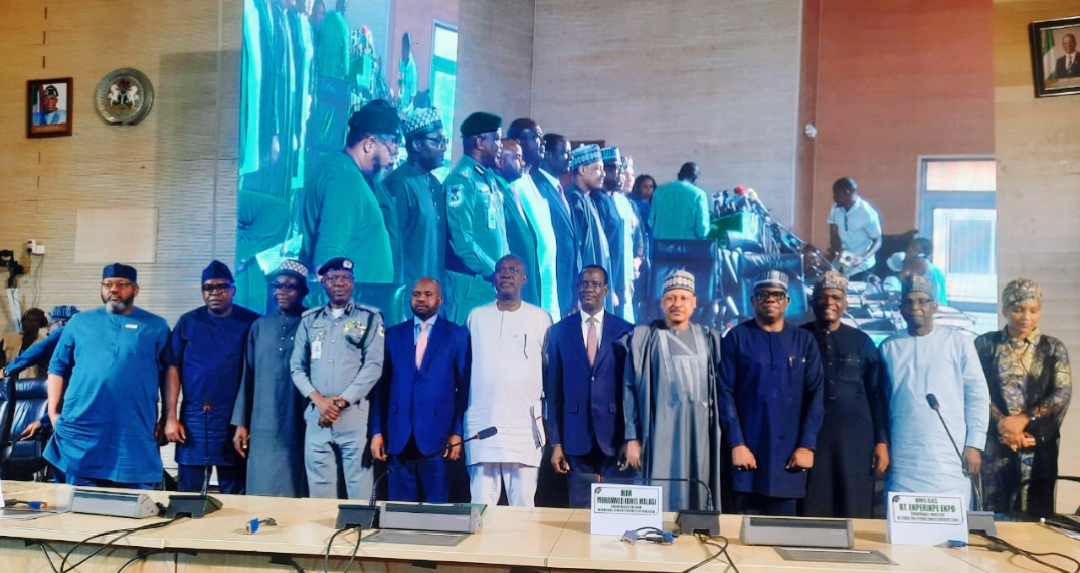
Earlier, the Minister of Information and National Orientation, Mohammed Idris, said the government’s economic reforms had created the foundation for increased investment and enterprise, but acknowledged that the benefits must become more visible in the daily lives of Nigerians.
Idris said the country’s transition should now move from reform to tangible economic impact, with progress measured not only through macroeconomic indicators but also by opportunities for young people, stronger businesses, productive farms and industries, and improved living standards.
He urged the media to continue interrogating government policies, asking critical questions and helping Nigerians understand both the progress being made and the challenges that remain.
“Whatever happens at the end of the day, Nigeria is for all of us to keep,” Idris said, urging journalists to keep national unity, progress and prosperity at the centre of their reporting.
Oyedele, meanwhile, said the government was not claiming that the reforms had eliminated the hardship being experienced by Nigerians.
He said the immediate task was to build on the reforms while providing targeted relief to households and businesses affected by higher energy and transportation costs.
The minister also disclosed that the Federal Government was working on a broader package of fiscal measures aimed at bringing inflation down to single digits “sustainably in the near term,” with further details expected to be released later.
The government’s latest intervention comes as petrol prices remain significantly higher than their pre-reform levels, following the removal of the petrol subsidy in May 2023. The government says its current approach is to combine targeted relief with measures intended to reduce volatility and strengthen domestic energy supply rather than return to a universal subsidy regime.