NSC Intensifies Nationwide Sports Infrastructure Renewal, Targets Modern Facilities Across Nigeria
Oru Leonard
The National Sports Commission (NSC) has reaffirmed its commitment to transforming Nigeria’s sports infrastructure through an ambitious nationwide programme aimed at rehabilitating dilapidated facilities, developing new sporting centres and creating a sustainable sports economy.
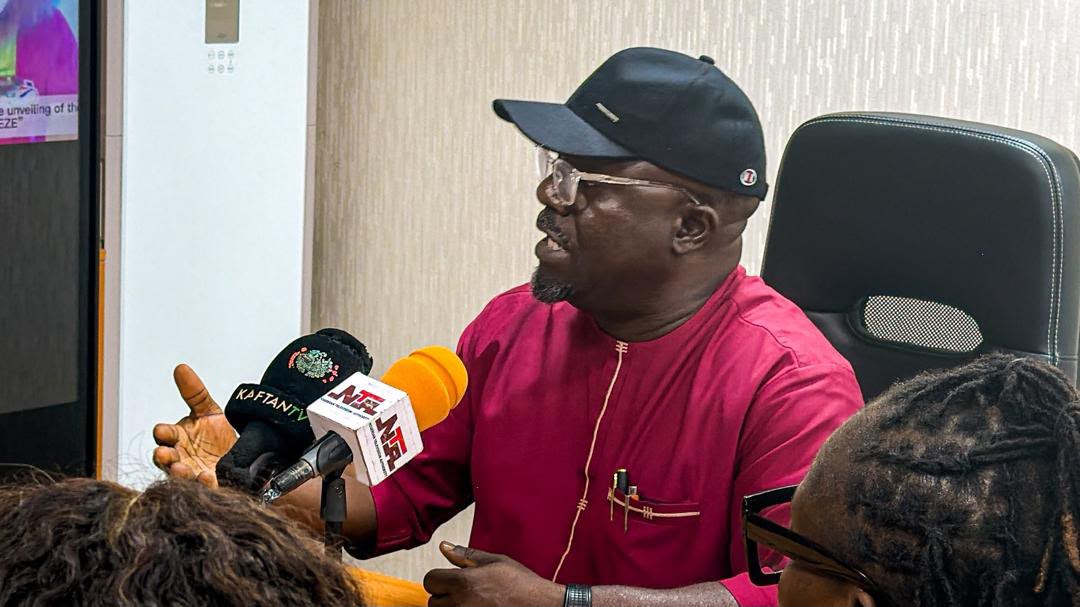
Director General of the Commission, Hon. Bukola Olopade, said the NSC was deliberately pursuing a major infrastructure revolution to reposition Nigerian sports, improve athletes’ performance and unlock the economic potential of the sector.
The initiative, being implemented under the leadership of NSC Chairman, Mallam Shehu Dikko, covers major national stadiums, state-owned sporting facilities, tertiary institutions and community-based sports centres.
Among the key projects is the proposed ₦2.5 billion revitalisation of the historic Mudashiru Lawal Stadium in Abeokuta, Ogun State. The project will involve the installation of modern tartan tracks and rehabilitation of existing facilities to bring the stadium in line with contemporary sporting standards.
The intervention is expected to restore the facility’s status as an important sporting centre while providing improved opportunities for athletes in Ogun State and neighbouring communities.
In Enugu State, the Commission is supporting the development of an Olympic-size swimming pool, alongside improvements to the state’s indoor sports hall and rehabilitation of athletes’ hostels.
The projects are expected to strengthen aquatic sports, enhance athlete preparation and improve Enugu’s capacity to host national and international sporting competitions.
A major highlight of the infrastructure renewal programme is the comprehensive redevelopment of the Moshood Abiola National Stadium in Abuja.
The Federal Government has approved an extensive upgrade of the stadium’s main pitch, tartan tracks and other critical facilities, including dressing rooms, media centre, VIP stands, corporate suites, public address systems, security installations, climate-control facilities and roof membrane.
The redevelopment will also introduce internationally compliant floodlighting, electronic advertising boards, Video Assistant Referee (VAR) technology and protective pitch covering to accommodate concerts and other commercial activities without damaging the playing surface.
Additional approvals cover the establishment of a High Performance Centre, construction of two training pitches and rehabilitation of the Package B swimming pool.
The existing 200-bed athletes’ hostel will also be redeveloped into a modern hotel accessible to the public, creating additional commercial opportunities and supporting the long-term sustainability of the stadium complex.
According to the Commission, the proposed High Performance Centre will provide specialised facilities for elite athlete training, sports science, performance monitoring and other technical services required to prepare Nigerian athletes for international competitions.
Beyond the national stadiums, the NSC is expanding its infrastructure agenda to tertiary institutions and grassroots communities.
Approvals have been secured for the establishment of sports centres in 15 tertiary institutions across the six geopolitical zones, while plans are underway to construct 20 additional mini sports centres and mini stadiums in communities nationwide.
The initiative is designed to improve access to sporting facilities, promote youth participation, strengthen grassroots competitions and create pathways for identifying emerging talents.
Other significant interventions include the redevelopment of Ahmadu Bello Stadium in Kaduna through a partnership with the Kaduna State Government, with completion projected for 2027.
The Commission is also collaborating with the National Assembly on the construction of the new Bichi Stadium in Kano State.
Plans are equally advancing for the redevelopment of the National Stadium in Lagos through government and private-sector investment, as well as the Obafemi Awolowo Stadium in Ibadan through a partnership between the NSC and the Oyo State Government.
Speaking on the scope of the projects, Olopade acknowledged that substantial investments were being channelled into sports infrastructure across the country but observed that many Nigerians were yet to appreciate the extent of the ongoing interventions.
He stressed that the Commission’s vision went beyond building and renovating stadiums, noting that the objective was to establish a functional sports ecosystem capable of supporting talent development, job creation, private-sector participation and international competitiveness.
A major component of this strategy is the National Sports Infrastructure Development Bond, approved by President Bola Ahmed Tinubu, to provide sustainable financing for the rehabilitation, redevelopment and maintenance of critical sporting facilities.
The funding initiative aligns with the Renewed Hope Initiative for Nigeria Sports Economy (RHINSE), which seeks to reposition sports as an important contributor to national economic development rather than limiting it to recreation and competitive activities.
Under the leadership of Dikko and Olopade, the Commission is pursuing a broader strategy that connects sports infrastructure with sports tourism, commercial partnerships, grassroots development, elite athlete preparation and employment generation.
The NSC believes that modern sporting facilities, supported by sustainable financing and effective management, will strengthen Nigeria’s capacity to host international competitions, nurture sporting talents and attract investments into the sector.
With projects spread across different states, institutions and communities, the Commission’s infrastructure programme represents a significant step towards rebuilding Nigeria’s sporting landscape and harnessing the sector’s potential for national development.
(Kola Daniel, S.A. Media to DG NSC, November 28, 2026)