Ochei Champions Grassroots Sports Development, Invests in Future Athletes
…DAVNOTCH Tennis Championship, Wheelchair Basketball Sponsorship, Donald Ochei Mini Stadium Highlight Commitment
Oru Leonard
Former Speaker of the Delta State House of Assembly and President of the Nigeria Tennis Federation, Rt. Hon. Engr. Victor Ochei, FNSE, Esq., has reaffirmed his commitment to grassroots sports development through sponsorship of sporting competitions and investment in community sports infrastructure.
Ochei’s approach to sports development is anchored on the belief that young people, irrespective of their social and economic backgrounds, deserve opportunities to discover, develop and maximise their sporting talents.
His contributions include sponsorship of the annual DAVNOTCH National Tennis Championship and the National Wheelchair Basketball Championship, initiatives that promote sporting excellence, youth empowerment and inclusion of athletes living with disabilities.
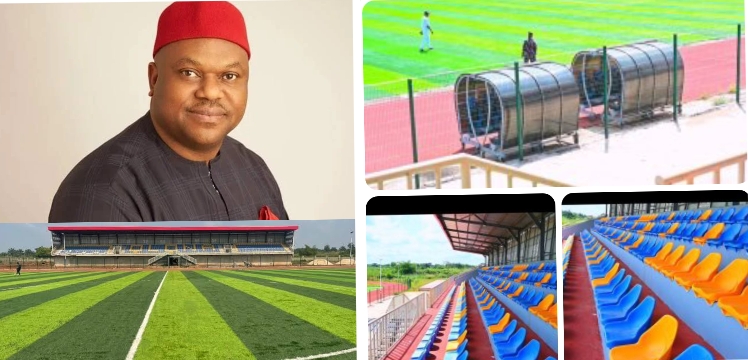
One of the most significant expressions of this commitment is the Donald Ochei Mini Stadium, a sports facility personally undertaken by him in his hometown of Onicha-Olona, Aniocha North Local Government Area of Delta State.
The facility boasts a modern football pitch, standard tartan athletics tracks with drainage facilities, dressing rooms and a tennis court, providing a platform for discovering and nurturing emerging sporting talents.
The stadium was conceived partly to strengthen the annual Onicha-Olona Football Tournament, which has continued to provide young footballers with opportunities to demonstrate their abilities and attract wider recognition.
Beyond its physical infrastructure, the initiative represents an example of how private investment can complement government efforts in developing sports at the grassroots.
Globally, successful sports development models, including Qatar’s Aspire Academy and Barcelona’s La Masia football academy, have demonstrated the importance of sustained investment in infrastructure, talent identification, professional coaching and athlete development.
Similarly, South Africa’s experience under Nelson Mandela demonstrated how sports could serve as an instrument of national unity, reconciliation and social integration.
For Ochei, sports development goes beyond winning competitions and collecting trophies. It is about empowering young people, promoting discipline, creating opportunities and providing alternative pathways to economic independence.
His experience as a lawyer, engineer, former legislator and sports administrator also offers an important perspective on the role of public policy and legislation in strengthening the country’s sports sector.
Among the areas requiring greater attention are improved sports infrastructure, sustainable funding mechanisms, school and community competitions, disability inclusion, talent identification and increased private-sector participation.
With sports increasingly emerging as a major economic sector, generating opportunities in broadcasting, tourism, coaching, facility management, athlete representation and sponsorship, Nigeria must begin to approach sports development as a serious economic investment rather than merely a recreational activity.
Ochei’s grassroots initiatives underscore the importance of creating opportunities at the community level, where sporting talents can be identified early and nurtured towards national and international recognition.
A football pitch could produce Nigeria’s next international football star; an athletics track could nurture a future national champion, while a tennis court could open doors to international opportunities for a young Nigerian.
Ultimately, the success of grassroots sports development should not be measured only by trophies won or medals secured, but by the lives transformed, talents discovered and opportunities created.
For Ochei, investing in grassroots sports is ultimately an investment in the future of Nigerian youths.
Credit: Austin Edemodu, PhD.