NDIS 2026: Summit Designed to Address Trust and Information Gaps
Oru Leonard
The 9th Nigeria Diaspora Investment Summit (NDIS) 2026 has been designed to bridge the trust and information gaps preventing Nigerians in the diaspora from investing in their home country, the Nigerians in Diaspora Commission (NiDCOM), has said.
The Commission expressed optimism that Nigeria could attract more than $100 billion annually in diaspora investments if appropriate structures are established to guarantee transparency, investor protection and sustainable returns.
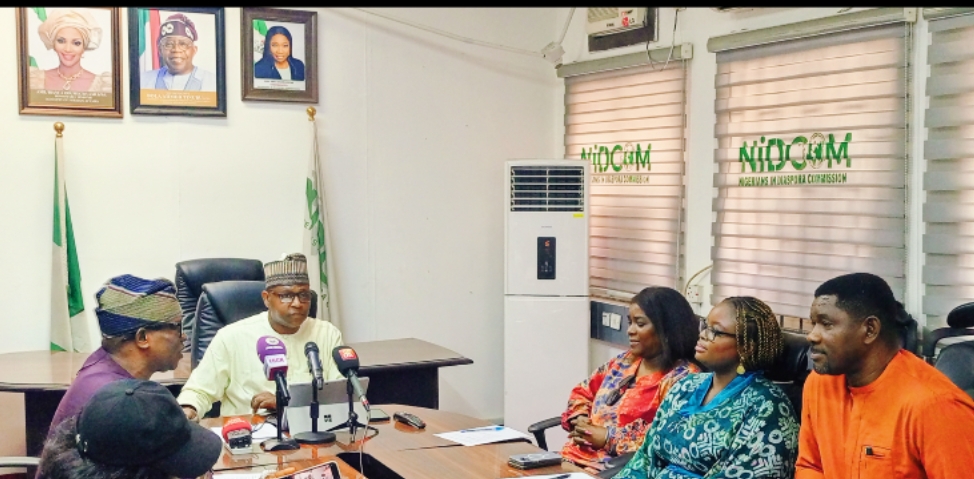
Chairman/Chief Executive Officer of NiDCOM, Hon. (Dr.) Abike Dabiri-Erewa, disclosed this during a press conference at the Commission’s headquarters in Abuja, where she unveiled plans for the 2026 edition of the summit.
Dabiri-Erewa, who was represented by the Acting Secretary to the Commission, Hon. Dr. Abdulrahman Terab, said the summit, organised in partnership with the Nigeria Diaspora Summit Initiative (NDSI), would hold on November 10 and 11, 2026.
Themed, “Bridging the Trust Gap: Connecting Diaspora Capital with Credible Home-based Opportunities,” the summit seeks to strengthen confidence among Nigerians abroad and connect them with verifiable investment opportunities in the country.
She observed that Nigerians in the diaspora possess enormous financial, entrepreneurial, professional and intellectual resources capable of contributing significantly to national economic growth if effectively mobilised beyond conventional personal remittances.
According to her, diaspora investments could generate up to $100 billion annually, describing Nigerians abroad as a strategic economic asset in the country’s quest to achieve a $1 trillion economy.
She, however, stressed that attracting such investments would require more than presenting business opportunities, noting that transparency, strong institutions, reliable information, effective regulatory frameworks and adequate investor protection were critical.
The NiDCOM chairman explained that this year’s summit was structured to address the concerns that discourage Nigerians abroad from committing their resources to businesses and projects in Nigeria.
She disclosed that the 2026 edition would adopt a hybrid format, combining virtual participation through Zoom with limited physical attendance at the Shehu Musa Yar’Adua Centre, Abuja.

The decision to limit physical participation, she explained, was informed by the forthcoming national election campaign season, while the virtual platform would provide opportunities for wider participation by Nigerians across different countries.
Dabiri-Erewa identified capital market opportunities, infrastructure investment and regulatory frameworks for investor protection as the three major areas of focus during the two-day engagement.
Institutions expected to participate include the Securities and Exchange Commission (SEC), Nigerian Exchange Group (NGX), Central Bank of Nigeria (CBN), Ministry of Finance Incorporated (MOFI), Infrastructure Concession Regulatory Commission (ICRC), Nigerian Sovereign Investment Authority (NSIA), Corporate Affairs Commission (CAC), Presidential Enabling Business Environment Council (PEBEC) and Nigerian Export Promotion Council (NEPC).
She added that interactive question-and-answer sessions would enable prospective investors to engage directly with regulators, financial institutions, project sponsors, mortgage providers and verified service providers.
Speaking virtually, the NDIS 2026 Coordinator, Mr. Mobolaji Lewis, said the summit had, over the last eight years, provided a platform for Nigerians abroad to connect with credible investment opportunities and contribute to the country’s economic development.
Lewis emphasised that the initiative was not simply about attracting diaspora funds but ensuring that such resources were channelled into transparent, properly structured and credible investment opportunities.
He identified trust, transparency, dependable information, institutional credibility and effective investor protection as essential requirements for mobilising diaspora capital towards sustainable national development.
Responding to questions from journalists, he said bridging the trust gap remained a fundamental reason for establishing NiDCOM and organising the investment summit.
He explained that the platform was also designed to educate Nigerians abroad about existing government institutions, investment opportunities and regulatory structures that could safeguard their financial commitments.
Lewis cautioned diaspora investors against informal person-to-person investment arrangements that could expose them to fraudulent schemes, urging them instead to work through established government institutions and regulated investment platforms.
He said the initiative was designed to connect prospective investors directly with agencies such as the Nigerian Investment Promotion Commission and Nigerian Export Promotion Council rather than relying on unverified individuals.
The coordinator disclosed that Nigerians in the diaspora currently remit between $20 billion and $35 billion annually, with much of the money directed towards personal and family needs.
He argued that creating a more dependable investment environment could encourage diaspora Nigerians to commit substantially more resources to productive ventures in the country.
Citing a previous mutual investment initiative involving Nigerians abroad, Lewis said the programme reportedly delivered a seven per cent return on investment, demonstrating the potential benefits of properly structured investment arrangements.
On the achievements of previous editions, he disclosed that the summit had facilitated business relationships and investment transactions worth billions of dollars, although a comprehensive assessment of the outcomes was still being compiled.
He further revealed that business engagements generated through one of the previous editions reportedly resulted in transactions approaching $1 billion within 365 days after the event.
However, he acknowledged that tracking the actual outcomes of the summit had remained challenging because some investors and business participants did not formally report transactions and partnerships concluded after the engagements.
To address the challenge, Lewis said the organisers were collaborating with the Central Bank of Nigeria and Ministry of Finance Incorporated to establish an empirical framework for identifying, tracking and documenting investments facilitated through the summit.
He also highlighted NiDCOM’s efforts to protect Nigerians abroad through initiatives aimed at monitoring investment transactions, addressing fraud and facilitating redress for victims of fraudulent investment arrangements.
According to him, prioritising institutional investment channels would enable diaspora investors to establish relationships with accredited and regulated organisations, thereby reducing their exposure to financial risks.
Both Dabiri-Erewa and Lewis expressed confidence that the 2026 summit would strengthen diaspora confidence in Nigeria’s investment climate and create more secure channels for directing diaspora resources into productive sectors of the economy.
Dabiri-Erewa consequently called on Nigerians in the diaspora, business associations, professionals, institutional investors, entrepreneurs and project developers to participate in the November 10–11 engagement.
She described the summit as an important foundation for the 10th anniversary edition scheduled for 2027, reaffirming NiDCOM’s commitment to connecting Nigerians abroad with credible investment opportunities in their home country.
Interested participants have been encouraged to visit www.ndisng.com for registration and further information.