Senate Health Committee Concludes Hearing on Seven Bills, Weighs Digital Healthcare and Regulatory Reforms
Oru Leonard
The Senate Committee on Health (Secondary and Tertiary) has concluded a two-day public hearing on seven health-sector bills seeking to expand access to healthcare through digital technology, strengthen drug and food safety regulation, improve the distribution of federal medical facilities and reform the governance of professional regulatory bodies.
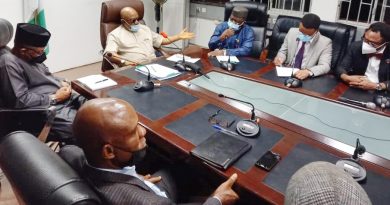
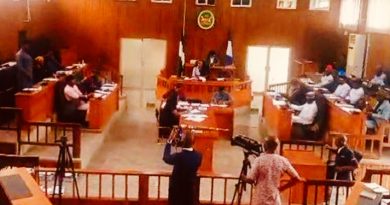
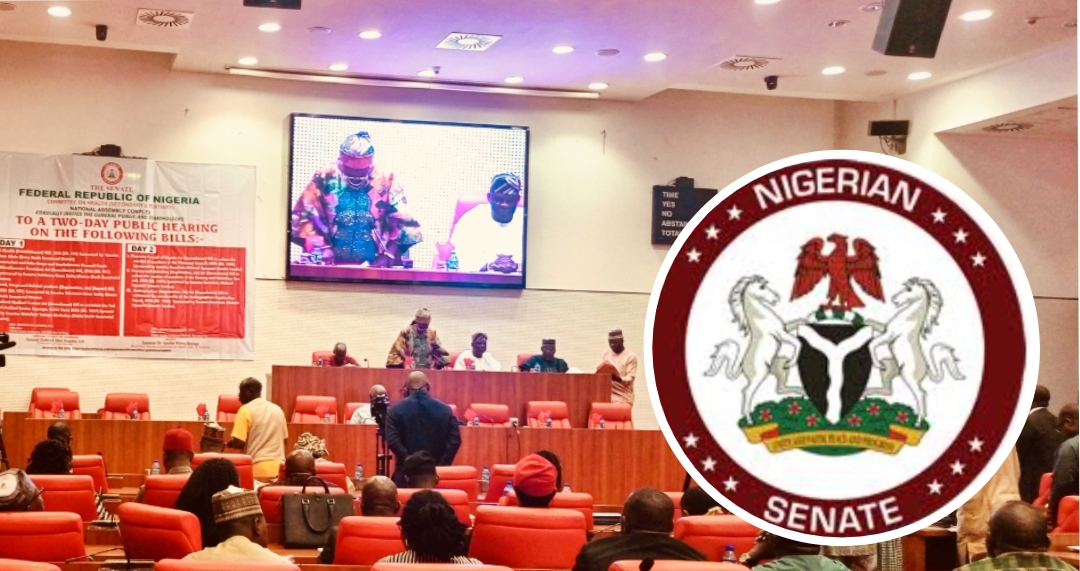
The hearing, which began on Thursday, October 8, and ended on Friday, October 9, 2026, at the National Assembly in Abuja, brought together government officials, healthcare regulators and professional associations to examine the proposed legislative changes and make recommendations to lawmakers.
Chairman of the committee, Senator Ipalibo Harry Banigo, reaffirmed the Senate’s commitment to improving access to quality healthcare, particularly in rural and underserved communities, while ensuring that reforms strengthen existing institutions rather than create additional challenges.
Banigo said the proposed digital health legislation could help bridge healthcare gaps in hard-to-reach areas, while reforms to regulatory bodies should promote better coordination and place patients at the centre of service delivery.
“We are passionate to see that health services are accessible for quality delivery and reach every nook and cranny of this nation, excluding not one single person,” she said.
Seven Bills Examined Over Two Days
Four bills were considered on the first day of the hearing, followed by three bills on the second day.
The first-day bills included the E-Health (Establishment) Bill, 2026 (SB. 758), sponsored by Senator Barau Jibrin, representing Kano North Senatorial District. The bill seeks to establish a framework for electronic health services.
The committee also considered the Counterfeit and Fake Drugs and Unwholesome Processed Foods (Miscellaneous Provision) Act (Amendment) Bill, 2026 (SB. 951) and the Food, Drugs and Related Products (Registration, Etc.) (Repeal) Bill, 2026 (SB. 952), both sponsored by Senator Suleiman Umar Sadiq of Kwara North Senatorial District.
The fourth bill was the Federal Medical Centres Act (Amendment) Bill, 2026 (SB. 1057), sponsored by Senator Abdullahi Yahaya Abubakar of Kebbi North Senatorial District. It seeks to establish a Federal Medical Centre in Argungu, Kebbi State.
The second-day session focused on three bills sponsored by Senate Leader Senator Bamidele Michael Opeyemi.
They were the Pharmacy Council of Nigeria Act (Amendment) Bill, 2026 (SB. 1000), which proposes reducing the council’s membership; the Nursing and Midwifery (Registration, Etc.) Act (Amendment) Bill, 2026 (SB. 1001), which seeks to reduce the membership of the Nursing and Midwifery Council; and the Radiographers (Registration, Etc.) Act (Amendment) Bill, 2026 (SB. 1003), which proposes restructuring the Radiographers Registration Board.
Digital Health, Rural Access Take Centre Stage
Addressing the policy objectives behind the proposed reforms, Banigo said digital health services could extend healthcare delivery to communities with limited access to medical facilities and personnel.
She noted that the hearing also examined proposals to establish federal medical centres in underserved locations and upgrade some general hospitals to federal medical centres.
The proposed Federal Medical Centre in Argungu is one of the measures under consideration that could broaden the geographical distribution of federal healthcare infrastructure.
The discussions highlight the importance of combining investment in healthcare facilities with technology, effective regulation and adequate staffing to improve access to medical services across the country.
Ministry Proposes Reduction in Pharmacy Council Membership
One of the major debates centred on the proposed restructuring of the Pharmacy Council of Nigeria.
The Federal Ministry of Health and Social Welfare proposed reducing the council’s membership from 81 to 24, arguing that a smaller body would improve administrative efficiency while retaining representation from key professional and institutional stakeholders.
The position was presented by the Director of Hospital Services, Dr Bisola Adekoke, who represented the Coordinating Minister of Health and Social Welfare, Professor Muhammad Ali Pate.
Under the ministry’s proposal, the reconstituted council would retain representatives of relevant professional associations, government institutions, training institutions and other stakeholders in pharmacy practice.
The Registrar of the Pharmacy Council, Ibrahim Babashe Hamad, supported the proposed reduction.
However, the Association of Nigerian Pharmacists advocated a further reduction to 14 members and opposed the proposed inclusion of representation from the Medical and Dental Council of Nigeria.
The competing proposals indicate that the final composition of the council will require further consideration of efficiency, professional representation and regulatory responsibilities.
Nursing Council Faces Different Position
On the Nursing and Midwifery Council, the ministry recommended retaining its existing 23-member board rather than reducing its membership.
The position was supported by the council’s Registrar, Dr Ndaiji Abihasa, who argued that the size of Nigeria’s nursing workforce and the profession’s extensive role across different levels of healthcare delivery justify broad representation.
The contrasting positions on the pharmacy and nursing councils underscore the need to consider the distinct responsibilities and professional structures of each regulatory body when reviewing their composition.
Radiographers’ Board Structure Under Review
The hearing also examined proposed changes to the Radiographers Registration Board.
The ministry raised concerns about proposals to remove the requirement that the board’s chairman have at least 12 years of professional experience, eliminate state representation and remove the position reserved for a therapeutic radiographer.
It also questioned a proposal to increase community-interest representatives to six.
Instead, the ministry recommended retaining the experience requirement for the chairman and maintaining representation from the health ministry, training institutions, professional associations and relevant regulatory bodies.
It further proposed six zonal radiographers in place of community-interest representatives, alongside a public-interest member, and recommended renaming the body the Radiography Registration Board of Nigeria.
The committee is expected to consider these competing recommendations as it prepares its report on the proposed amendment.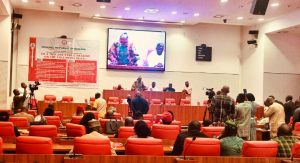
Counterfeit Drugs and Food Safety Require Further Consultation
The proposed amendments concerning counterfeit drugs, fake medicines and unwholesome processed foods also featured in the deliberations.
Banigo disclosed that the Federal Ministry of Health and Social Welfare had requested additional time to prepare detailed submissions on the relevant bills.
She stressed the importance of careful legislative scrutiny to avoid introducing provisions that could worsen existing regulatory challenges.
“We don’t want to be in a hurry to bring out anything that will worsen the situation. What we want to do is to build solutions,” she said.
Her remarks underscored the need to balance stronger enforcement against counterfeit products with effective regulatory coordination and safeguards for public health.
Health Workforce Shortage Also Discussed
The committee chairman also highlighted measures by the National Assembly to support increased admissions into pharmacy, medicine and nursing programmes in response to healthcare workforce shortages.
She said provisions had been made to expand training opportunities, including an increase of 100 in medical student intake.
The issue remains relevant to the broader reform agenda, as expanding access to healthcare requires not only facilities and regulatory improvements but also sufficient numbers of qualified health professionals.
Committee to Consider Stakeholders’ Submissions
Banigo expressed satisfaction with stakeholder participation, noting that memoranda and oral presentations had been recorded for consideration by the committee.
She said the committee would review the submissions before preparing its reports, with the objective of strengthening health institutions, expanding access to medical services, addressing workforce shortages and ensuring that regulatory systems serve patients and the wider public.
The conclusion of the public hearing does not mean the bills have been passed into law. They remain subject to further legislative scrutiny and the applicable procedures of the National Assembly.
The outcome of the committee’s deliberations will help determine the recommendations forwarded for subsequent legislative consideration.
Stakeholders and members of the public can access the bills through the Senate Health Committee’s public hearing portal: https://p.placbillstrack.org/senatehealthcommittee.