Maritime Industry Holds Untapped Wealth for Nigeria — NIMASA DG
Oru Leonard
The Director-General of the Nigerian Maritime Administration and Safety Agency (NIMASA), Dr. Dayo Mobereola, has identified the maritime sector as a critical engine for Nigeria’s economic diversification, investment and sustainable growth.
Mobereola said the sector’s significance extended far beyond Nigeria’s coastal communities, noting that maritime activities played a central role in facilitating trade, transportation and the movement of goods across the country.
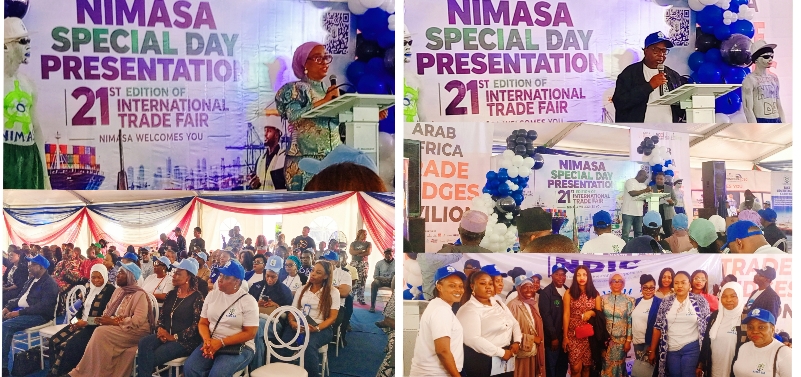
The NIMASA Director-General stated this through the agency’s representative, Mrs. Nneka Obiano, at the ongoing Abuja International Trade Fair, where NIMASA showcased its regulatory reforms, maritime safety initiatives and programmes aimed at developing the blue economy.
He said Nigeria’s maritime industry presented considerable opportunities for businesses, investors and entrepreneurs in areas including shipping, port services, inland waterways and other marine-related activities.
According to him, unlocking these opportunities would contribute significantly to Nigeria’s efforts to diversify its economy and create more avenues for wealth and employment generation.
Obiano said NIMASA’s participation in the trade fair was aimed at increasing public understanding of the agency’s mandate while creating opportunities for engagement between the maritime industry and entrepreneurs, investors, policymakers and other stakeholders.
She said: “Our presence here is to explain our reforms, programmes and initiatives and their impact on the development of Nigeria’s maritime sector and the blue economy.”
Mobereola stressed that Abuja’s geographical distance from the coastline did not diminish the relevance of the maritime industry to residents of the Federal Capital Territory and other inland communities.
He explained that goods imported into or exported from Nigeria through the country’s maritime gateways were eventually transported to various parts of the country for distribution and consumption.
The NIMASA boss said the agency’s strategic priorities included strengthening maritime safety and security while creating an enabling environment for the expansion of Nigeria’s blue economy.
On maritime security, Mobereola recalled the challenges previously posed by piracy in the Gulf of Guinea, saying the development had affected vessel traffic, investment and the movement of goods.
He attributed progress in combating maritime crime partly to the Suppression of Piracy and Other Maritime Offences (SPOMO) Act 2019, which established a legal framework for the prosecution of piracy and other maritime offences.
He noted that successful prosecutions between 2021 and 2022 demonstrated Nigeria’s determination to tackle maritime crime and improve confidence in the country’s maritime domain.
Mobereola assured that NIMASA would continue to implement initiatives aimed at improving maritime safety and security while expanding opportunities for Nigerians to participate meaningfully in the maritime industry.
Earlier, the Head of NIMASA Abuja Zonal Office, Buba Umar, said the agency’s participation in the trade fair was part of efforts to strengthen stakeholder engagement and make information about the maritime sector more accessible to Nigerians.
Umar said NIMASA’s mandate extended beyond regulation to include public engagement, stakeholder collaboration and promotion of opportunities within the maritime industry.
He urged visitors to the trade fair to engage with NIMASA officials and provide constructive feedback that could assist the agency in improving its regulatory and administrative functions.