FG Launches Landmark National Land Transport Policy to Transform Nigeria’s Transport System
Oru Leonard
The Federal Government has unveiled Nigeria’s first National Land Transport Policy, describing it as a landmark framework for building an integrated, efficient, safe, affordable and sustainable transportation system capable of driving economic growth and national development.
The policy was unveiled on Thursday in Abuja during the 19th National Council on Transportation held at the National Judicial Institute, Jahi, with stakeholders from the Federal and state governments, National Assembly, transport agencies and the private sector in attendance.
The council, which held from August 31 to September 3, 2026, was themed: “Developing an Effective Transport System for Nigeria: The Role of Integrated Transportation.”
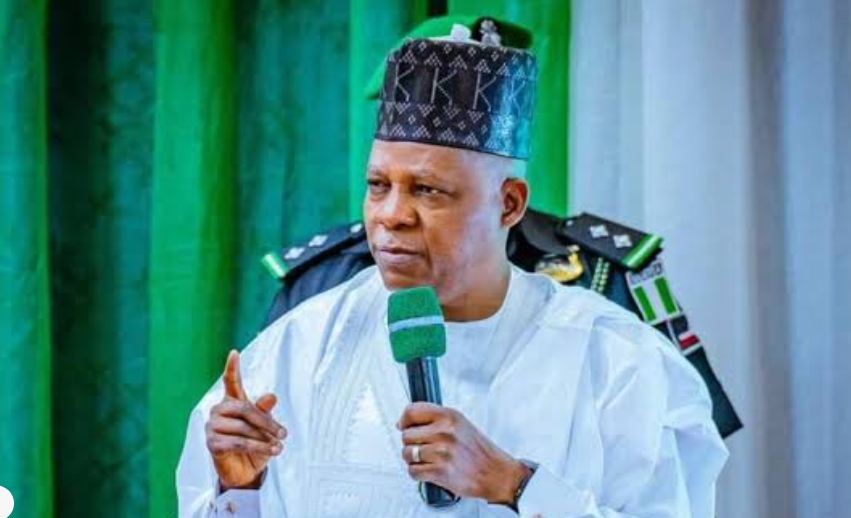
Representing Vice President Kashim Shettima, Director-General, General Duties, Aliyu Modibbo Umar, said transportation remained central to Nigeria’s economy as it connects workers, families, businesses, markets and communities.
He said the Federal Government’s transportation strategy was anchored on President Bola Ahmed Tinubu’s Renewed Hope Agenda, with emphasis on infrastructure capable of supporting a productive, competitive and interconnected economy.
According to him, the government is moving away from developing isolated transportation projects towards an integrated national network where roads, railways, ports, inland waterways and aviation complement one another.
He explained that the approach would improve the connection between production centres, markets, ports and consumers, while facilitating the movement of people and goods across the country.
The Vice President’s representative identified railway modernisation as a critical component of the administration’s transportation strategy, noting that major rail corridors were being developed to improve connectivity across the eastern, central and northern parts of the country.
He also highlighted efforts to strengthen connections between ports, railways, roads and logistics hubs.
Umar specifically cited the Kano-Maradi Railway Project, which links Kano through Jigawa and Katsina to Maradi in the Republic of Niger, saying it would enhance domestic connectivity, cross-border trade and regional integration.
He stressed the importance of connecting ports to rail and road networks to facilitate efficient cargo evacuation and reduce pressure on highways.
“Rail must connect to roads. Rail to production centres and markets, while roads provide first- and last-mile access,”
he said, stressing that no single mode of transportation could adequately meet Nigeria’s needs in isolation.
Shettima also emphasised the need for integrated urban transportation as Nigerian cities continue to grapple with congestion and inefficient mobility.
He said the Federal Government had approved high-grade urban transportation projects and directed the Minister of Transportation to work with participating states to establish clear technical, institutional, regulatory and implementation arrangements without unnecessary delays.
He said successful implementation of the projects would provide models that could be replicated in other Nigerian cities.
In his goodwill remarks, immediate past Minister of Transportation, Senator Said Ahmed Alkali, described the unveiling as a historic development, noting that the National Land Transport Policy was the first comprehensive policy of its kind for Nigeria’s transport sector since independence.
Alkali commended President Tinubu for creating an enabling environment for the Federal Ministry of Transportation to facilitate the policy’s approval by the Federal Executive Council on July 31, 2025, during his tenure.
He said the absence of a comprehensive land transport policy had made it difficult for the ministry to effectively regulate the sector, particularly amid emerging and increasingly complex transportation challenges.
According to him, the policy aligns with the administration’s eight-point priority agenda and provides a framework for developing a fast, safe, efficient, affordable, convenient, integrated and intermodal transport system.
Also speaking, the Permanent Secretary, Federal Ministry of Transportation, Engr. Olufunso Adebiyi, said the theme of the council was particularly relevant to the government’s efforts to develop a transportation system capable of supporting economic growth, national connectivity and improved quality of life.
Adebiyi explained that integration means ensuring that Nigeria’s various modes of transportation do not operate independently but function as components of a single national system.
“Our roads, railways, ports, inland waterways and urban transport systems must connect people and goods efficiently across the country, and increasingly, across our borders,”
he said.
He identified the operational Lagos-Ibadan and Abuja-Kaduna railway corridors as evidence of progress towards an integrated transport network.
He added that work was also progressing on the Kaduna-Kano segment of the Lagos-Kano Railway Modernisation Project.
The Federal Government expects the new National Land Transport Policy to provide a coordinated framework for transport planning, regulation, investment and infrastructure development, while improving mobility, reducing inefficiencies and strengthening the role of transportation in Nigeria’s economic transformation.