Osadebamwen: One Death, Too Many …A Tribute to Fallen Journalists and the Plight of Practising Journalists
By Abdullateef Bamgbose
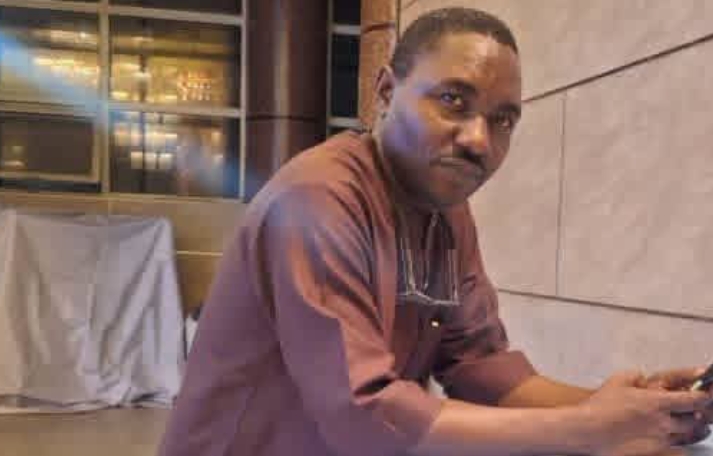
The tragic news of the death of Patrick Osadebamwen, a former reporter with the Nigerian Tribune and former Chairman of the Nigeria Union of Journalists (NUJ), FCT Council, struck members of the NUJ, FCT, like a thunderbolt, leaving many in disbelief.
Patrick is one of many journalists who have paid the ultimate price while serving the profession. Like several others before him, he has departed quietly, leaving behind family, friends, colleagues and a profession to which he devoted his life.
May the souls of all fallen journalists rest in peace.
Many journalists have died without the kind of recognition often accorded politicians and technocrats whom they spent their professional lives promoting. When a journalist dies, the usual response is a condolence message, a candlelight procession or a service of songs.
But for the families left behind, the pain goes far beyond the funeral.
Journalists are dying in circumstances that should concern the profession and the society at large. Some have been unable to access adequate medical treatment, even when suffering from ailments that could ordinarily be treated.
For many practising journalists, falling ill is not just a health challenge; it can also threaten their livelihood. Their physical presence at assignments often determines whether they will earn enough to support themselves and their families.
Consequently, some journalists are compelled to endure illness and continue working, moving from one assignment to another as though their daily activities could cure them.
Perhaps this partly explains why some deaths in the profession are described as sudden collapses.
Behind every fallen journalist is a family.
There are many other “Patricks” still in the profession today—journalists battling illness, struggling to pay children’s school fees and house rents, meeting family responsibilities and, in some cases, struggling to provide even one square meal a day.
When tragedy strikes, wives are often left to bear the burden of raising the children. Children are left without the fathers who were their providers and protectors.
Patrick’s story is particularly painful.
He had paid his dues as a journalist, working with several media organisations, including Union Newspapers, Core TV, The Nigerian Tribune and Kaftan TV. He also served the NUJ as Chairman of the FCT Council.
He died while still mourning the loss of his wife, leaving his children behind.
His death should remind us of the sacrifices made by journalists every day in the service of society.
The journalist is there when politicians make announcements, when governments commission projects and when public officials seek to tell their stories. Journalists give visibility to the activities of those in power and help preserve the history of society.
But when the journalist is sick, who tells his story?
When he cannot afford medical treatment, who comes to his rescue?
When he dies, who takes care of the family he leaves behind?
These questions become even more painful in the wake of the recent health challenges and deaths involving veterans in the profession.
Debo Adeshina, a veteran Nigerian journalist and former Editor-in-Chief of The Guardian, who was appointed Nigeria’s non-career ambassador to Togo in 2020, was recently reported to be critically ill in a Canadian hospital following a stroke he reportedly suffered in July. An appeal for financial assistance for his medical treatment was subsequently circulated online.
Dotun Oladipo, Publisher of The Eagle Online, veteran journalist and former Politics Editor of PUNCH Newspapers, also died on August 25, 2026, at the age of 56. He was reported to have collapsed and died.
These are not merely names in the history of Nigerian journalism. They are journalists who gave their time, energy and talent to a profession that often demands much and gives little in return.
Their stories should not end with condolence messages.
Their deaths should provoke a serious conversation about the welfare of journalists in Nigeria.
The NUJ, media owners, governments and other stakeholders must do more to protect practising journalists and provide mechanisms that can assist them in times of illness, hardship and retirement.
A journalist should not have to choose between feeding his family and paying for medical treatment.
A journalist should not have to continue working while seriously ill simply because staying away from an assignment could mean losing his means of livelihood.
And the family of a journalist who gives his life to informing society should not be left to struggle alone after his death.
As we mourn Patrick Osadebamwen and other journalists who have gone before him, we must also remember those still working under difficult conditions.
To the fallen journalists: thank you for your service.
To their families: we remember your sacrifices.
To the practising journalists still on the beat: may society never take your sacrifices for granted.
Patrick Osadebamwen’s death is one death too many.
May his soul, and the souls of all fallen journalists, rest in peace.
Abdullateef Bamgbose is the Associate editor of Aljazira Newspaper