NCAA Seeks Restoration of 65% Share of Ticket, Cargo Sales Charges to Strengthen Aviation Safety Oversight
Oru Leonard
Abuja, Aug. 6, 2026 – The Nigeria Civil Aviation Authority (NCAA) has urged the House of Representatives Committee on Aviation to restore its original 65 per cent share of the five per cent Ticket Sales Charge (TSC) and Cargo Sales Charge (CSC), warning that any reduction in its statutory funding could undermine Nigeria’s aviation safety oversight system.
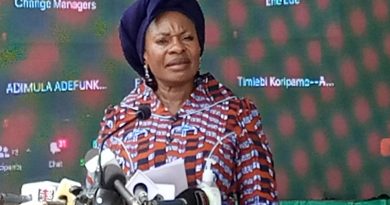
Director-General of Civil Aviation, Capt. Chris Ona Najomo, made the appeal on Thursday during the public hearing on the proposed review of the allocation formula for the five per cent TSC and CSC in Abuja.
Najomo argued that while all aviation agencies require adequate funding to perform their statutory responsibilities, the NCAA remains heavily dependent on the TSC to finance its regulatory and safety oversight functions.
He maintained that if additional financial support is required for the Nigerian Airspace Management Agency (NAMA), such funding should first be generated through the optimisation of the agency’s numerous commercial revenue streams, improved operational efficiency, stronger corporate governance and, where necessary, targeted Federal Government intervention for strategic infrastructure.
The NCAA boss stressed that the Authority was requesting a return to the original funding framework established when the NCAA and NAMA were created in 1999.
“We respectfully request that this honourable committee champion the return to the original vision that drove the establishment of the NCAA and NAMA in 1999. We submit that NCAA’s allocation of the five per cent TSC be restored to 65 per cent to address the deficiencies identified by ICAO and bring Nigeria in line with global best funding practices,” he said.
Najomo noted that while about 80 per cent of NCAA’s revenue comes from the Ticket Sales Charge, NAMA derives roughly 75 per cent of its income from a broad range of commercial and operational activities, with the TSC accounting for only about 25 per cent of its revenue.
According to him, NAMA also benefits from Bilateral Air Services Agreement (BASA) funds and has no fewer than 16 statutory commercial revenue sources, including over-flight and en-route charges, terminal navigation charges, air traffic services, calibration fees, telecommunications services, consultancy, property rentals, obstacle evaluation fees and aeronautical information sales.
He said these revenue mechanisms are consistent with the funding model recommended by the International Civil Aviation Organization (ICAO) for Air Navigation Service Providers.
The NCAA Director-General emphasised that the Authority’s funding supports not only domestic aviation regulation but also Nigeria’s financial obligations to international aviation bodies, including ICAO, the Banjul Accord Group Aviation Safety and Security Oversight Organisation (BAGASOO), and the African Civil Aviation Commission (AFCAC).
He explained that ICAO’s Universal Safety Oversight Audit Programme assesses whether member states have sufficient financial resources to support their safety oversight authorities, making sustainable funding a critical requirement for regulatory effectiveness.
Although Nigeria recently recorded an Effective Implementation score of 91.3 per cent in ICAO’s safety audit, Najomo noted that the country scored only 50 per cent in the area of financial resources supporting the State Safety Oversight System.
He warned that reducing the NCAA’s principal source of statutory funding would further weaken an area already identified by ICAO for improvement.
“Aviation safety is not sustained by legislation alone. It depends upon competent inspectors, effective surveillance, continuous certification, recurrent technical training, international cooperation and an independent regulator possessing the financial capacity to discharge its statutory mandate without compromise,” he said.
Najomo urged lawmakers to consider the long-term implications of the proposed revenue review on Nigeria’s aviation safety architecture, stressing that the issue goes beyond revenue sharing and directly affects the country’s ability to maintain an effective safety oversight system in line with ICAO Standards and Recommended Practices.
He added that preserving adequate funding for the NCAA would help Nigeria sustain compliance with its international obligations while ensuring the continued safety and confidence of the travelling public.