FEWACCI Advocates Stronger Public–Private Partnership to Curb Illicit Financial Flows in West Africa
Oru Leonard
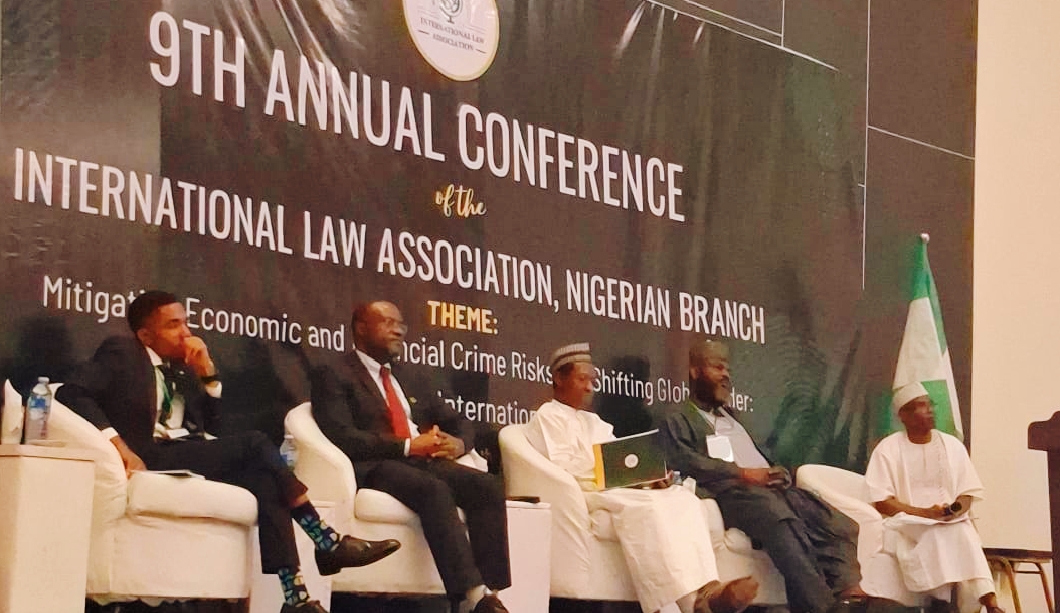
Stakeholders at the 9th International Law Association Annual Conference held in Abuja from April 13 to 15, 2026, have underscored the urgent need for stronger collaboration between governments and the private sector to tackle illicit financial flows (IFFs) and deepen regional integration across West Africa.
Presenting a position note at the conference, the Federation of West African Chambers of Commerce and Industry (FEWACCI) emphasized the critical role of the private sector in promoting financial integrity and supporting economic integration within the ECOWAS region.
The conference featured prominent global figures, including Fatou Bensouda, former Prosecutor of the International Criminal Court and current High Commissioner of The Gambia to the United Kingdom, whose presence highlighted the importance of international cooperation in addressing financial crimes.
Speaking during a session on illicit financial flows, FEWACCI reiterated that as the umbrella body for national chambers of commerce and industry in West Africa, it serves as a vital bridge between policymakers and the business community. The organization noted that it plays a central role in facilitating public–private dialogue, promoting cross-border trade and investment, and supporting the implementation of regional economic commitments.
According to FEWACCI, Africa loses an estimated $80–88 billion annually to illicit financial flows, largely driven by trade misinvoicing and weak institutional coordination. It warned that without stronger frameworks anchored on transparency and accountability, regional integration efforts could be undermined.
To address the challenge, FEWACCI called for the institutionalization of a structured public–private partnership model. This includes establishing permanent coordination mechanisms linking ECOWAS institutions, regulators, and private sector actors, as well as designing compliance systems tailored to small and medium-sized enterprises (SMEs), which dominate the region’s economy.
The group also advocated leveraging its network of chambers of commerce as compliance enablers to build capacity, promote standards, and foster a culture of accountability among businesses.
On trade-related financial crimes, FEWACCI identified misinvoicing as a major driver of illicit flows and proposed a series of reforms aimed at enhancing transparency without disrupting legitimate commerce. These include the deployment of digital single-window systems, adoption of risk-based customs controls, development of interoperable regional trade data platforms, and improved use of data analytics for detecting suspicious transactions.
The organization stressed that such measures must remain business-friendly, particularly for SMEs, to avoid increasing compliance burdens and discouraging formalization.
FEWACCI concluded that tackling illicit financial flows is not merely a regulatory issue but a strategic priority for sustainable development, improved revenue generation, and strengthening trust in regional markets. It called for sustained collaboration between public institutions and private sector stakeholders to build resilient value chains and ensure fair competition across West Africa.