Agencies Unite to Advance Climate and Health Early Warning Systems in Nigeria Swift action follows Nigeria’s NDC 3.0 pledge on integrated climate-health alerts
Oru Leonard
Nigeria is intensifying efforts to protect public health from the growing threats of climate change, environmental degradation, and pollution, as key agencies convene to accelerate the development of an integrated early warning system.
Rising temperatures, flooding, poor air quality, and shifting weather patterns are already contributing to respiratory conditions, water- and vector-borne diseases, food insecurity, and other climate-related health emergencies across the country. In response, the Federal Government’s 2025 Nationally Determined Contribution (NDC 3.0) commits to establishing a national climate, health, and environmental early warning system in at least 18 states by 2030.
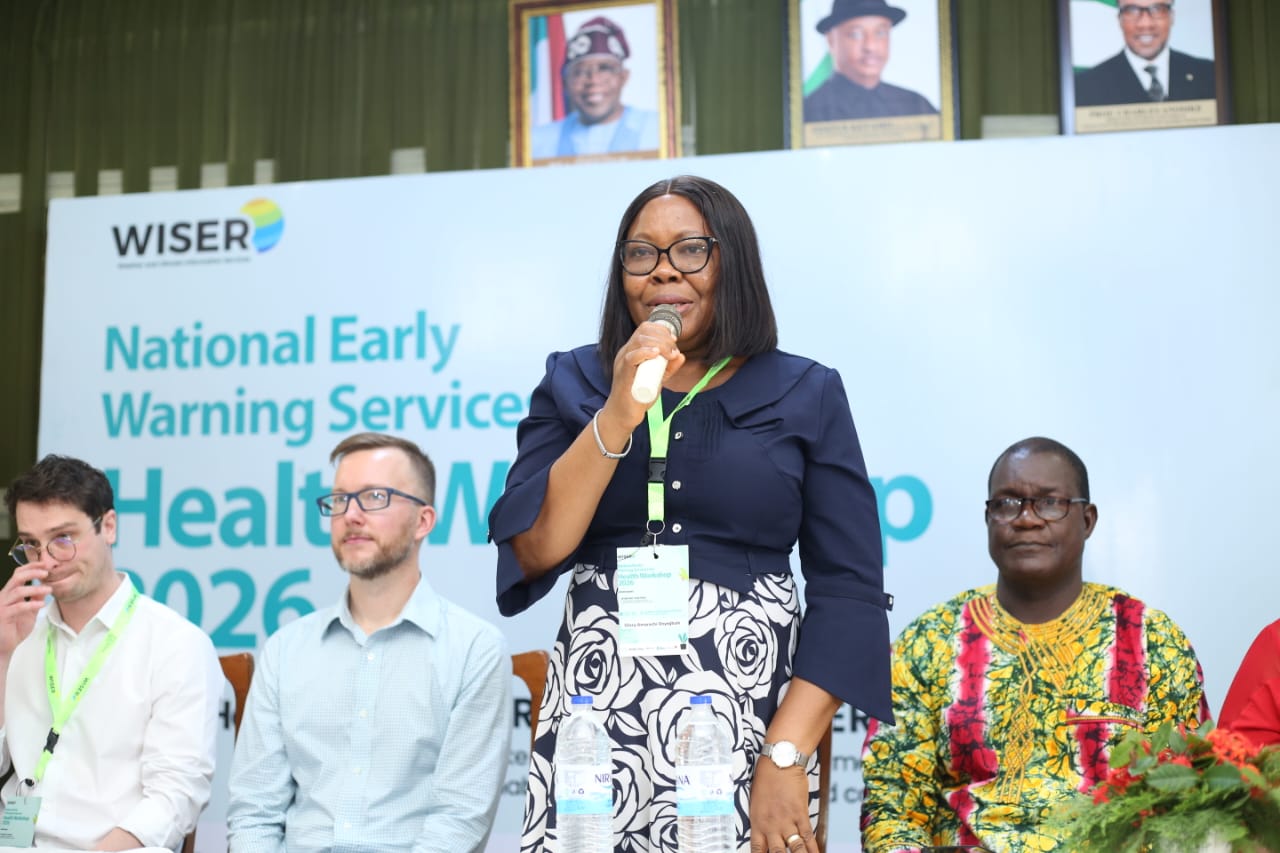
A major milestone toward achieving this target is the National Early Warning Services for Health (WISER) workshop, hosted by the Nigerian Meteorological Agency (NiMet) in collaboration with the Federal Ministry of Health and Social Welfare, the National Emergency Management Authority (NEMA), the National Hydrological Services Agency (NIHSA), and the National Orientation Agency (NOA).
The multi-agency gathering reflects a strong cross-sectoral approach, with additional participation from the Ministry of Agriculture and Food Security, the Ministry of Budget and Economic Planning, and the Lagos State Government.
A nationwide community-level survey is also underway to guide discussions and training sessions. The survey aims to ensure that early warning services are inclusive, community-driven, and responsive to the needs of vulnerable populations most affected by climate-sensitive risks.
At the core of the initiative is collaboration—bringing together meteorological, health, disaster management, and policy institutions to co-design a multi-hazard early warning system that is practical, accessible, and effective.
The workshop draws support from international partners, including the UK Government, the UK Met Office, the Rockefeller Foundation, the World Bank, the World Meteorological Organization, the World Health Organization, and the UK Health Security Agency.
The engagement forms part of WISER Health (Weather and Climate Information Services for Health), a global programme co-funded by the UK Government and the Rockefeller Foundation, with implementation led by the UK Met Office.
Speaking at the event, Juliet Whitley, Head of Health at the British High Commission in Abuja, praised Nigeria’s leadership in integrating climate and health policy. She noted that the UK remains committed to supporting Nigeria in strengthening preparedness for extreme weather and building climate-resilient health systems.
Dr. Zakariya Mohammed, Director and Head of the Climate Change and Environmental Health Division at the Federal Ministry of Health and Social Welfare, described the workshop as a crucial first step in operationalising the health components of Nigeria’s NDC 3.0.
Isa Abulkasir, Chief Disaster Risk Reduction Officer and Climate Change Desk Officer at NEMA, emphasized the importance of climate intelligence in safeguarding communities. He reaffirmed the agency’s commitment to leveraging early warning systems to reduce the burden of climate-sensitive diseases and disasters nationwide.
NiMet reiterated that strengthening weather and climate services is essential to protecting public health. According to the agency, building an effective early warning system goes beyond scientific responsibility—it is a national priority. By translating accurate, impact-based forecasts into early action, Nigeria aims to save lives, protect livelihoods, and foster healthier, more resilient communities.
With coordinated action across institutions and sustained international support, Nigeria is positioning itself to transform climate information into a powerful tool for public health resilience.
Cover Photo Caption, L-R, Pix 1&2: Nyree Pinder, Global Strategic Partnerships Manager, Met Office , Dr Ousmane Ndiaye, Director General, African Center of Meteorogical Application for Development (ACMAD), Nathan Post, Foreign, Commonwealth & Development Office, UK Health Lead & Met Office international economist, Hunter Jones, Global Lead, Climate Services for Health,WHO/WMO Climate and Health Joint Office, Glory Amarachi Onyegbule, Director Applied Meteorological Services, Nigerian Meteorological Agency (NiMet), Prof. Odjugo, Peter Akpodiogaga-a Ovuyovwiroye, Director Research and Training, Engr. Abohwo Ngozi Judith, Director Hydrology, Federal Ministry of Water Resources and Sanitation, at the World Press Conference of the National Early Warning Services (WISER) for Health Workshop 2026 held at the World Meteorological Organisation Regional Training Center (WMO RTC) in Oshodi, Lagos, Nigeria on Tuesday.