A Defection Against Conscience: What Abba Atiku’s Move Says About Nigeria’s Political Soul
By Citizen Bolaji O. Akinyemi
January 15, 2026, should have been a solemn day of national reflection. Sixty years after the tragic 1966 coup, Nigerians across regions, ethnicities and faiths sought healing—an opportunity to confront history, mend fractures and reaffirm our collective conscience.
Yet, on that very day, the floor of the Nigerian Senate became a stage for an act that symbolises all the storms ravaging our political culture; following the public defection of Abba Abubakar Atiku, son of former Vice President Atiku Abubakar, from the People’s Democratic Party (PDP) to the ruling All Progressives Congress (APC).
Abba’s defection is a clear demonstration of his support for President Bola Tinubu’s second term bid in 2027 as well as the ruling APC.
While the right to political association is fundamental in any healthy democracy, timing, context and symbolism matter if the right is exercised.
Abba Atiku’s defection was not just a private political choice quietly exercised, but a choreographed spectacle at the National Assembly—Nigeria’s most symbolic democratic institution.
The question, therefore, is not whether he has the right to defect or not. He does. But the deeper question is: What does this defection symbolize for the values guiding Nigeria’s political elite?
For years, APC leaders fiercely defended an ideology they they tagged: “People’s mandate,” resisting public outrage and economic hardship with moral certainty—until power shifted.
Once in control, many of those same voices appeared untroubled by the consequences of their policies or the contradictions of their past positions. Today, ideological conviction seems increasingly replaceable with political convenience.
What worries conscientious Nigerians is not the defection itself, but the culture of political monetisation it reflects.
Under the President Bola Tinubu-led APC government, life appears increasingly measured in naira and kobo. Loyalty has a price. Values have a price. Even conscience appears negotiable. Productivity, integrity, and service—once the pillars of national progress—are steadily being subordinated to transactional politics.
Abba Atiku’s public pledge to mobilise for President Tinubu’s re-election in 2027 further exposes this reality. Political structures are dismantled and reassembled not around ideas or national vision, but around access to power and proximity to resources.
This is not a realignment for national interest, but a recalibration for survival within a monetised political ecosystem.
Former Vice President Atiku Abubakar’s response, describing his son’s decision as “entirely personal,” is constitutionally correct, but morally incomplete.
Reason? His son’s defection from the PDP has drawn a sharp opposition line between him and his father. It portrays his lack of confidence in the party which his father belongs and has been using as a platform to run for Presidency with several attempts.
If Abba Atiku is dumping the party at a time preparations for another election (2027) are gathering momentum and he is supposed to throw his weight behind his father who might most likely run for Presidency again, it simply means that he has no confidence in his political dream.
Apparently, his defections takes a lot away from his father’s political contents that he has been building over the years, leaving much vacuum to be filled.
Although politics in Nigeria is rarely personal when it is performed on a national stage. But when actions intersect with public memory, national trauma, and economic suffering, they transcend private choice.
As we look toward 2027, Nigeria is at a very dangerous crossroads. A society where everything is priced risks losing everything that truly matters.
If conscience, history and national pain can be set aside for political gains, then the future is bleak and should worry us all.
This moment of political uncertainties should provoke deep introspection—not just among politicians, but also among citizens.
Democracy without values is hollow. Politics without conscience is destructive. A nation that normalises such contradictions must confront the consequences they will inevitably bring.
Nigeria deserves better than symbolic betrayals dressed up as political realignment. The question is whether we are prepared to demand it or not.
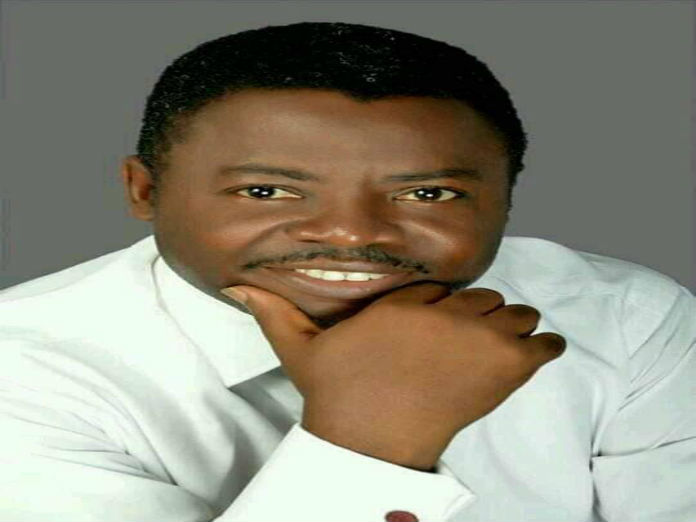
Citizen Bolaji O. Akinyemi
Founding President, PVC-Naija
Chairman, Board of Trustees
Apostle & Nation Builder
Dr. Bolaji O. Akinyemi is an Apostle and Nation Builder. He’s also President Voice of His Word Ministries and Convener Apostolic Round Table. BoT Chairman, Project Victory Call Initiative, AKA PVC Naija. He is a strategic Communicator and the C.E.O, Masterbuilder Communications.
Email:bolajiakinyemi66@gmail.com
Facebook:Bolaji Akinyemi.
X:Bolaji O Akinyemi
Instagram:bolajioakinyemi
Phone:+2348033041236