Nigeria Hosts 2nd International Railway Conference, Urges Increased Investment in Railway Infrastructure
Oru Leonard
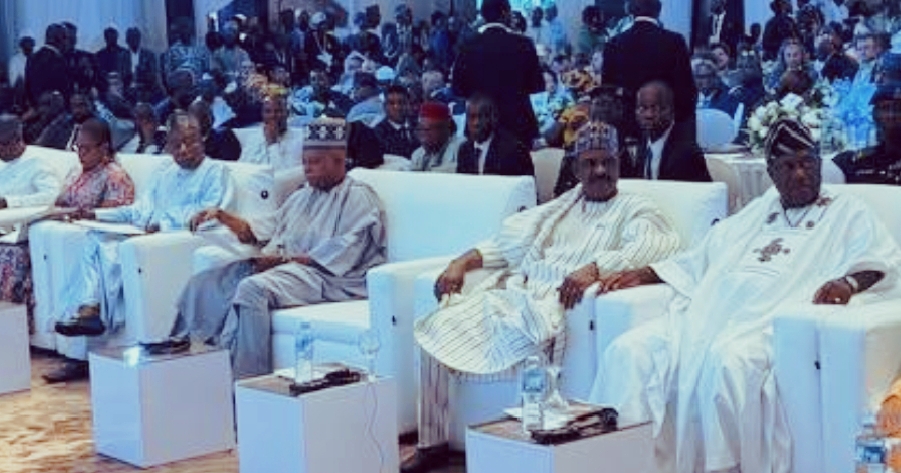
The 2nd International Railway Conference and Exhibition kicked off today at the Abuja Continental Hotel, bringing together stakeholders from across Africa and beyond to discuss opportunities and challenges in railway development on the continent. The conference, themed “Opportunities and Challenges in Railway Development in Africa: A Call for Investment,” aims to attract investments, foster partnerships, and address policy gaps slowing down railway infrastructure across Africa.
President Bola Tinubu has emphasized the critical role of railway infrastructure in driving Nigeria’s industrialization and economic growth. Speaking at the 2nd International Railway Conference and Expo 2025, Tinubu highlighted the importance of modernized railways in supporting mass transportation, reducing road congestion, and providing sustainable transport solutions.
Tinubu who was represented by the Vice President, Senator Kashim Shettima, said the Kano-Maradi railway modernization project, has progressed to nearly 60% completion, as a cornerstone for boosting trade under the African Continental Free Trade Area agreement. He called for robust private sector partnerships to ensure timely completion and sustainability of rail projects,
“The challenge ahead of us is to lead this race as the logistics hub of Africa by reviving and revitalizing our railway services. We must be conscious of our place as the anchor of West Africa’s economy and home to the continent’s largest population as we prepare for the adoption of modern railway infrastructure. This awakening inspired projects such as the Kano-Maradi railway modernization would open new gateways for trade under the African continental free trade area” he stated.
In his remarks, Minister of Transportation Sen. Said Ahmed Alkali emphasized railways as a pivotal driver of Nigeria’s economic transformation under President Bola Ahmed Tinubu’s Renewed Hope Agenda.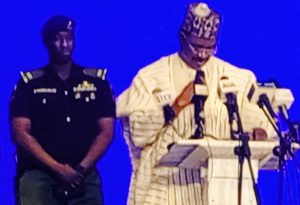
Minister Alkali expressed gratitude to President Tinubu for enabling the event, highlighting transportation’s role as the gateway to Nigeria’s economy.
He outlined significant achievements since the administration’s inception, including accelerating the 203km Kaduna-Kano rail modernization to 53% completion, slated for commissioning by December 2026.
He disclosed that the 387km Kano-Maradi line, with an extension to Dutse, advanced to 60%, expected to reach Katsina by December 2025 and fully operational by March 2027.
Other milestones include rehabilitating the Lagos-Kano Narrow Gauge for freight, linking seaports to the Dala Inland Dry Port.
In addition, the Federal Executive Council approved modern bus terminals in each geopolitical zone—Abeokuta, Onitsha, Warri, Lokoja, Kano, and Gombe—to boost passenger safety and efficiency.
The Alkali also mentioned the launch of the Federal University of Transportation in Daura, previously staffed only by a Vice Chancellor, and support for the Compressed Natural Gas (CNG) initiative, training over 6,000 professionals via the Nigerian Institute of Transport Technology (NITT) in Zaria.
He said the Presidential festive transport relief program, which ferried over one million passengers free by rail and road in 2023 and 2024, enhancing security and welfare.
“Innovations like dual-fuel locomotives on the Abuja-Kaduna corridor aim to cut costs, while federal backing for state light rails in Kaduna, Kano, and Ogun promotes productivity.
“Attracting foreign investors for high-speed rails connecting Abuja to Lagos, Kano, and Port Harcourt, with approved Outline Business Cases, signals major infrastructural leaps.
“Funds from China Development Bank and counterpart contributions were secured for Kaduna-Kano, alongside the long-awaited National Land Transport Policy approval after decades” he highlighted, adding that beyond infrastructure, railway is a nation builder fostering unity, environmental sustainability, and regional integration under the African Continental Free Trade Area (AfCFTA).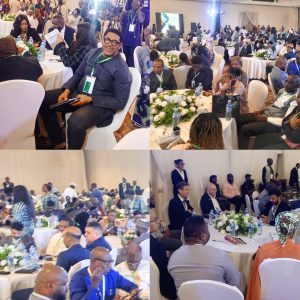
On the way forward, the Nigerian Minister outlined three priorities: transforming railways into economic tools serving agriculture and industry; securing sustainable financing through public-private partnerships; and empowering citizens via skills and jobs, bolstered by institutions like Daura University and NITT.
He said the railways’ shift to the concurrent legislative list, enables state and private involvement and tasked delegates on productive deliberations,
Dr. George Akume, Secretary to the Government of the Federation (SGF), says the railway initiative will foster national integration, create economic opportunities, and address energy, transportation, and digital connectivity needs. Milestones achieved include approval of the Outline Business Case and completion of environmental and social impact assessments, paving way for project advancement.
Chief Emeka Obegolu, President ACCI,
described railways as the backbone of industrialization, trade facilitation, and regional integration, capable of reducing business costs, opening new markets, and boosting economic competitiveness.
He noted that the event builds on the success of the inaugural conference, hosted at ACCI’s facilities, aligning with the Chamber’s mandate to promote trade, investment, and industrial development in Nigeria’s Federal Capital Territory and beyond.
Obegolu emphasized the ACCI’s keen interest in railway development due to its potential to stimulate investment, support industries, enhance logistics, and create jobs for SMEs and the broader economy.
The event is organized in collaboration with Federal Ministry, Abuja Chamber of Commerce and Industry (ACCI), and De-Sadel Nigeria Ltd as the major partner,
The conference provides a platform for stakeholders to brainstorm on the future of railway development in Africa, with a focus on attracting investments, fostering partnerships, and driving sustainable development.