INEC Worries Over Early Campaigns, Calls for Legal Reforms to Safeguard 2027 Elections
Oru Leonard
The Independent National Electoral Commission (INEC), has called for urgent reforms to address the growing trend of premature political campaigns in Nigeria, warning that the practice undermines governance, distorts fair competition, and erodes public trust in the electoral process.
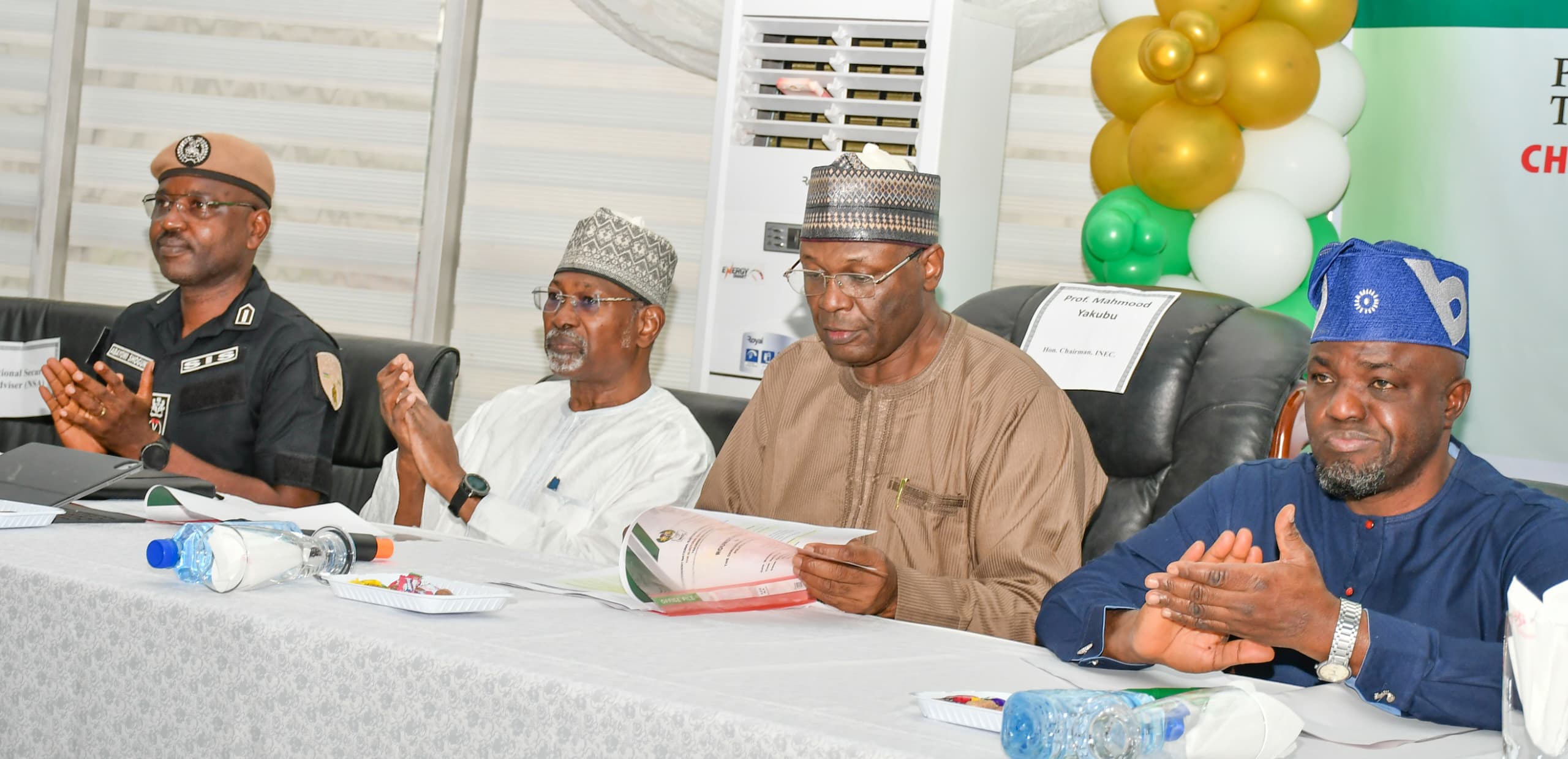
This was the central theme at a one-day Stakeholders’ Roundtable on the Challenges of Premature/Early Political Campaigns convened by INEC at The Electoral Institute, Abuja, on Wednesday, 10th September 2025.
Declaring the meeting open, INEC Chairman, Prof. Mahmood Yakubu, said the Commission had become increasingly concerned by the “perpetual election mode” of parties, candidates, and their supporters, who engage in advertising, rallies, and media blitz even before the electoral timetable is released.
Citing Section 94(1) of the Electoral Act 2022, Prof. Yakubu recalled that campaigns are only permitted within 150 days to polling day and must stop 24 hours before the vote. He however, regretted that the law only prescribes mild sanctions of up to N500,000 for campaigns within 24 hours to election day, while remaining silent on campaigns conducted earlier than the 150-day threshold.
“This legal lacuna makes it difficult for the Commission to sanction breaches,” the INEC Chairman lamented. “Yet the consequences are enormous. They affect campaign finance monitoring, give unfair advantage to violators, and weaken respect for the law. This roundtable has been convened for deep reflection on how to collectively confront the menace.”
In his welcome remarks, Chairman of the Board of The Electoral Institute (BEI), Prof. Abdullahi Abdu Zuru, described premature campaigns as “a creeping danger” to Nigeria’s democracy. He cited the growing use of cultural festivals, religious gatherings, and philanthropy as camouflage for veiled campaign messages, alongside billboards, branded vehicles and social media content that skirt the law.
According to Prof. Zuru, such activities distort the political environment: “They not only inflate the cost of elections but also distract office holders from service delivery, erode public confidence in institutions, and feed cynicism about whether laws can ever be enforced.” He called for clearer definitions in the law, stronger enforcement mechanisms, civic education for citizens, and active collaboration with media platforms to check the trend.
Delivering the keynote address, former INEC Chairman Prof. Attahiru Jega provided a comprehensive analysis of the dangers of premature campaigns and the weaknesses of Nigeria’s current legal framework.
“Premature campaigns are not just technical violations,” He warned. “They are aberrations that confer undue advantage, entrench impunity, and compromise electoral integrity. When incumbents commission projects or allow proxies to campaign years in advance, they normalize illegality and make it almost impossible to ensure a level playing field.”
Prof. Jega pointed out that premature campaigns are rampant in Nigeria, particularly among incumbents at both federal and state levels, often disguised as third-party initiatives. He cited international examples from Australia, Mexico, the Philippines and India, where premature campaigns attract stiff sanctions, ranging from fines to imprisonment. He urged Nigerian lawmakers to adopt similar measures.
His recommendations included:
Clearly defining premature campaign offences in the Electoral Act and attaching stiff penalties.
Holding candidates and political parties vicariously liable for third-party campaigns.
Empowering the EFCC and ICPC to investigate the financing of premature campaign activities.
Factoring third-party campaign expenses into official campaign finance audits.
Establishing an Electoral Offences Commission and Tribunal before the 2027 elections to ensure effective prosecution of violators.
“These reforms are urgent,” Prof. Jega insisted. “If premature campaigns are not checked, they will heat up the polity, escalate costs, promote hate speech, and fuel ethno-religious tensions as we move towards 2027.”
The event also featured goodwill messages from key stakeholders. Chairman, House of Representatives Committee on Electoral Matters, Hon. Adebayo Balogun, The Inspector General of Police, Kayode Egbetokun, represented by the Commissioner of Police in charge of Elections, Abayomi Sogunle, Chairman of the Inter-Party Advisory Council (IPAC), Malam Yusuf Dantalle, and the Director-General of the Advertising Regulatory Council of Nigeria (ARCON), Dr. Olalekan Fadolapo.
Panel discussions interrogated the role of media, civil society, regulators, and the judiciary in curbing premature campaigns. Participants emphasized the importance of proactive civic education, enhanced synergy between regulators, the need to review the existing legal framework, and the political will to enforce compliance.