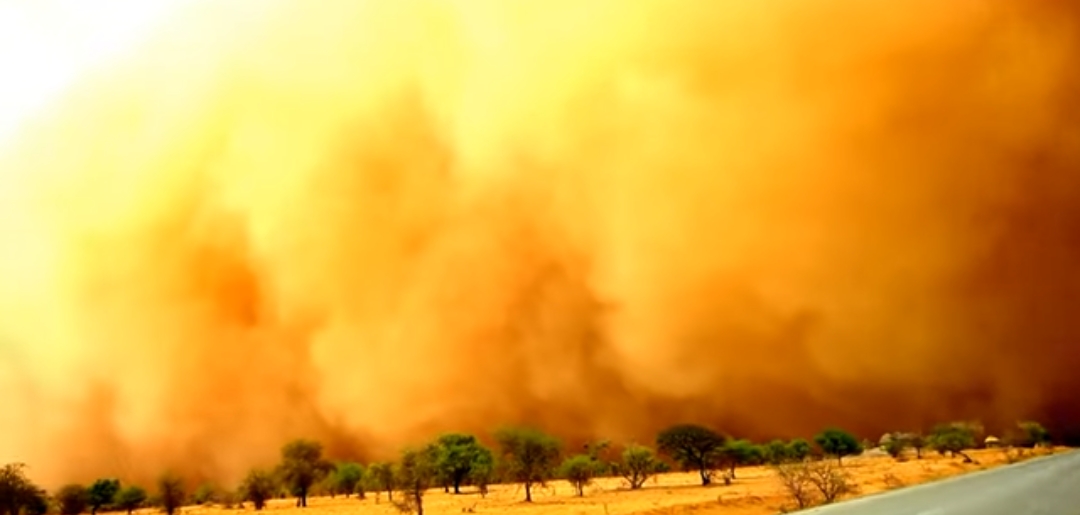
WMO Report Highlights Devastating Impact of Sand and Dust Storms
Oru Leonard
The World Meteorological Organization (WMO), has released its annual Airborne Dust Bulletin, shedding light on the severe consequences of sand and dust storms worldwide. The report emphasizes the need for enhanced monitoring, forecasting, and early warnings to mitigate the effects of this hazard, which affects approximately 330 million people in over 150 countries.
Key Findings showed increasing health risks as new sand and dust storm indicator developed by WMO and the World Health Organization (WHO) reveals that 3.8 billion people (nearly half the world’s population) were exposed to dust levels exceeding WHO’s safety threshold between 2018-2022, representing a 31% increase from 2003-2007.
The economic impact of sand and dust storms is often underestimated, with estimated costs in the United States alone reaching USD 154 billion in 2017.
The most affected areas include the northern tropical Atlantic Ocean, South America, the Mediterranean Sea, the Arabian Sea, and central-eastern China.
Major sand and dust storms in 2024 were found in the Canary Islands as surge of strong Harmattan winds transported dust from the western Sahara desert to Spain’s Canary Islands in December.
In East Asia, 14 sand and dust storms occurred, mostly in spring, with a fierce Mongolian cyclone sweeping large amounts of dust to densely populated regions in northern China.
In West Asia, an exceptional winter dust storm struck Iraq, Kuwait, Qatar, and the Arabian Peninsula in December, with far-reaching socio-economic consequences.
In response, the WMO has established a Sand and Dust Storm Warning Advisory and Assessment System to strengthen operational forecasting and warning services. The organization is also part of a UN Coalition on Combating Sand and Dust Storms, aiming to increase global collaboration to tackle the hazards and disruption caused by these storms.