West African Leaders Converge for Unity, Security, and Deeper Integration in Abuja
Oru Leonard
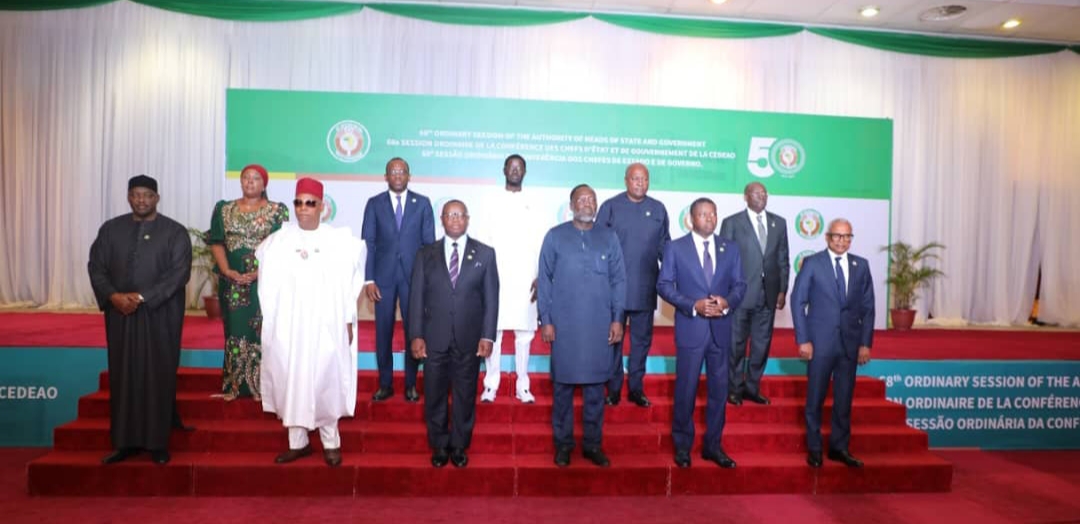
West African leaders converged at the State House, Abuja, on Sunday, 14 December 2025, for the 68th Ordinary Session of the Authority of Heads of State and Government of the Economic Community of West African States (ECOWAS), a moment widely described as pivotal for the region’s future.
Opening the summit, Nigeria, as the host nation, reaffirmed its unwavering commitment to the ideals of regional solidarity, collective security, and shared prosperity. Speaking on behalf of President Bola Ahmed Tinubu, Vice President Kashim Shettima underscored that West Africa’s geography is not accidental but historical and deliberate, bound by culture, memory, and a shared destiny. He stressed that while disagreements among member states are inevitable, they must never erode fraternity or undermine the foundations of the Community.
The session brought together Heads of State and Government, Foreign Ministers, senior ECOWAS officials, representatives of the African Union (AU), the United Nations (UN), international financial institutions, and members of the diplomatic corps.
In their interventions, speakers repeatedly emphasized that terrorism, violent extremism, unconstitutional changes of government, transnational organised crime, climate shocks, food insecurity, and irregular migration constitute shared threats that no single state can confront in isolation.
A dominant theme of the summit was the defence of democratic governance. Leaders strongly condemned recent unconstitutional developments in parts of the region, particularly the political crisis in Guinea-Bissau and the attempted disruption of constitutional order in Benin. ECOWAS was commended for its swift, coordinated, and principled response, including diplomatic engagement and the mobilisation of regional security mechanisms, demonstrating zero tolerance for military takeovers and democratic backsliding.
In his address, the Chair of the ECOWAS Authority and President of the Republic of Sierra Leone, His Excellency, Julius Maada Bio, described the 68th session as a defining moment, coinciding with nearly five decades of ECOWAS’ existence. He called on leaders to renew the founding vision of the Community with courage and unity, noting that instability in one country inevitably threatens the stability of all. He pledged that under his chairmanship, ECOWAS would remain people-centred, security-driven, and firmly anchored on democracy and the rule of law.
Beyond security and governance, economic integration featured prominently in the deliberations. Leaders reaffirmed their commitment to deepening regional trade, accelerating monetary convergence, and strengthening cross-border infrastructure in transport, energy, and digital connectivity. Particular attention was drawn to the operationalisation of the ECOWAS Business Council, envisioned as a bridge between governments and the private sector to mobilise regional capital, boost intra-regional investment, and enhance competitiveness across West Africa.
A landmark announcement during the session was the decision to significantly reduce the cost of air travel within the region. Beginning from 1 January 2026, ECOWAS member states will abolish certain air travel taxes and reduce passenger and security charges by 25 per cent. Leaders described the measure as a concrete step towards making regional integration tangible for ordinary citizens, easing mobility, stimulating tourism, and strengthening social and economic ties across borders.
Humanitarian concerns also featured strongly, with leaders acknowledging the growing challenges posed by climate change, flooding, displacement, and food insecurity. The summit called for stronger coordination with development partners, improved early warning systems, and greater investment in disaster risk management, with women and youth placed at the centre of resilience and recovery strategies.
In messages delivered on behalf of the United Nations and the African Union, both organisations praised ECOWAS for its firm stance on constitutional order and regional security. They reiterated their readiness to deepen collaboration with the Community in addressing terrorism, supporting democratic transitions, and tackling the root causes of conflict through inclusive governance, development, and institution-building.
As the summit moved into closed-door deliberations, leaders expressed optimism that the 68th Ordinary Session would reinforce trust among member states and reposition ECOWAS as a stronger, more cohesive bloc. The consensus was clear: unity is no longer optional but essential if West Africa is to secure peace, stability, and prosperity for its more than 400 million citizens.
(MFA Press, 14 December 2025)