UNODC Launches 5 Year Strategic Program for Nigeria, Calls for Stronger Partnerships and Reforms
Oru Leonard
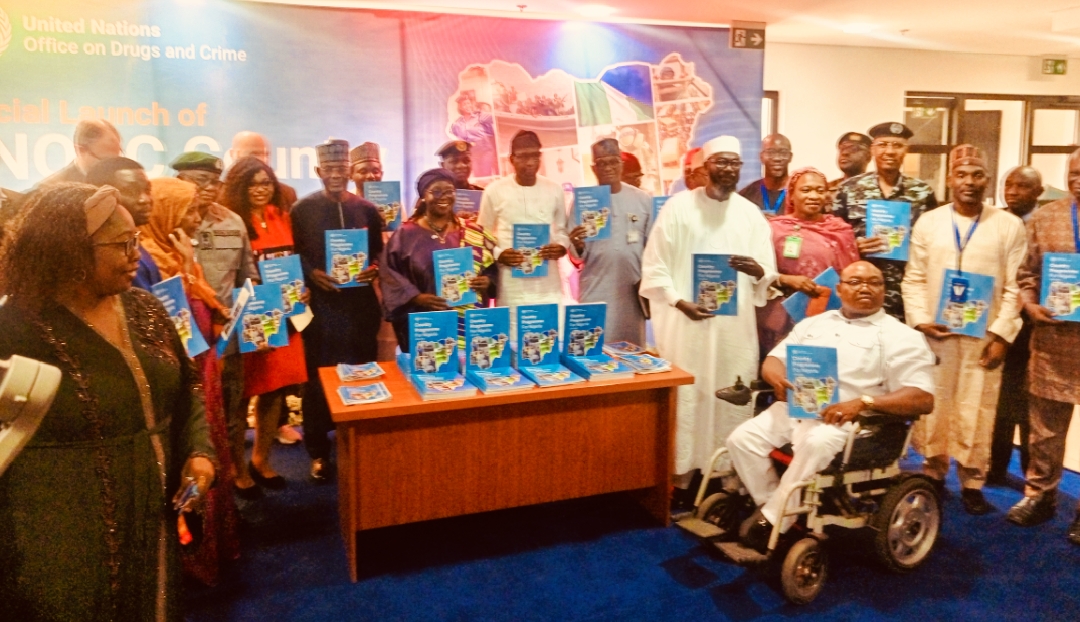
The United Nations Office on Drugs and Crime (UNODC), has launched its Country Programme for Nigeria (2026–2030), urging stronger political commitment, institutional reforms, and sustained partnerships to tackle the country’s complex security and development challenges.
Speaking at the official launch in Abuja on Friday, UNODC Country Representative in Nigeria, Chiek Toures described Nigeria as a nation at a “defining moment,” noting its strategic importance as Africa’s largest economy and most populous country. They stressed that Nigeria’s trajectory would significantly shape the future of West Africa and the wider global community.
The agency highlighted that Nigeria continues to face interconnected threats, including illicit drug trafficking, transnational organized crime, human trafficking, maritime insecurity, violent extremism, and corruption, all of which place pressure on institutions and communities.
According to UNODC, the newly launched Country Programme represents its most comprehensive framework for Nigeria to date, built on years of collaboration with government institutions, civil society, development partners, and local communities. The programme is anchored on strengthening Nigeria’s sovereignty, institutions, and capacity to respond to emerging threats.
The framework adopts a holistic approach to security and development. It prioritizes strengthening the criminal justice system to enhance fairness and public trust, tackling corruption and illicit financial flows, and supporting counter-terrorism efforts rooted in human rights and the rule of law. It also addresses organized crime in its various forms, including trafficking in persons, smuggling of migrants, cybercrime, and environmental crime.
In addition, the programme places emphasis on public health interventions, particularly in preventing and treating drug use disorders, while expanding access to evidence-based services. UNODC noted that sustainable security cannot be achieved without addressing health challenges.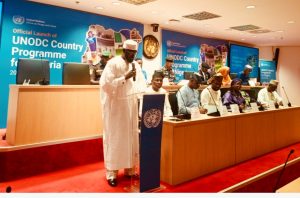
Cross-cutting priorities of the programme include youth empowerment, gender equality, inclusion of persons with disabilities, and strengthened partnerships across federal, state, and community levels.
The agency expressed appreciation to the Government of Nigeria, particularly the Federal Ministry of Justice, the Ministry of Foreign Affairs, and the Federal Ministry of Budget and Economic Planning, as well as key law enforcement and anti-corruption bodies such as the National Drug Law Enforcement Agency (NDLEA), National Agency for the Prohibition of Trafficking in Persons (NAPTIP), Nigeria Police Force, Economic and Financial Crimes Commission (EFCC), Independent Corrupt Practices and Other Related Offences Commission (ICPC), and the Nigerian Correctional Service.
UNODC also acknowledged the support of international partners, particularly the European Union as its anchor partner, alongside countries such as Canada, the United States, Denmark, Switzerland, and the Netherlands, as well as global funding institutions including the Global Fund and the Peacebuilding Fund.
While expressing confidence in its implementation capacity, the agency noted that the success of the programme would depend on adequate funding and sustained collaboration. It revealed that a Resource Mobilization Strategy (2026–2030) has been developed to attract diversified funding sources and promote innovative financing mechanisms.
UNODC called on the Nigerian government to demonstrate strong ownership through policy reforms, institutional support, and gradual domestic resource contributions, emphasizing that such commitment would unlock greater international funding and reinforce trust among partners.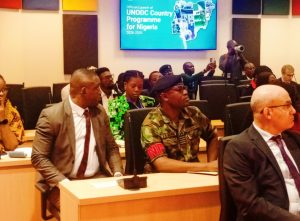
The agency concluded that the programme represents a practical, evidence-based, and nationally owned framework designed to deliver measurable results, stressing that lasting progress can only be achieved through collective action.
Speaking Director-General of the National Agency for the Prohibition of Trafficking in Persons (NAPTIP), Binta L. Adamu Bello, reaffirmed the agency’s commitment to combating human trafficking and related crimes at the launch of the United Nations Office on Drugs and Crime Country Programme for Nigeria (2026–2030) in Abuja. She described the initiative as a renewed partnership to address trafficking, organized crime, corruption, and migrant smuggling. Bello emphasized collaboration among government, civil society, and international partners as key to success. She commended UNODC and stakeholders for their efforts and pledged NAPTIP’s continued support to ensure the programme delivers tangible results, promotes justice, and protects vulnerable groups nationwide.
Speaking earlier, the UN Resident Coordinator Elsie Attafuah said the UNODC Country Programme for Nigeria (2026–2030) is vital for addressing the nation’s security and development challenges through stronger collaboration. She described the initiative as a key framework to combat crime, corruption, terrorism, and insecurity. Attafuah called for a whole-of-system approach involving government, partners, and civil society to ensure sustainable impact. She stressed that justice, rule of law, and human security are central to development, reaffirming the UN’s commitment to supporting reforms, strengthening institutions, protecting vulnerable populations, and fostering long-term national stability.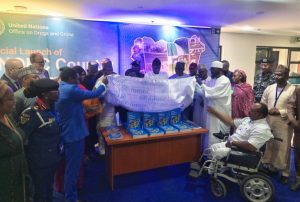
Inspector-General of Police, IGP Olatunji Rilwan Disu, at the launch of the UNODC Country Programme for Nigeria (2026–2030) emphasized that security is a shared responsibility. The Nigeria Police reaffirmed its commitment to tackling transnational organized crime, cybercrime, terrorism, and drug trafficking. The IGP highlighted the importance of its partnership with UNODC in strengthening law enforcement capacity. He noted that the programme aligns with the Federal Government’s Renewed Hope Agenda and the vision for a modern, responsive, citizen-centered police force. He called for sustained collaboration among stakeholders to enhance justice, security, and national development.
In his key note àddress, the Honourable Minister of Foreign Affairs, represented by a Director in the Ministry, Mr Yusuf Danladi Mustapha noted that the program that focuses on key areas like justice, anti-corruption, and mental health care, the Ministry of Foreign Affairs pledged to continue work with the UN and partners to implement the program, promoting peace and stability.
The event was well attended by key stakeholders including the The Nigerian Drug Law Enforcement Agency (NDLEA), Economic Financial Crimes Commission (EFCC), The Nigerian Judicial Institute (NJI), The Nigerian Correctional Service (NSC), Independent Corrupt Practices Commission (ICPC), among others.