UNODC and NAPTIP Unite to Combat Human Trafficking in Nigeria
Oru Leonard
The United Nations Office on Drugs and Crime (UNODC), has reaffirmed its commitment to combating human trafficking in Nigeria, in collaboration with the National Agency for the Prohibition of Trafficking in Persons (NAPTIP).
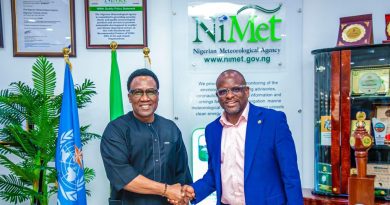
The UNODC Country Representative in Nigeria, Mr. Cheikh Touré stated this during a press conference to commemorate the 2025 World Day Against Trafficking in Persons.
He noted that the theme, “Human Trafficking is Organised Crime: End the Exploitation,” emphasizes the need to recognize trafficking as a calculated, transnational enterprise.
Cheikh further said that UNODC is proud to support NAPTIP in delivering critical activities, including a national awareness walk, bootcamp, and national stakeholders forum.
“UNODC has invested in Nigeria’s long-term security through various flagship projects, including the EU-funded Migration Governance Support and the Netherlands-funded PROMIS Project, he disclosed.
He emphasized the need to redirect energy and resources to the grassroots, empowering local leaders, traditional institutions, and community networks to combat human trafficking. He also highlighted the importance of partnership between government, civil society, and survivors to shatter criminal empires and uplift victims.
Activities lined up to commemorate the week include a National Awareness Walk on the July 28, to amplify Nigeria’s united call to end trafficking; Bootcamp & Peer Review on the July 29, to enhance grassroots collaboration; National Stakeholders Forum on the July 30, to unite justice actors, civil society, and international partners and Closing & Departure on the July 31, to carry forward renewed commitment.
According to the UNODC Representative, “Beyond this week, UNODC remains invested in Nigeria’s long-term security through flagship projects:
1. EU-funded Migration Governance Support;
2. Data-Driven Migration Management (MPTF-backed);
3. Netherlands-funded PROMIS Project combatting smuggling/trafficking;
4. Switzerland-supported National Action Plan Implementation (2022–2026).
Yet, policies alone cannot win this fight. Trafficking festers where vulnerability is
highest in underserved communities, border regions, and among marginalized
youth. We must redirect energy and resources to the grassroots: empowering local leaders, traditional institutions, and community networks. The frontline of this battle is where poverty and desperation are exploited.
Human trafficking violates every principle of human dignity, destabilizes societies, and undermines the rule of law. Let me be clear: UNODC will deepen its partnership with Nigeria working with government, civil society, and survivors to shatter criminal empires, uplift victims, and build a future where no Nigerian is bought or sold.”