TRANSFORMATION OF AKPABIO?
Nick Dazang
Transformations and transfigurations take place, easily, in the theological and spiritual realms. But they hardly do so in the physical space.
Once upon a time, and in antiquity, the town of Nazareth was thought to be accursed. That is until the advent of Jesus Christ to that famous back foot. Saint Paul, a distinguished member of the Great Sanhedrin, the supreme Jewish Legislative and Judicial Council in ancient Israel, was a fanatical persecutor of Christians, until he saw the light on his way to Damascus. Then he morphed into a zealous proselytizer.
We may yet, in the year of our Lord, 2025, be witnessing an intriguing transfiguration of the Nigerian Senate and its leadership. Recall that since his assumption of the presidency of the Senate, that pre-eminent rump of the Legislative Branch, that institution had distinguished itself, in putting its official seal on whatever policies the Executive Branch had brought before it, without bringing due scrutiny and diligence to bear.
It demonstrated gross insensitivity to the abject plight of Nigerians when it was inaugurated some two years ago: It elected for itself opulent appurtenances and perks of office to the chagrin and dismay of suffering Nigerians. This insensitivity was compounded by a fawning and a sycophancy at the Executive Branch that verged on the sickening.
For good measure, the Senate, particularly its leadership, has been famous for its misogyny, hectoring and brow-beating of its female members for daring to stand up to its hubris.
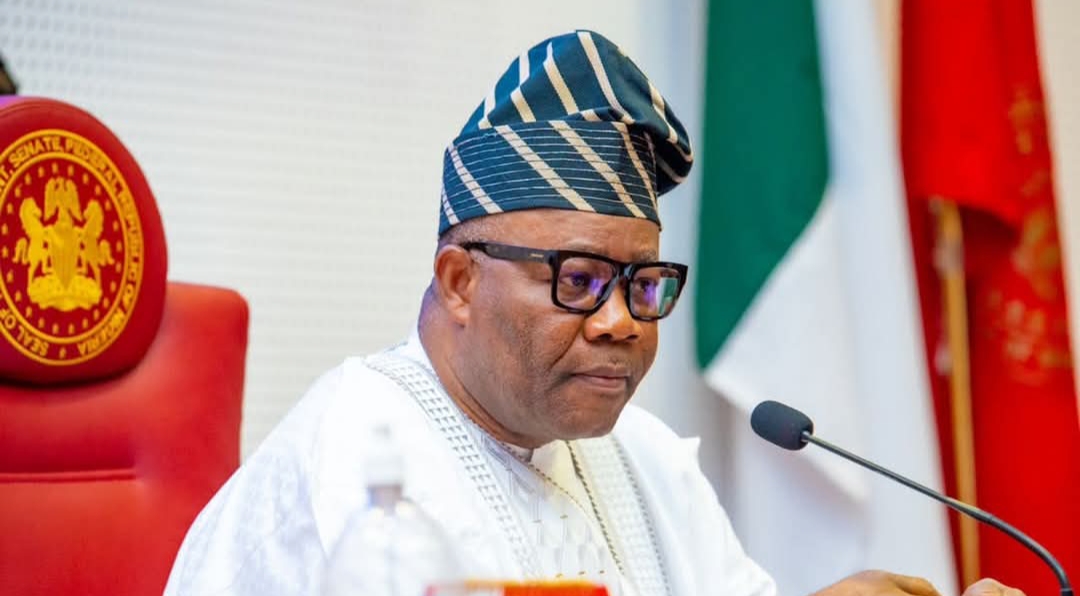
Against this unwholesome and unbecoming deportment, it must come across to ordinary folks as a transfiguration of a seismic proportion that the President of the Senate, Senator Godswill Akpabio, is now empathizing with Nigerians who are hurting.
At the resumption of the Senate on Tuesday, October 7, 2025, following its recess which began on July, 23, 2025, the Senate President, Godswill Akpabio, had declared:”Let us also heed the cry from the farms and the markets. Over 33 million Nigerians face acute food insecurity – a crisis demanding urgent legislative attention to agriculture, rural roads, irrigation, and mechanization. Hunger cannot be defeated with words; it requires policy, budget and will”.
As a matter of fact, what the Senate President said was not new. As at August this year, a number of organizations, including the UN, had warned of the prospect of acute hunger and Severe Acute Malnutrition(SAM) in the country.
The Cadre Harmonise Food and Nutrition Insecurity Analysis led by the federal government with support from the Food and Agriculture Organization(FAO), the World Food Program(WFP) and other partners had projected that 33.1 million Nigerians would face high levels of food insecurity. This is not to add 1.4 million Internally Displaced Persons(IDPs) and another 1.8 million children who are at the risk of SAM.
It is heartwarming that, at least and for once, the Senate leadership seems to show some measure of concern for, and identify itself with, millions of its acutely hungry compatriots. Anyone with a sense of fellow-feeling ought to be deeply concerned for millions of Nigerians who go without a decent meal in a day.
Not only are such famished Nigerians in deep despair, they are encumbered from bringing any meaningful contribution to the table of development. Their health is at risk and some of them are liable to being recruited into criminality and banditry in order to survive. In late July this year, following the withdrawal of support from donors, a staffer of the WFP feared, in an interview with the BBC, the possibility of IDPs, who were hitherto succored by the WFP, walking straight into the embrace of Boko Haram insurgents who were prepared to welcome and feed them.
Of course, the reasons for this severe hunger and malnutrition, that are upon us, are well known and documented. For nearly two decades, the North East has been a cauldron of Boko Haram insurgency. This insurgency, and other vile acts of banditry, kidnappings and genocidal killings, have since spread to other zones such as the North West and North Central. By and by, Boko Haram begat, not only splinter groups but fellow-travelers such as ISWAP, LAKURAWA, ANSARU and MAHMUDA. The nefarious activities of these bandits and terrorists have made it excruciatingly difficult for farmers to access their farms and to cultivate them.
This has resulted in food insecurity.
Even where these farmers are allowed to access them, they are subjected to primitive and suffocating taxes imposed and exacted by these vicious bandits. Worse, instead of incentivizing genuine farmers by suppling them fertilizers, seedlings and pesticides, at subsidized prices and at the appropriate time, they are made available late in the farming season or to phantom and bogus farmers.
The upshot of all these is that the farmers find their profession unprofitable. Some, as a consequence of this, have migrated from farming sorghum and maize/corn to perishables and vegetables. Those who persevere sell the maize at harvest time to youths who roast corn by the roadside in order to recover their investments.
In addition to these challenges, even where foodstuffs are available, most Nigerians cannot afford them. Following the devaluation of the Naira, occasioned by its forced free-fall, the currency can fetch only so little. It commands lesser value than before and inflation has eroded what is left of its vestige. This is not to mention the high cost of transportation, engendered by the withdrawal of fuel subsidy.
Furthermore, an army of millions of despondent Nigerians – largely youths – trudges the streets with no jobs, income and hope.
It is salutary for Senator Akpabio to call attention to the plight of Nigerians from his bully pulpit. One is delighted that the Senate President is capable of such introspection and lofty thought. But the Senate, and by extension the House of Representatives, must work with the Executive Branch to encourage and enable farmers. They should view the heightened insecurity in the country as a clear and present danger which demands that it be addressed head-on and forthwith.
The National Assembly must explore avenues of creating jobs which will meaningfully engage and empower our youths. They should work with the Executive Branch and our Governors to address our acute infrastructure deficits in the areas of rural roads, housing, health and education.
That should be the ultimate transformation. Not issuing platitudes or pandering to Nigerians who are suffering. Talk is, after all, cheap.