The Discipline of a Quiet Life… Reflections on My Father at Ninety-Five
By Citizen (Dr) Bolaji Oluwayanmife Akinyemi
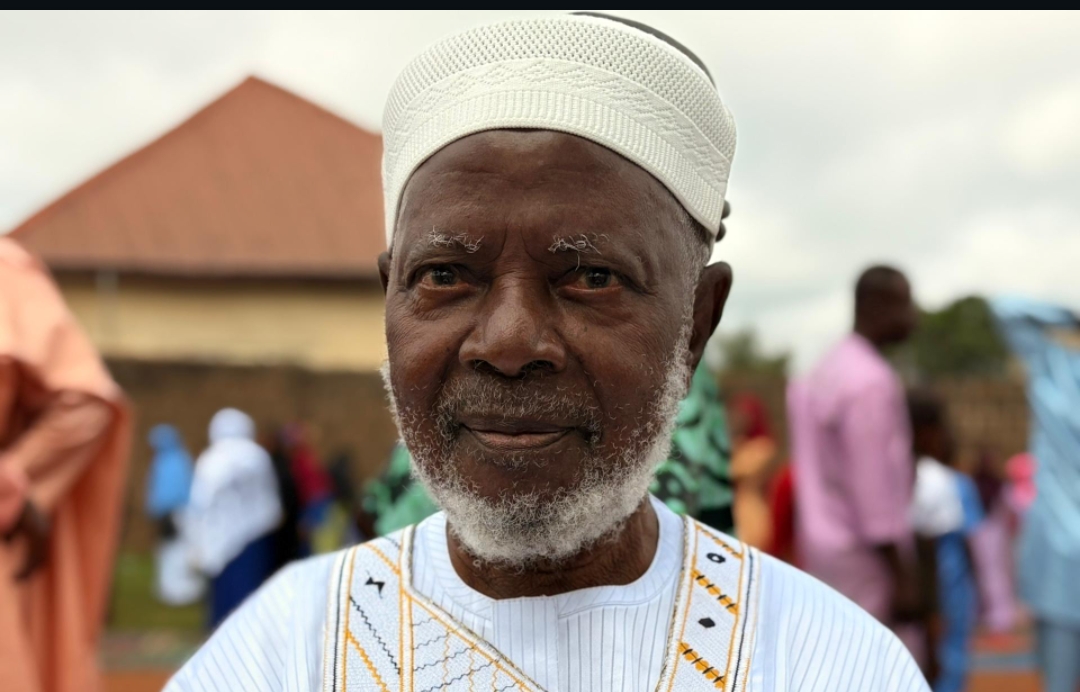
At ninety-five, my father, Alhaji Nasir Adesina Babatunde Ogunseye belongs to a generation whose lives were shaped by discipline, routine, faith, and responsibility. These were not principles they advertised loudly; they were values they simply lived.
When I reflect on the life and influence of my father, I sometimes find it helpful to listen not only to my own memories of him, but also to the memories of my younger brother, Taofiq Olaotan Akanbi Ogunseye—his last born.
Taofiq represents a much later chapter in Daddy’s fatherhood.
Some of his earliest memories, he says, centre on the routine Daddy created for him during his nursery school years. Despite already being advanced in age at the time, Daddy personally took him to school every morning. It was a simple act, but one carried out with remarkable consistency.
He also remembers that Daddy made it a point of duty to pay his school fees before the academic session began or, at the latest, on the first day of resumption. As a child, he only saw a father doing what fathers normally do. As an adult, he now recognises the discipline, planning, and sacrifice behind that consistency.
That support continued long after he left home.
During his undergraduate years, whenever Taofiq called home, Daddy ensured that financial support for his academic needs reached him without delay. Now that he is serving in the National Youth Service Corps programme, Daddy has developed yet another routine: he calls him every single day.
Those calls may appear simple. Yet they reveal something deeper about fatherhood—a man who remains present, attentive, and committed to his children’s well-being despite distance and time.
Taofiq also reflects on Daddy’s lifestyle. His eating habits, his moderation, and the order with which he structures his day all reflect a man who believes that self-control is central to a meaningful life.
When our family; Dad, myself and Mum, Tao, further reflected, moved to our present estate, Daddy extended that sense of discipline and responsibility to the community. Within the Muslim community there, he served for many years as Financial Secretary and Treasurer. He eventually stepped down voluntarily because of age, but not before earning the deep respect of the community for his integrity, blunt honesty, and the transparent way he managed its finances.
For Taofiq, perhaps the most profound influence has been spiritual. He often describes Daddy as his most consistent religious model—admiring his devotion to faith, his calm disposition, and the way he structures his life around moral and spiritual discipline.
Considering that Daddy was already over sixty-five when Taofiq was born and is now ninety-five, growing up with him meant growing up with the patience, wisdom, and restraint that often accompany age.
Listening to Taofiq recount these experiences feels like watching a later chapter of a story that began long before him.
Our father has lived long enough to raise children across very different generations.
By the time Taofiq was born, I was already a grown man. In fact, my first daughter is a year older than him. That reality alone speaks volumes about the span of our father’s life and the remarkable reach of his fatherhood.
Yet across these generational differences, one quality has remained constant: discipline.
Daddy is a Muslim, and in his younger years the rhythm of his life revolved around prayer. The discipline of walking to the mosque five times daily for congregational prayers kept him physically active and spiritually anchored. When the mosque was within reach, praying at home was rarely his option.
For thirty-five years he served in the civil service. During those years, he maintained a routine that today would surprise many people: he walked to work and back home almost every day. Rarely did he rely on transportation.
Walking was not simply how he moved from place to place. It was an expression of how he lived—deliberately, steadily, and with discipline.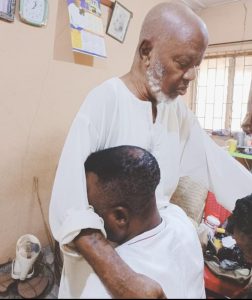
One particular memory captures that spirit vividly.
When Daddy was seventy-four and our late mother, Dorcas Aduke Ogunseye, was approaching her seventieth birthday, preparations began for the celebration. My younger sister, Omotola Abeke Ogunseye-Fashuape, and I were assigned a task: to join Daddy in searching for a suitable event centre within our neighbourhood at Aaba Alamu, Apata, Ibadan.
Naturally, we assumed the search would involve driving from one location to another.
Daddy thought otherwise.
He insisted that the search would be done on foot.
For more than an hour we walked through the neighbourhood looking for possible venues. What made the experience unforgettable was not the distance, but the pace. At seventy-four, Daddy walked with such determined speed that both of us—much younger than him—found ourselves repeatedly hurrying to catch up.
That walk was more than a practical search for a venue. It was a quiet demonstration of the discipline that had shaped his life for decades.
Even today, the memory makes me smile.
It also reminds me how easy it is to underestimate the strength that comes from a life lived with consistency and restraint.
My own experience of Daddy belongs to an earlier season of his life, yet the lessons have remained the same.
Back in the days his favourite meal was beans. During the years I lived closely with him at Opera Remo, while attending Christ Apostolic Church Grammar School, I must have shared that meal with him hundreds of times. At the time it seemed ordinary; today it feels like a small but meaningful inheritance of simplicity.
As I approach my sixtieth birthday this August, I find myself reflecting more deeply on the influences that shaped the citizen I have been all my life.
Many people know me today through my voice in conversations about society, governance, justice, and national transformation. Yet the foundation of the convictions I carry today was laid much earlier, in the quiet discipline of my father’s life.
From him I learned that responsibility does not require applause.
From him I learned that faith must be lived, not merely spoken.
Are you still wondering at my brand of Christianity?
From him I learned that integrity is not a public performance—it is a daily practice.
Watching him across decades—first raising children in his middle years, and later guiding a much younger son—has allowed me to see the same character expressed across generations.
At ninety-five, Daddy’s life reminds us that the most enduring influence often comes from the simplest routines faithfully practised: walking to the mosque, walking to work, caring for children, serving the community with integrity, and living a life guided by faith.
These quiet disciplines rarely attract attention, yet they shape families and, through families, the moral character of society itself.
As I prepare to become a senior citizen myself in a few months’ time, I realise that I have been privileged to live for nearly sixty years under the influence of a man who has already been a senior citizen for the past thirty-fpast
For that lifelong inspiration, I remain grateful.
And so, as family, friends, neighbours, and members of the community gather to celebrate my father at ninety-five, we invite others to join us in celebrating not just a man, but the values he represents.
Values of discipline.
Values of faith.
Values of integrity.
Values of responsibility.
These are the quiet virtues that sustain families and strengthen society.
They are the virtues my father has lived.
And they are the legacy we celebrate.
Happy 95th Birthday Dad. Enjoy your day.