Subsidy Removal Saved Nigeria ₦15.8trn, Averted Fiscal Crisis — Oyedele; Next Phase to Focus on Tangibles
Oru Leonard
The Federal Government says the removal of petrol subsidy and unification of the foreign exchange market generated ₦15.8 trillion in savings for the Federation between June 2023 and December 2025, while helping Nigeria avoid a deeper fiscal and economic crisis.
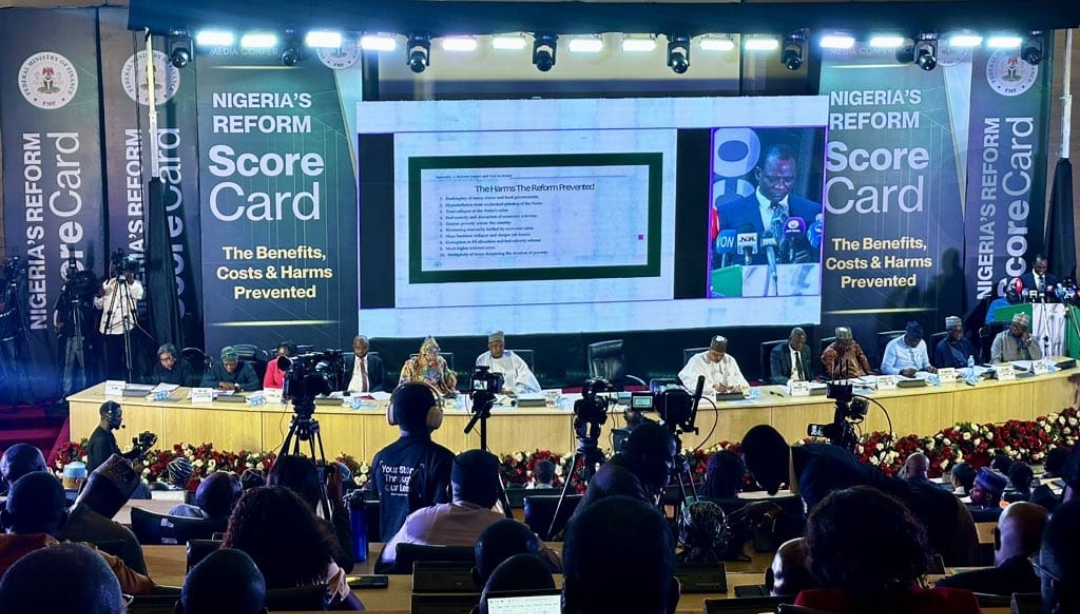
Minister of Finance and Coordinating Minister of the Economy, Prof. Taiwo Oyedele, disclosed this on Wednesday in Abuja while presenting the government’s “Nigeria’s Reform Scorecard: The Benefits, Costs and Harms Prevented.”
According to Oyedele, the subsidy savings comprised ₦5.4 trillion accruing to the Federal Government and ₦10.4 trillion shared among states and local governments. The Federal Government also generated ₦3.1 trillion in additional independent revenue, mainly through remittances from government-owned entities, while incremental borrowing contributed ₦11.9 trillion.
He said the Federal Government’s total incremental resources during the period stood at ₦20.4 trillion, contributing to additional expenditure of ₦30.64 trillion.
The minister explained that ₦9.39 trillion was spent on wage adjustments, minimum wage increases and allowances, while ₦9.37 trillion went towards external debt servicing resulting from exchange-rate depreciation. Another ₦6.5 trillion was committed to strategic infrastructure.
Oyedele said 58 per cent of the government’s incremental resources came from borrowing, 27 per cent from subsidy savings and 15 per cent from other revenue.
He stressed that the reforms were not introduced primarily to raise government revenue, but to address corruption, arbitrage and distortions associated with the former petrol subsidy regime and multiple foreign exchange windows.
The scorecard assessed 25 indicators covering fiscal sustainability, external stability, investment climate, social impact, and growth and productivity. Oyedele said all 36 states can now reliably meet salary obligations, compared with 27 states struggling to do so in May 2023. Without the reforms, the government estimated that at least 30 states could have faced difficulties paying salaries by 2026.
He also said the gap between official and parallel exchange rates had fallen from above 60 per cent before the reforms to below five per cent, compared with a projected possibility of exceeding 150 per cent under the previous system.
However, Oyedele acknowledged the significant hardships created by the reforms. The Monetary Policy Rate rose from 18.5 per cent to 26.5 per cent, while petrol prices increased from about ₦185 to between ₦1,100 and ₦1,400 per litre.
He argued that without reform, petrol could have become unavailable at the official price and traded for more than ₦3,000 per litre on the black market.
On economic indicators, Oyedele said food inflation declined from 24.82 per cent to 17.52 per cent by June 2026, while headline inflation fell to 15.91 per cent from 22.41 per cent in May 2023.
Nigeria’s gross foreign reserves, he said, increased to $52.5 billion from about $35 billion, while net reserves rose from approximately $3 billion to $34.8 billion. Stock market capitalisation also increased from about ₦31 trillion to ₦150 trillion, while real GDP growth strengthened to 3.89 per cent, from 2.31 per cent.
He cited Nigeria’s B sovereign credit rating upgrade by S&P Global in May 2026, the country’s first upgrade in 14 years, as well as its exit from the FATF grey list and the EU’s AML/CFT deficiency list, as signs of improved confidence.
To cushion the impact of reforms, government raised the minimum wage from ₦30,000 to ₦70,000, paid salaries and pensions, cleared pension arrears, expanded student loans through NELFUND, implemented cash transfers, subsidised mortgages and supported agriculture. More than 1.5 million students, Oyedele said, had benefited from NELFUND.
Minister of Information and National Orientation, Mohammed Idris, said the briefing was intended to provide Nigerians with clear information on the savings from subsidy removal and how the resources were being utilised.
Oyedele described the scorecard as a mid-course assessment rather than a declaration of victory, acknowledging that economic stability had yet to fully translate into improved living standards for all Nigerians.
He said the next phase would focus on converting macroeconomic gains into tangible household benefits through stronger social protection, agricultural interventions, lower food prices, improved public spending, tax reforms and efforts to reduce inflation towards single digits.