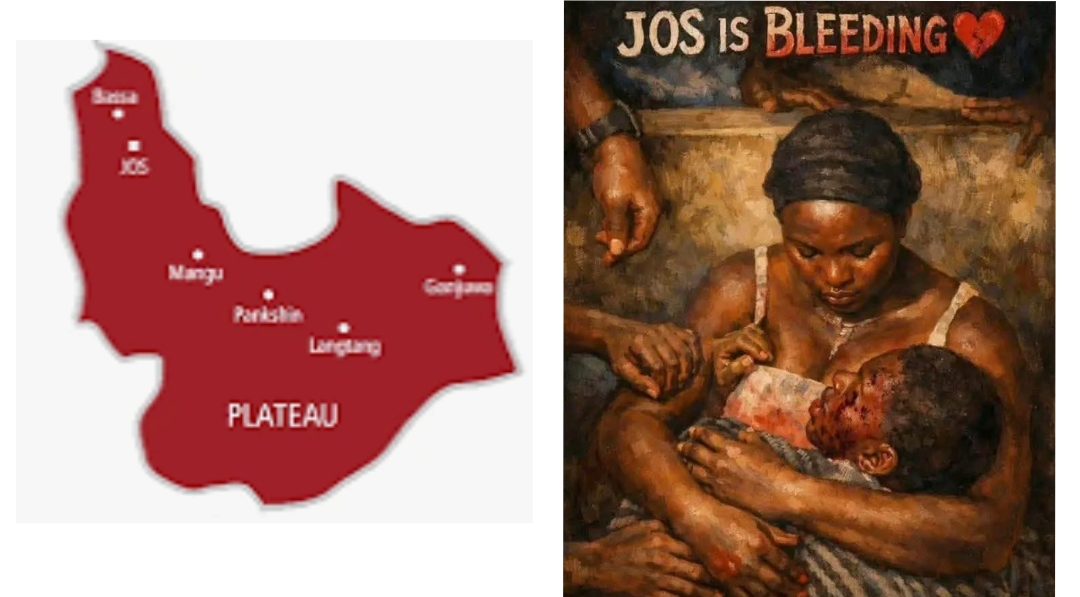
Reflections: The Tragic Killing of 12 Persons in Gari Ya Waye, Jos North LGA, Plateau State
By Chigozirim Okoro
Introduction
The recent attack in Gari Ya Waye (near Angwan Rukuba), Jos North LGA, represents a devastating escalation in the cycle of violence within Plateau State. Initial reports indicate that approximately 12 persons were killed, with victims including men, women, and children. This analysis deconstructs the incident through the lenses of general security and the Women, Peace, and Security (WPS) framework.
1. Core Issues and Security Landscape
The Gari Ya Waye massacre is not an isolated event but a symptom of deep-seated systemic failures.
Security Challenges:
Intelligence Failure: The assailants arrived in a van and on motorcycles in a densely populated area around 8:00 PM, suggesting a significant lapse in human and signals intelligence.
Response Lag: Despite the proximity to urban centers, the indiscriminate shooting lasted long enough for high casualties to occur before security intervention.
Operational Challenges: Terrain and Urban Density: Navigating densely populated business district like Angwan Rukuba during an active shooting is difficult for heavy security vehicles.
Reactive vs. Proactive Posture: The imposition of a 48-hour curfew and the deployment of “Operation Rainbow” are reactive measures that occur only after the loss of life.
Institutional and Policy Challenges:
Trust Deficit: There is a persistent lack of information sharing between the community and the Nigeria Police Force (NPF), due to historical perceptions of inefficiency or bias.
Legal Bottlenecks: The “Sixth Alteration” Bill regarding State Police remains a point of debate, leaving local security—such as the Plateau State Vigilante Group—underfunded and without a clear legal mandate for high-level combat.
2. Women, Peace, and Security (WPS) Analysis
Applying the four pillars of the WPS mandate (UNSCR 1325) to the Gari Ya Waye context:
A. Prevention
Issue: Women in Jos North are often the first to notice unusual movements in markets and residential areas but lack formal channels to report these without fear of retaliation.
Gap: Early Warning Systems (EWS) are often gender-blind, failing to capture the specific “quiet” indicators women observe in communal spaces.
B. Protection
Issue: During the attack, women and children were specifically vulnerable as the assault targeted bustling business outlets where women frequently work or shop.
Gap: Displacement following the attack places women at higher risk of Sexual and Gender-Based Violence (SGBV) in temporary shelters or crowded host communities.
C. Relief and Recovery
Issue: The loss of breadwinners leaves several households headed by widows who may lack land titles or economic buffers.
Gap: Standard emergency relief often overlooks the long-term psychosocial needs of women who witnessed the killings of their children or spouses.
3. Tailored Recommendations
Stakeholder Recommendation
Security Agencies (NPF, Operation Safe Haven)
Operationalize Gender Desks:
Move beyond administrative roles to active Community-Police Forums where women can report threats anonymously.
Plateau State Government Economic Buffer Funds:
Create a support scheme to provide immediate grants to women whose businesses were destroyed or who lost primary providers.
Traditional Leadership Inclusive Security Committees:
Formally integrate women leaders (Magajiyas) into local security decision-making councils to improve community intelligence;
Civil Society (CSOs) Psychosocial First Aid:
Deploy mobile trauma counselors to Angwan Rukuba to provide culturally sensitive mental health support.
Chigozirim Okoro is the Program Manager, CLEEN Foundation