President Tinubu’s Visit: Plateau and the Death of Promise
By Citizen Bolaji O. Akinyemi
Plateau is not just a state. It is a metaphor—of resilience, of pain, of memory, and of a people who have learned, through fire and blood, to read between the lines of political promises.
Before the 2023 elections, the mood in Plateau was not shaped by propaganda, party loyalty, or ethnic sentiment alone. It was shaped by something deeper—lived experience. The people had buried too many. They had mourned too often. They had become too familiar with the language of condolence and the silence of justice.
In Plateau, insecurity is not an abstract policy failure; it is a daily reality. It is the farmer who cannot go to his land. It is the mother who sleeps with one eye open. It is the community that buries its dead in batches. It is the normalization of grief.
And so, when the 2023 elections approached, Plateau did what many underestimated—it thought. It assessed. It interrogated. It chose.
The voting pattern of Plateau was not accidental. It was a product of political intelligence and civic awareness. The people understood something fundamental: leadership is not a blanket endorsement across all levels. One can choose differently for the presidency, governorship, and legislature based on perceived competence, trust, and alignment with urgent needs.
This is where many analysts got it wrong.
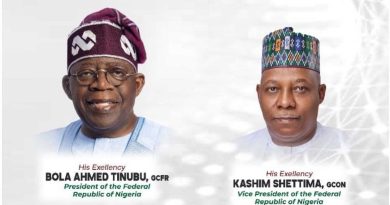
Plateau’s response to the Muslim-Muslim ticket of Bola Ahmed Tinubu and Kashim Shettima was not merely emotional; it was deeply reflective. For a state that has borne the brunt of ethno-religious violence, symbolism matters. Representation matters. Sensitivity matters. The ticket raised concerns—not just about religion, but about empathy, balance, and understanding.
Yet, beyond that concern was something even more pressing: security.
If there was one promise Plateau held onto—one non-negotiable expectation—it was that the incoming administration would decisively confront insecurity. That the era of helplessness would end. That lives would matter again. That communities would breathe.
Security, to Plateau, was not just a policy goal.
It was an only son.
Precious. Non-transferable. Irreplaceable.
And then came Jos North.
Another attack. Another round of mourning. Another reminder that promises, when not backed by action, are merely words rehearsed for campaigns.
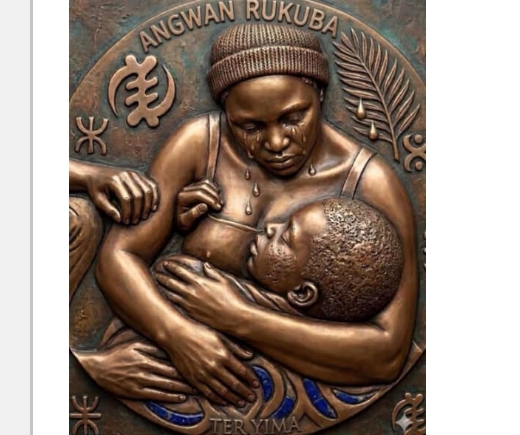
And in the midst of this tragedy emerged the story of Promise—a young man, the only son of his widowed mother, now cut down by the very insecurity that was supposed to have been defeated.
His name is not just a coincidence. It is an indictment.
Promise is dead.
And with him lies a haunting question: What has become of the promise made to Plateau?
For that mother, her loss is personal, irreversible, and devastating. But for Plateau, it is also symbolic. It represents a betrayal of trust, a fracture in hope, and a widening gap between governance and the governed.
The tragedy forces us to ask uncomfortable questions:
Will the President come to Plateau—not just in words, but in presence?
Will he stand before the people and reaffirm that their lives still matter?
Will he demonstrate, through decisive action, that the promise of security is still alive?
Or shall we, as a people, begin to prepare for the burial of that promise alongside Promise?
Leadership is tested not in times of calm, but in moments of crisis. Plateau is watching. Not with hostility, but with expectation. Not with rebellion, but with a longing to believe again.
But belief must be earned.
The people of Plateau have shown that they understand governance. They have demonstrated political sophistication. They have exercised their democratic rights with discernment.
What they ask in return is simple:
Protection. Justice. Dignity of life.
If these cannot be guaranteed, then every promise—no matter how eloquently made—risks becoming another casualty.
And Plateau has buried too many already.
And now, it is no longer rumour.
The State House has confirmed that Bola Ahmed Tinubu will suspend his earlier itinerary and head to Jos to commiserate with the people of Plateau over the recent killings.
This visit, therefore, is not ceremonial.
It is consequential.
Because Plateau is no longer interested in symbolic presence.
It has outgrown photo opportunities.
It has buried too many to be impressed by protocol.
The President’s arrival in Jos must carry more than empathy—it must carry answers.
He must come with clarity.
He must come with commitment.
He must come with a demonstrable pathway to end the killings—not another cycle of assurances that dissolve with the next attack.
Anything short of this risks deepening the very distrust his presence is meant to heal.
At the same time, there remain painful whispers surrounding the fate of Promise’s grieving mother—whispers too fragile to declare as fact, yet too heavy to ignore.
But even without confirmation, the symbolism is already complete.
Because what Plateau has lost is not just lives.
It is trust.
And so, as the President steps into Plateau, the question is no longer whether he will be welcomed.
The real question is this:
Is he coming to revive a broken promise—
or to preside over its burial?
Because if security was the only son Plateau entrusted to this administration,
then today, that son lies lifeless.
And now, with the President physically on ground, history will be watching more closely than ever:
Whether leadership will raise that promise back to life—
or finally lay it to rest.