Preparation Before Performance: Abia Today, Lagos Yesterday, and Lessons for Nigeria
By Citizen Bolaji O. Akinyemi
Leadership success rarely begins in office. It begins long before the oath of office, in preparation.
Across Nigeria, many governments have entered office with enthusiasm but without a working document, a strategic framework, or the intellectual architecture required to translate campaign promises into policy outcomes. When that happens, governance becomes improvisation.
What we are witnessing in Abia State today provides a useful case study of the power of preparation.
*The Abia Preparation*
Before assuming office in May 2023, Governor Alex Otti constituted a 100-member Transition Council to examine the structural challenges of Abia State and recommend actionable solutions.
The council was chaired by Victor Onyenkpa, while the co-chair was Ifueko Omogui‑Okauru, a respected reformer known for leading Nigeria’s tax modernization at the Federal Inland Revenue Service.
The membership itself reflected serious intellectual investment.
Among those who served were:
Ndubuisi Ekekwe, an engineer and innovation scholar with global experience in semiconductor engineering and technology entrepreneurship.
Arunma Oteh, former Director-General of Nigeria’s Securities and Exchange Commission and former Vice President at the World Bank.
Uche Orji, who led Nigeria’s sovereign wealth fund through a period of institutional strengthening.
Okey Oramah, a major figure in African development finance.
Victor Okoronkwo, an energy sector leader.
Frank Nneji, entrepreneur and pioneer of modern mass transit in Nigeria.
This was not a ceremonial committee. It was a brain trust assembled to diagnose a state whose economic vitality had been eroded over decades.
Later, the intellectual ecosystem expanded further with the creation of the Abia Global Economic Advisory Council, bringing in figures such as Muhammadu Sanusi II as co-chair, while Ngozi Okonjo‑Iweala serves as honorary advisor.
The significance of this structure lies not only in the stature of the individuals involved but in the quality of thinking they represent. These are individuals who have worked within functioning systems across global institutions, corporate structures, and development organizations.
Their recommendations formed a working roadmap handed to the governor at the start of his administration.
And governance, as we are now seeing, becomes easier when a leader enters office with a map.
*Lagos in Retrospect*
But Abia’s experience is not entirely new in Nigeria.
A similar approach shaped the early years of Lagos State at the beginning of the Fourth Republic in 1999.
When Bola Ahmed Tinubu prepared to assume office as governor of Lagos State, a policy advisory structure involving technocrats and private-sector leaders helped generate ideas that later informed many of the reforms of the era.
Among those who contributed to the intellectual ecosystem of that period was Sam Ohuabunwa, a respected pharmaceutical industrialist and former president of the Pharmaceutical Society of Nigeria.
The policy conversations of that period helped shape Lagos’ reform direction, particularly around:
revenue expansion and tax administration
economic planning
institutional reforms
private-sector partnership in governance.
Those early efforts eventually matured into the Ehingbeti Lagos Economic Summit, which became a continuing platform for policy dialogue between government and the private sector.
Lagos did not accidentally become Nigeria’s most economically dynamic state. It planned its transformation.
*The Critical Lesson for Governor Otti*
The Lagos story also carries an important caution.
While the intellectual preparation of the early years laid strong foundations, sustaining reform requires continuous renewal of the coalition of ideas and minds that built the original roadmap.
This is where Governor Otti must take a lesson to heart as 2027 approaches.
Political success often creates new pressures—political accommodation, loyalty politics, electoral calculations. These pressures can gradually displace the technocratic discipline that birthed reform in the first place.
If Abia’s current momentum must endure, the governor must protect the intellectual ecosystem that produced the roadmap.
Reform collapses when the thinkers who design the blueprint are replaced by political noise.
*A Word to President Tinubu*
There is also a national lesson here for President Bola Ahmed Tinubu.
When Lagos reforms began in 1999, they were driven by structured thinking and collaborative policy design. But at the national level today, Nigeria’s economic management often appears like a ship sailing turbulent waters without a navigational chart.
From the moment fuel subsidy removal was announced in 2023, the nation’s economic ship has been sailing through waves of inflation, currency volatility, and declining purchasing power.
Bold decisions require equally bold planning architecture.
Nigeria possesses some of the finest economic and policy minds on the African continent—across academia, industry, global institutions, and the diaspora. Harnessing that intellectual capital through a structured national advisory framework could help reposition the nation’s policy direction.
There is still time between now and 2027.
A drifting ship can still be stabilized if the captain is willing to consult the best navigators available.
*The Leadership Equation*
Ultimately, preparation and performance are inseparable.
Committees do not govern; leaders do.
But leaders govern best when they draw strength from the collective intelligence of capable minds.
Abia today demonstrates the value of preparation.
Lagos once demonstrated the same.
Nigeria must rediscover that principle if it hopes to navigate the difficult waters ahead.
Because nations rise not merely by political ambition, but by the quality of thinking that guides leadership decisions.
And when preparation precedes performance, transformation becomes possible.
I come in peace.
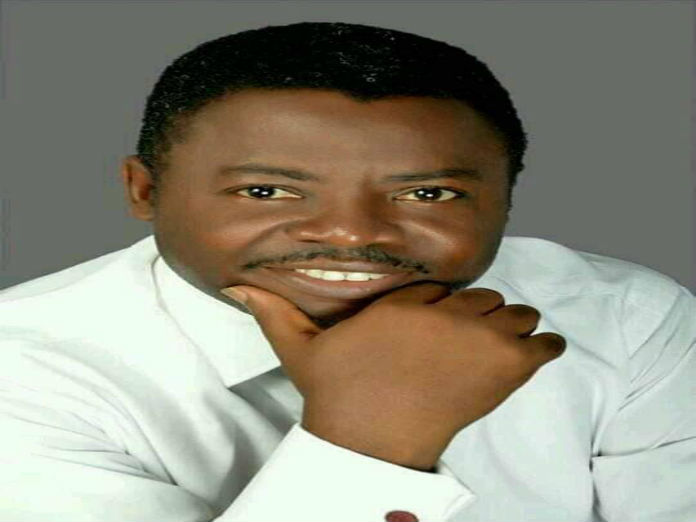
Citizen (Dr) Bolaji O. Akinyemi
Founding President, PVC Naija, now,
Chairman Board of Trustee. An
Apostle & Nation Builder. He’s also the President Voice of His Word Ministries and Convener Apostolic Round Table. He is a strategic Communicator and the C.E.O, Masterbuilder Communications.
Email:bolajiakinyemi66@gmail.com
Facebook:Bolaji Akinyemi.
X:Bolaji O Akinyemi
Instagram:bolajioakinyemi
Phone:+2348033041236