PALLIATIVES:THERE WE GO AGAIN
By Nick Dazang
Due to shifts in the Muslim and Christian calendars, Ramadan and Lenten seasons tend to coincide about every thirty to thirty three years. The last significant overlap was in mid-February 1993 when both seasons commenced on the same day. The last overlap prior to 1993 was in 1863.
In a country which citizens put so much premium on religion that it has assumed the proportion of a fault line, a consummate politician would view this rare coincidence as an opportunity to be seized upon and exploited to the fullest.
Little wonder, our President, Bola Ahmed Tinubu, who is obsessed with continuing in office in 2027, and who has honed governance through the instrument of palliatives to an art, must have seen it as a God-send.
Recall that in the immediate aftermath of his peremptory withdrawal of subsidy on petrol, one of the President’s motions, to cushion its severe effects, was to deploy a swathe of palliatives.
Recall also that last month, Governor Dauda Lawal Dare of Zamfara State, before he defected to the governing All Progressives Congress (APC), from the Peoples Democratic Party (PDP), had alleged that opposition governors were incentivized with large sums of money disguised as “palliatives” from the federal government. He further alleged that such whopping sums were in the region of N500 billion per each defector.
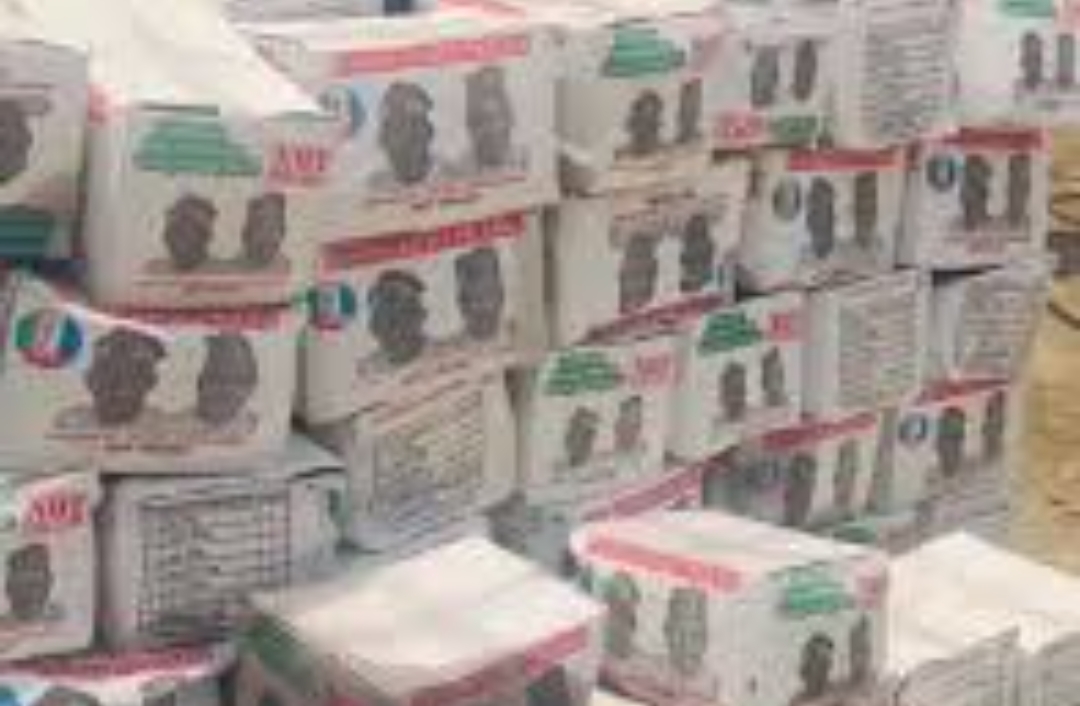
In tandem with his abiding faith in palliatives and the magic they conjure, the President has ordered the immediate, nationwide, distribution of free rice to vulnerable citizens to combat hunger and support citizens during the 2026 Ramadan and Lenten seasons.
Under this initiative, which is being co-ordinated by the Director-General of the Renewed Hope Ambassadors, Hope Uzodinma, 1,200 bags of rice shall be assigned per Minister to be distributed across all the thirty-six States of the Federation and the Federal Capital Territory (FCT).
If each State and FCT were to get 1,200 bag each, the total would come to 44,400 bags to be distributed across the country. Given the fact that 63% of Nigerians, approximating to 139-141 million Nigerians are multidimensionally poor and are therefore vulnerable, this quantity must be akin to a drop in the ocean of poverty.
The fact too that the “free” rice will be distributed by political appointees and under the auspices of the Renewed Hope Ambassadors implies that the rice will go only to partisans and that it would herald, by subtlety and other means, the campaign for 2027, which by law, is yet to commence.
But what is more concerning is that ad hocism, short termism, reflexiveness and the deployment of palliatives have all characterized the Bola Ahmed administration – and to our detriment.
Right from his inauguration, policies have either been pronounced or instituted without forethought and due consideration for their ramifications and consequences.
The whimsical withdrawal of subsidy on petrol, which put the economy in a tailspin, is the first in this unseemly leitmotif. Compounding this is the lack of a beating of a consistent policy track in the agricultural, livestock and power sectors.
In spite of heightened insecurity, which has birthed an inexorable food insecurity, gains had been made by our farmers, especially in cultivating rice, maize, sorghum, cassava, vegetables and livestock.
Thanks to the ban on importation of rice, the closure of our land borders(to avert smuggling), and the Anchor Borrowers Program, paddy rice production rose from an anaemic 2.8 million tons in 2010 to a buoyant 8 million tones in 2021. Corresponding with this significant increase, not less than sixty eight(68) medium and large-scale mills were built during the said period.
Enter President Tinubu: these lofty policies of his predecessor, Muhammadu Buhari, were jettisoned, if not reversed with alacrity: the borders were flung wide open. The Anchor Borrowers Program was either abandoned or put in abeyance. Nigeria imported between 2.4 to 3.2 million metric tones of rice in 2025, with the intention of lowering/crashing price.
The consequences of these were wrong-headed and adverse: Local farmers have been compelled to sell their produce at huge losses on account of the pressure created by the importation of cheaper and smuggled rice, some of dubious quality. Farms, hitherto used to cultivate rice, were left to fallow. The rice sector is facing an imminent collapse. Permit me to quote the Director-General of the Rice Processors Association of Nigeria (RIPAN), Dr. Andy Ekwelem:”Out of more than 150 rice mills nationwide, nearly 90 have shut down operations. The remaining mills are currently operating between 30 and 70 percent of their installed capacity”.
Farmers of maize and sorghum, like their rice growers, who have been victims of the crashing of prices by the government and who have lost huge sums as a result, have either migrated to other endeavors or quit farming. These, put together, have worsened food security, pauperized farmers and caused unemployment.
The same lack of forethought and arbitrariness have afflicted the livestock sector. In 2023, Nigeria had a glut of eggs. Many poultry farms produced large quantities of eggs. These eggs should have been deliberately mopped up by the Federal, State and Local Governments and distributed to schools, hospitals and orphanages. Instead, they were left to get rotten, with the farmers incurring huge losses. The result of this lack of imagination and foresight is that many hatcheries have had to downsize. Poultry farmers are now faced with limited access to day-old chicks referred to in poultry parlance as “pullets” for layers. Worse, the country is now in the throes of egg scarcity.
Electricity, once supplied in epileptic and staccato fashion, has simply been unavailable in most parts of Nigeria in the past one month. The Tinubu administration’s solution to this challenge is a desperate recourse to inviting the fire brigade: It set up the Grid Asset Management Company (GAMCO), yet another bureaucratic contraption, which would proffer – in the government’s words – “a quick-fix solution” for stranded electricity, weak grid management etc.
Certainly, dire situations call for immediate and short term interventions. This is because contingencies and other unforeseens could arise. It goes with the territory. But statecraft thrives best in thinking long term. Policies must be planned and thought through.
Measurable implementation benchmarks and key performance indicators should provide guidance. Policies too should be informed by periodic stocktaking and evaluation. Short term interventions are then used to reinforce and strengthen these policy frameworks. They don’t assume or replace the roles of planning and policy. Unfortunately, the Tinubu administration seems to be more framed and hallmarked by short termism and palliatives.
Rather than resorting to temporary reliefs, the government must focus on policies which are enduring and sustainable. It is these that would ultimately take the people out of the mire in which they are bogged. Rather give our people fish, we should empower them to catch the fish. Palliatives can only promote a dependency syndrome and a people beholden to handouts. They cannot not promote a people who stand sturdily on their feet.
Cover Photo Credit; Facebook